No products in the cart.
U.S. FILLED & FINISHED | ≥99% COA-VERIFIED PURITY
LC-MS VERIFIED IDENTITY | INDEPENDENTLY TESTED
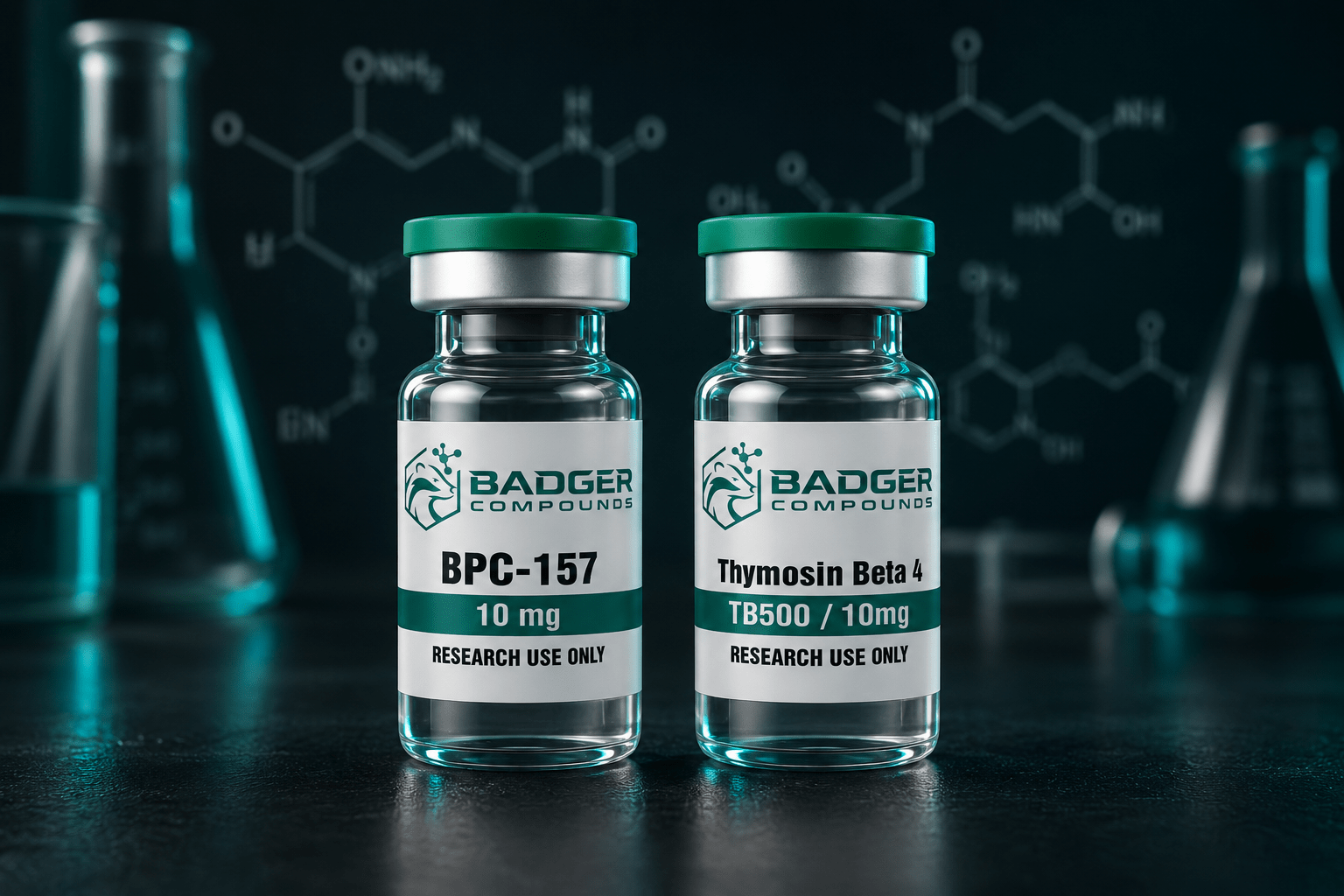
BPC-157 and TB-500 research has become one of the most discussed topics in regenerative and connective tissue peptide investigation. These two compounds are frequently studied in combination because they appear to operate through complementary biological pathways – each targeting different aspects of tissue repair signaling, angiogenesis, and cellular recovery models.
This article explores what each compound is, what pathways researchers are investigating, and why the scientific community has developed a strong interest in studying BPC-157 and TB-500 together in preclinical research settings.
Research focus: This article is intended for educational and research-context discussion only. BPC-157 and TB-500 are research compounds sold for laboratory investigation only. This content does not provide medical advice, dosing guidance, or treatment recommendations of any kind.
What Is BPC-157?
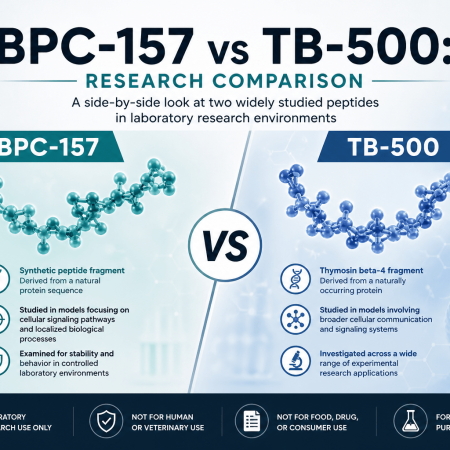
BPC-157, or Body Protection Compound 157, is a synthetic pentadecapeptide consisting of 15 amino acids. It is derived from a protein found in gastric juice and has been the subject of a significant body of preclinical research investigating its role in tissue repair signaling, angiogenesis, and cellular recovery models.
In research settings, BPC-157 is primarily studied for its involvement in pathways related to connective tissue modeling, blood vessel formation, and gastrointestinal mucosal integrity. Preclinical investigations have examined its interaction with growth factor signaling, nitric oxide pathways, and cytoskeletal organization in tissue repair models.
BPC-157 at a Glance
BPC-157 is a 15-amino acid synthetic peptide investigated across a wide range of preclinical tissue repair and angiogenesis research models. It is one of the most extensively studied regenerative peptides in current research literature.
What Is TB-500?
TB-500 is a synthetic peptide fragment corresponding to the active region of Thymosin Beta-4, a naturally occurring 43-amino acid protein found throughout the body. Thymosin Beta-4 plays a well-documented role in actin sequestration and cellular cytoskeletal dynamics, and TB-500 research has focused on its involvement in these same biological processes.
In preclinical investigations, TB-500 has been studied in relation to cellular migration, angiogenesis, inflammation modulation, and connective tissue repair signaling. Its mechanism of action is distinct from BPC-157, which is one of the primary reasons researchers are interested in studying the two compounds together.
TB-500 at a Glance
TB-500 is a synthetic fragment of Thymosin Beta-4, investigated in preclinical models for its role in actin dynamics, cellular migration, angiogenesis, and tissue repair pathway signaling.
How Their Research Pathways Compare
While BPC-157 and TB-500 are both studied in the context of tissue repair and regenerative signaling, their proposed mechanisms of action differ in important ways. This distinction is central to understanding why researchers frequently choose to investigate them together rather than in isolation.
BPC-157
Primary Research Areas
- Angiogenesis and blood vessel formation models
- Connective tissue and tendon repair signaling
- Gastrointestinal mucosal integrity research
- Nitric oxide pathway interaction
- Growth factor receptor upregulation
- Neurological and gut-brain axis research
TB-500
Primary Research Areas
- Actin sequestration and cytoskeletal dynamics
- Cellular migration and proliferation models
- Angiogenesis and vascular remodeling research
- Inflammation modulation in tissue models
- Cardiac and skeletal muscle repair signaling
- Stem cell activation pathway research
Why Researchers Study BPC-157 and TB-500 Together
The growing scientific interest in studying BPC-157 and TB-500 in combination stems from the observation that their proposed mechanisms appear to be complementary rather than redundant. When researchers investigate multi-compound models, they are typically looking for situations where two compounds engage different pathways within the same biological process – allowing for a more comprehensive experimental framework.
In tissue repair research models, BPC-157 is primarily studied for its role in angiogenesis signaling and growth factor pathway interaction, while TB-500 is investigated for its role in actin dynamics and cellular migration. These two processes – vascular formation and cellular movement – are both considered important components of broader tissue repair signaling, which is why studying them together is scientifically logical.
Pathway 1
Angiogenesis Research
Both BPC-157 and TB-500 have been investigated in angiogenesis models, though through different proposed mechanisms. BPC-157 research has focused on VEGF pathway interaction, while TB-500 research has examined actin-dependent endothelial cell migration – two complementary aspects of new blood vessel formation.
Pathway 2
Connective Tissue Models
Connective tissue repair research frequently investigates both structural remodeling and cellular migration. BPC-157 research addresses extracellular matrix and tendon signaling, while TB-500 addresses the cytoskeletal dynamics that enable cell movement into repair sites.
Pathway 3
Inflammation Pathway Research
Both compounds have been studied in relation to inflammation modulation in preclinical models. Researchers investigating multi-pathway inflammation signaling often include both compounds to examine how different anti-inflammatory mechanisms may interact within the same experimental model.
BPC-157 vs TB-500: Key Research Differences
While these compounds share overlapping areas of research interest, their distinct mechanisms make them scientifically distinct investigational tools. The table below outlines the key differences researchers consider when designing studies involving one or both compounds.
| Research Dimension | BPC-157 | TB-500 |
|---|---|---|
| Peptide Origin | Synthetic – derived from gastric protein | Synthetic fragment of Thymosin Beta-4 |
| Amino Acid Length | 15 amino acids (pentadecapeptide) | 17 amino acid fragment |
| Primary Mechanism Focus | Angiogenesis, growth factor signaling, nitric oxide pathways | Actin sequestration, cellular migration, cytoskeletal dynamics |
| Tissue Research Focus | Tendon, ligament, GI tract, neurological models | Muscle, cardiac tissue, vascular remodeling models |
| Angiogenesis Role | VEGF pathway interaction | Endothelial cell migration via actin dynamics |
| Research Overlap | Connective tissue repair, angiogenesis, inflammation modulation | |
The Concept of Complementary Pathway Research
The scientific rationale for studying BPC-157 and TB-500 together is rooted in the concept of complementary pathway investigation. In complex biological processes like tissue repair, multiple signaling systems operate in parallel. No single compound can address every pathway involved, which is why multi-compound research frameworks are common in advanced preclinical investigation.
When researchers design studies incorporating both BPC-157 and TB-500, they are typically attempting to create a more complete picture of regenerative signaling by covering both the angiogenic and cytoskeletal dimensions of tissue repair. This approach allows investigators to examine how these pathways interact, whether synergistic signaling patterns are observed, and how each compound contributes to the overall experimental model.
Single Compound Research
- Isolates one mechanism for study
- Simpler experimental design
- Easier to attribute specific signaling effects
- May miss complementary pathway interactions
- Standard starting point in investigational research
Multi-Compound Research Framework
- Covers multiple pathways simultaneously
- Allows study of complementary signaling
- More closely models complex biological processes
- Introduces greater experimental complexity
- Commonly used in advanced preclinical models
Current Areas of Investigation
Preclinical research involving BPC-157 and TB-500 continues to expand across several areas of tissue repair and regenerative biology. The following represent the most active areas of scientific investigation currently documented in peer-reviewed literature.
Tendon and Ligament Models
BPC-157 has been extensively studied in tendon and ligament repair research models. TB-500 research has examined cellular migration into connective tissue repair sites. Together, these compounds are studied across the vascular and cellular dimensions of tendon healing models.
Muscle Tissue Research
TB-500 has demonstrated particular research interest in skeletal and cardiac muscle models, with studies examining actin dynamics and cellular repair signaling. BPC-157 research has also been conducted in muscle injury models, with a focus on angiogenic support of repair processes.
Vascular Remodeling Research
Both compounds have been independently studied in angiogenesis and vascular remodeling contexts. Researchers examining multi-pathway vascular signaling have investigated how VEGF-related pathways (BPC-157) and actin-dependent endothelial migration (TB-500) may interact in the same experimental model.
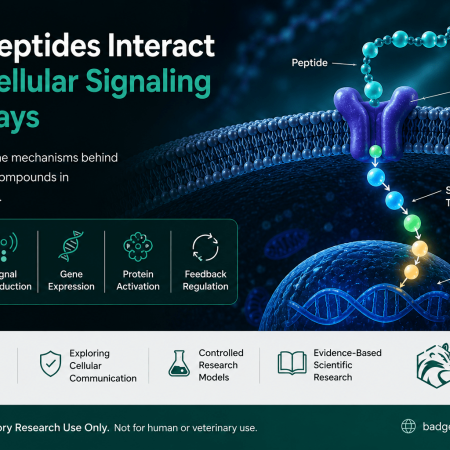
Related reading: For a broader overview of how peptides interact with cellular signaling pathways in research settings, see our article on How Peptides Interact with Cellular Signaling Pathways in Research Settings.
What to Consider When Sourcing Both Compounds
Researchers planning multi-compound studies involving BPC-157 and TB-500 should apply the same quality standards to both compounds. Purity, batch consistency, and independent CoA verification are equally important whether sourcing a single peptide or multiple compounds for the same research program.
Because multi-compound studies introduce additional experimental variables, sourcing both peptides from a single supplier with consistent batch documentation and verified analytical standards simplifies traceability and reduces the risk of introducing uncontrolled quality variables between compounds.
Quality Considerations for BPC-157
- Minimum 99% HPLC purity confirmation
- Mass spectrometry identity verification
- Lyophilized format for storage stability
- Lot-specific Certificate of Analysis
- Independent third-party laboratory verification
Quality Considerations for TB-500
- Minimum 99% HPLC purity confirmation
- Mass spectrometry identity verification
- Lyophilized format for storage stability
- Lot-specific Certificate of Analysis
- Independent third-party laboratory verification
Final Thoughts
BPC-157 and TB-500 research represents one of the most scientifically compelling examples of complementary pathway investigation in modern peptide research. By targeting different yet overlapping aspects of tissue repair signaling – angiogenesis and growth factor pathways on one hand, and actin dynamics and cellular migration on the other – these two compounds offer researchers a multi-dimensional framework for examining regenerative biology.
As preclinical investigation in this area continues to develop, BPC-157 and TB-500 are likely to remain central topics in connective tissue, vascular, and regenerative research literature. Researchers sourcing these compounds for investigational use should prioritize analytical transparency, batch traceability, and independent verification to ensure experimental integrity.
Related reading: For a direct comparison of how these compounds differ across specific research applications, see our article on BPC-157 vs TB-500: Key Differences in Research Applications.
Explore Regenerative Research Compounds
BPC-157 and TB-500 are available individually in our research compound catalog, each supported by independent third-party CoA documentation and our 6x testing standard.
View Regenerative CompoundsReferences
[1] Sikiric P, et al. Stable gastric pentadecapeptide BPC 157: novel therapy in gastrointestinal tract. Curr Pharm Des. 2011;17(16):1612-1632. View via PubMed
[2] Goldstein AL, Hannappel E, Kleinman HK. Thymosin beta4: actin-sequestering protein moonlights to repair injured tissues. Trends Mol Med. 2005;11(9):421-429. View via PubMed
[3] Sikiric P, et al. Brain-gut Axis and Pentadecapeptide BPC 157: Theoretical and Practical Implications. Curr Neuropharmacol. 2016;14(8):857-865. View via PubMed
[4] Sosne G, Qiu P, Goldstein AL, Wheater M. Biological activities of thymosin beta4 defined by active sites in short peptide sequences. FASEB J. 2010;24(7):2144-2151. View via PubMed
[5] Chang CH, et al. The promoting effect of pentadecapeptide BPC 157 on tendon healing involves tendon outgrowth, cell survival, and cell migration. J Appl Physiol. 2011;110(3):774-780. View via PubMed
[6] Philp D, et al. Thymosin beta4 and a synthetic peptide containing its actin-binding domain promote dermal wound repair in db/db diabetic mice and in aged mice. Wound Repair Regen. 2003;11(1):19-24. View via PubMed
Disclaimer: This article is for informational and educational purposes only. Products and compounds discussed are intended for research use only and are not for human consumption, veterinary use, clinical use, diagnostic use, food use, supplement use, pharmaceutical use, cosmetic use, or any consumer application. Statements have not been evaluated by the FDA. This content does not provide medical advice, treatment guidance, dosing information, or recommendations for personal use.