No products in the cart.
U.S. FILLED & FINISHED | ≥99% COA-VERIFIED PURITY
LC-MS VERIFIED IDENTITY | INDEPENDENTLY TESTED
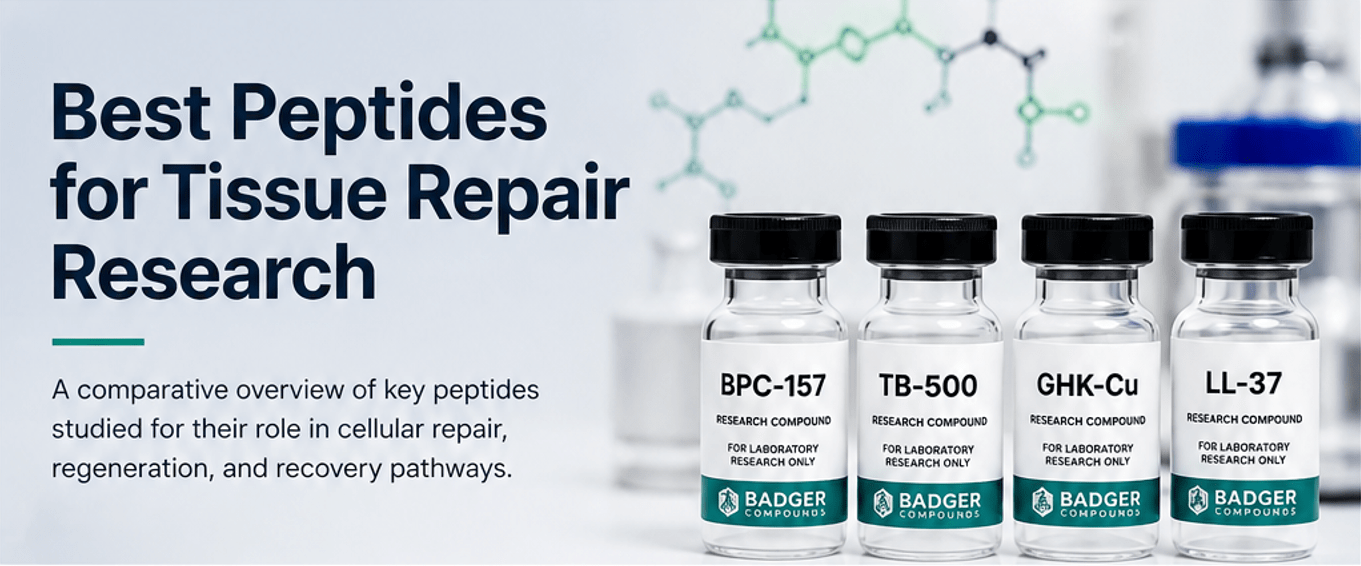
Best Peptides for Tissue Repair Research:
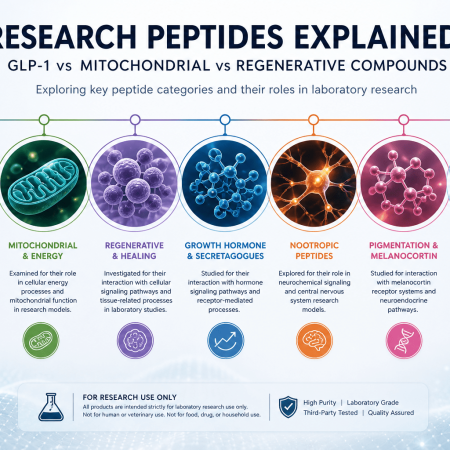
Peptide-based compounds are widely studied in laboratory environments for their interaction with cellular signaling pathways involved in tissue repair, regeneration, and related cellular signaling processes. These compounds are examined in controlled research settings to better understand how short amino acid chains influence cellular communication, structural protein expression, and cellular-level responses.
This article provides a comparative overview of several commonly studied peptides within the context of tissue repair research, including BPC-157, TB-500, GHK-Cu, and LL-37. Each compound exhibits unique characteristics and is investigated across different experimental models.
Research Focus Areas
Angiogenesis
Cell Migration
ECM Regulation
Inflammatory Signaling
Collagen Activity
Immune Response
Overview of Peptide-Based Tissue Research
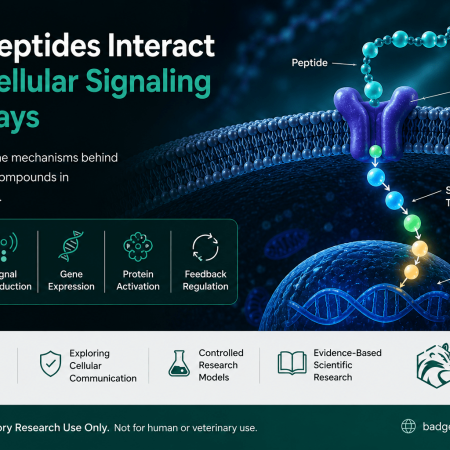
Peptides are short sequences of amino acids that interact with specific receptors and signaling pathways within biological systems. In laboratory research, certain peptides are studied for their involvement in processes such as angiogenesis, cellular migration, extracellular matrix regulation, and inflammatory signaling.
Research involving these compounds is typically conducted in vitro or in preclinical models to explore how peptide structures influence biological responses under controlled conditions.
Key Peptides in Tissue Repair Research
🧬
BPC-157
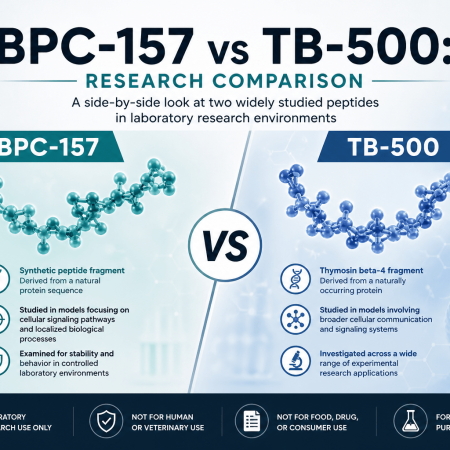
BPC-157 is a synthetic peptide derived from a naturally occurring protein sequence. It is studied for its interaction with signaling pathways related to angiogenesis and tissue-level biological processes.
Explore BPC-157 →🧪
TB-500
TB-500 is a synthetic peptide fragment associated with thymosin beta-4. It is studied for its role in cellular migration, actin regulation, and structural protein dynamics.
Explore TB-500 →🧫
GHK-Cu
GHK-Cu is a copper-binding peptide studied for its interaction with collagen-related pathways and extracellular matrix regulation in controlled laboratory environments.
Explore GHK-Cu →🛡️
LL-37
LL-37 is an antimicrobial peptide studied for its involvement in immune signaling pathways and cellular response mechanisms within research models.
Explore LL-37 →Comparative Research Considerations
While each of these peptides interacts with distinct biological pathways, they are frequently studied within overlapping research contexts such as tissue repair, inflammatory signaling, and cellular regeneration processes.
The selection of a specific peptide for study depends on the experimental model, research objective, and the biological mechanisms being investigated. Variations in peptide structure, stability, and receptor interactions contribute to differences in observed outcomes across studies.
It is important to note that research involving these compounds is ongoing, and findings from laboratory studies may not directly translate to human biological systems.
Additional information on peptide research mechanisms can be found in publicly available literature databases such as PubMed.
Related Research Compounds
Disclaimer
All products referenced are intended strictly for laboratory research use only. They are not approved for human or veterinary use, and are not intended for use as food, dietary supplements, pharmaceuticals, or cosmetic products. All information provided is for educational and research purposes only and has not been evaluated by the Food and Drug Administration.