No products in the cart.
U.S. FILLED & FINISHED | ≥99% COA-VERIFIED PURITY
LC-MS VERIFIED IDENTITY | INDEPENDENTLY TESTED
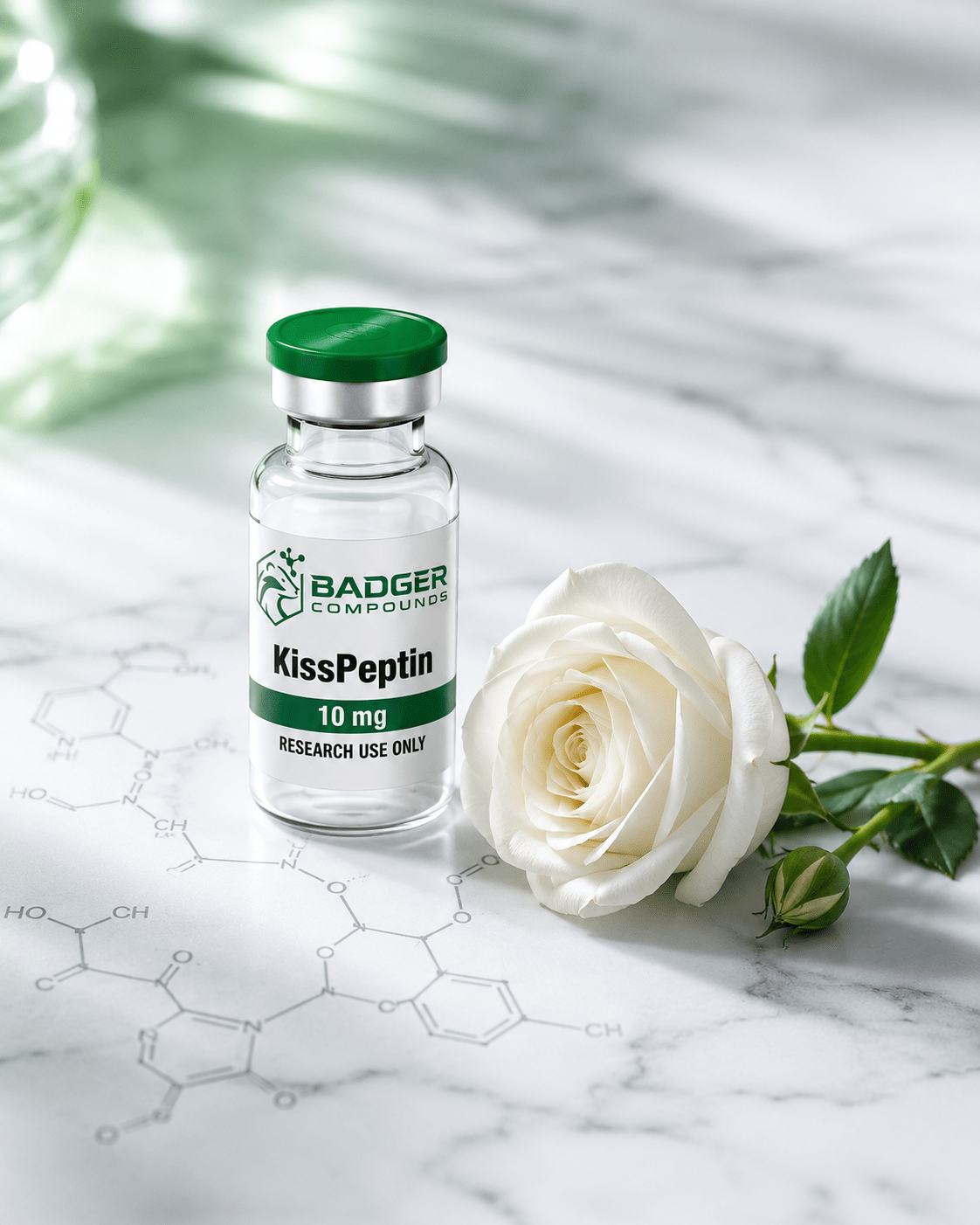
Kisspeptin reproductive hormone research has emerged as one of the most significant areas of investigation in neuroendocrinology over the past two decades. Since its discovery in 1996 and subsequent identification as a critical regulator of the hypothalamic-pituitary-gonadal (HPG) axis in 2003, kisspeptin has fundamentally changed how researchers understand the central control of reproductive hormone signaling.
This article explores what kisspeptin is, how it regulates GnRH and downstream reproductive hormone cascades, what the primary research areas are, and why kisspeptin has become one of the most studied neuropeptides in reproductive endocrinology research today.
Research focus: This article is intended for educational and research-context discussion only. Kisspeptin is a research compound sold for laboratory investigation only. This content does not provide medical advice, dosing guidance, or treatment recommendations of any kind.
What Is Kisspeptin?
Kisspeptin refers to a family of peptides encoded by the KISS1 gene, which was originally identified as a metastasis suppressor gene in melanoma research before its role in reproductive biology was discovered. The KISS1 gene encodes a 145-amino acid precursor protein that is cleaved into several bioactive peptide fragments – the most studied being Kisspeptin-54, Kisspeptin-14, Kisspeptin-13, and Kisspeptin-10, with the latter being the shortest fragment that retains full receptor binding activity.
All kisspeptin fragments share a common C-terminal sequence that is responsible for receptor binding and activation. The kisspeptin receptor – originally known as GPR54 and now designated KISS1R – is a G protein-coupled receptor expressed primarily in the hypothalamus, pituitary, and gonads. The discovery that loss-of-function mutations in KISS1R cause hypogonadotropic hypogonadism in humans and rodents established kisspeptin as an essential regulator of the reproductive axis and catalyzed an explosion of research interest in its biology.
Kisspeptin at a Glance
Kisspeptin is a family of neuropeptides encoded by the KISS1 gene that act at the KISS1R receptor to stimulate GnRH release from the hypothalamus. As the primary upstream regulator of the HPG axis, kisspeptin research has become central to understanding reproductive hormone signaling, puberty biology, fertility research, and the neuroendocrine mechanisms that govern gonadotropin secretion.
The HPG Axis and Kisspeptin’s Role
The hypothalamic-pituitary-gonadal (HPG) axis is the hormonal cascade that governs reproductive function in mammals. At the top of this axis, hypothalamic neurons release gonadotropin-releasing hormone (GnRH) in a pulsatile pattern into the hypothalamic-pituitary portal circulation. GnRH acts on anterior pituitary gonadotrophs to stimulate the release of luteinizing hormone (LH) and follicle-stimulating hormone (FSH), which in turn act on the gonads to regulate sex steroid production and gametogenesis.
Kisspeptin neurons in the hypothalamus – concentrated primarily in the arcuate nucleus (ARC) and the anteroventral periventricular nucleus (AVPV) – are now recognized as the primary upstream regulators of GnRH pulsatility. Kisspeptin acts directly on GnRH neurons, which express KISS1R at high levels, to trigger GnRH secretion. The frequency and amplitude of kisspeptin signaling directly determines GnRH pulse characteristics, which in turn governs LH and FSH secretion patterns.
This positions kisspeptin as the master regulator of the entire HPG axis – a gatekeeper that integrates signals from sex steroids, metabolic status, stress, photoperiod, and other environmental factors to modulate reproductive hormone output at the hypothalamic level.
Primary Research Pathways
Pathway 1
GnRH Pulse Regulation
The primary research focus for kisspeptin is its regulation of GnRH pulsatility. Kisspeptin neurons in the arcuate nucleus co-express neurokinin B and dynorphin – forming the KNDy neuron population that generates the GnRH pulse generator. Research has examined how KNDy neuron activity determines pulse frequency and amplitude across different physiological and experimental states.
Pathway 2
LH and FSH Secretion Research
Kisspeptin administration in preclinical and clinical research models consistently stimulates robust LH secretion – reflecting its stimulatory effect on GnRH release. Studies have used kisspeptin-induced LH responses as a tool for probing HPG axis sensitivity and GnRH neuron responsiveness across different experimental conditions.
Pathway 3
Sex Steroid Feedback Research
Kisspeptin neurons are primary targets of sex steroid feedback to the HPG axis. Estrogen and testosterone regulate kisspeptin neuron activity through estrogen receptor alpha and androgen receptor signaling – with the AVPV and ARC populations responding differently to sex steroids, mediating positive and negative feedback respectively.
Pathway 4
Puberty Onset Research
Kisspeptin signaling is a critical trigger for puberty onset in research models. Studies have examined the developmental changes in KISS1 expression, KISS1R signaling, and GnRH pulse frequency that occur at puberty – establishing kisspeptin as a central focus for understanding the neuroendocrine mechanisms that initiate reproductive maturation.
Pathway 5
Metabolic-Reproductive Interface
Kisspeptin neurons integrate metabolic signals including leptin, insulin, and ghrelin to couple nutritional status to reproductive function. Research has examined how energy deficiency, obesity, and metabolic disruption influence kisspeptin signaling and downstream HPG axis activity in preclinical models.
Pathway 6
Stress and Reproduction Research
Stress-induced suppression of reproductive function is mediated in part through inhibitory effects on kisspeptin neuron activity. Research has examined how corticotropin-releasing hormone, glucocorticoids, and other stress-related signals influence kisspeptin signaling to suppress GnRH pulsatility under conditions of physiological stress.
Kisspeptin Isoforms in Research
The KISS1 gene produces multiple bioactive peptide fragments through post-translational processing. Understanding the differences between these isoforms is important for researchers designing kisspeptin studies, as different fragments may have distinct pharmacokinetic profiles, receptor binding affinities, and practical research applications.
| Isoform | Amino Acids | Receptor Activity | Research Notes |
|---|---|---|---|
| Kisspeptin-54 | 54 aa | Full KISS1R agonist | Predominant circulating form in humans. Extensively studied in clinical research populations for LH stimulation and HPG axis assessment. |
| Kisspeptin-14 | 14 aa | Full KISS1R agonist | Produced by further processing of Kisspeptin-54. Used in preclinical and clinical research investigations. |
| Kisspeptin-13 | 13 aa | Full KISS1R agonist | Shorter processed fragment. Shares C-terminal binding sequence with all active isoforms. |
| Kisspeptin-10 | 10 aa | Full KISS1R agonist | Shortest fragment retaining full receptor activity. Most commonly used in preclinical research due to ease of synthesis and well-characterized pharmacology. |
Current Areas of Kisspeptin Investigation
Hypogonadotropic Hypogonadism Research
Loss-of-function mutations in KISS1 or KISS1R result in hypogonadotropic hypogonadism in research models and humans. Studies have examined kisspeptin administration as a tool for probing residual HPG axis function and GnRH neuron responsiveness in research models of central reproductive axis disruption.
Ovulation and Fertility Research
The preovulatory LH surge in female research models is driven by a dramatic increase in kisspeptin signaling from AVPV neurons in response to rising estrogen levels. Kisspeptin research has examined its role in triggering ovulation and its potential as a tool for studying and modulating ovulatory timing in preclinical fertility research.
Male Reproductive Biology Research
In male research models, kisspeptin regulates GnRH pulsatility and downstream testosterone production. Studies have examined kisspeptin’s role in spermatogenesis regulation, testosterone secretion dynamics, and the HPG axis response to exogenous androgen exposure in preclinical male reproductive research.
Polycystic Ovary Research
PCOS research models are characterized by disrupted GnRH pulsatility and altered kisspeptin-neurokinin B signaling in the arcuate nucleus. Research has examined how kisspeptin neuron activity differs in PCOS-relevant research models and what this reveals about the neuroendocrine origins of disrupted gonadotropin secretion patterns.
Aging and Reproductive Senescence
Reproductive aging is associated with changes in kisspeptin neuron number, KISS1 expression, and HPG axis responsiveness. Research has examined how age-related changes in kisspeptin signaling contribute to the decline in reproductive function in aged research models – connecting kisspeptin biology to broader aging research frameworks.
Photoperiod and Seasonal Reproduction
In seasonally reproducing research species, kisspeptin expression varies dramatically with photoperiod – providing a molecular mechanism through which light-dark cycles regulate reproductive activity. Research in seasonal breeding models has examined how melatonin and photoperiod signals regulate kisspeptin neuron activity and downstream HPG axis function.
Kisspeptin Beyond Reproduction: Emerging Research Areas
While kisspeptin research is predominantly focused on reproductive biology, KISS1R expression has been identified in tissues beyond the HPG axis – including the pancreas, placenta, liver, and brain regions outside the hypothalamus. This broader expression pattern has opened new investigational questions that extend kisspeptin research beyond reproductive endocrinology.
Metabolic Research
- KISS1R expression in pancreatic beta cells has prompted research into kisspeptin’s role in insulin secretion regulation
- Studies have examined kisspeptin effects on glucose homeostasis and insulin sensitivity in metabolic research models
- The bidirectional relationship between metabolic status and kisspeptin signaling is an active research area
- Leptin-kisspeptin signaling interactions have been studied in the context of obesity and reproductive suppression
Neurological and Behavioral Research
- KISS1R expression outside the HPG axis suggests potential roles in non-reproductive neurological function
- Research has examined kisspeptin in relation to mood, anxiety-related behavioral endpoints, and social behavior in preclinical models
- Kisspeptin-oxytocin interactions have been studied in the context of reproductive behavior and pair bonding research
- Potential roles in olfactory processing and pheromone response pathways are under investigation
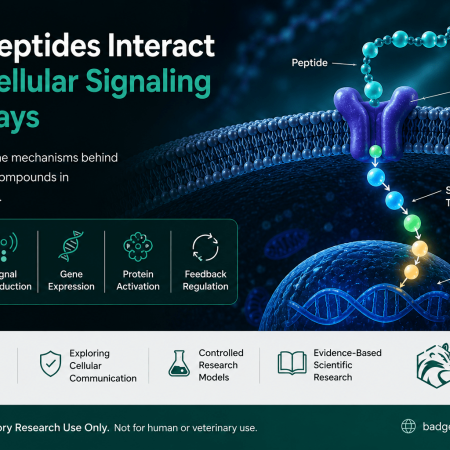
Related reading: For a broader overview of how peptides interact with hormonal signaling pathways in research settings, see our article on How Peptides Interact with Cellular Signaling Pathways in Research Settings.
Final Thoughts
Kisspeptin reproductive hormone research has transformed the scientific understanding of HPG axis regulation since its identification as an essential GnRH secretagogue in 2003. As the master upstream regulator of GnRH pulsatility, kisspeptin sits at the intersection of neuroendocrinology, reproductive biology, metabolic research, and aging science – making it one of the most multidimensional neuropeptides currently under active preclinical investigation.
Researchers sourcing kisspeptin isoforms for investigational use should prioritize sequence verification, analytical transparency, and independent CoA documentation. Given the multiple bioactive isoforms derived from the KISS1 gene, mass spectrometry confirmation of the correct fragment and molecular weight is particularly important for ensuring experimental precision and reproducibility.
Explore Reproductive and Hormonal Research Compounds
Kisspeptin and other reproductive biology research compounds are available in our catalog, each supported by independent third-party CoA documentation and our independent five-test panel.
View Research CompoundsReferences
[1] Seminara SB, et al. The GPR54 gene as a regulator of puberty. N Engl J Med. 2003;349(17):1614-1627. View via PubMed
[2] Oakley AE, et al. Kisspeptin signaling in the brain. Endocr Rev. 2009;30(6):713-743. View via PubMed
[3] Navarro VM, et al. Regulation of gonadotropin-releasing hormone secretion by kisspeptin/dynorphin/neurokinin B neurons in the arcuate nucleus of the mouse. J Neurosci. 2009;29(38):11859-11866. View via PubMed
[4] Dhillo WS, et al. Kisspeptin-54 stimulates the hypothalamic-pituitary gonadal axis in human males. J Clin Endocrinol Metab. 2005;90(12):6609-6615. View via PubMed
[5] Roa J, et al. Kisspeptins and the control of gonadotropin secretion in male and female rodents. Peptides. 2009;30(1):57-66. View via PubMed
[6] Hameed S, et al. Evidence for glucose-dependent appetitive memory via hippocampal arc/arg3.1 mRNA and kisspeptin interneurons. Endocrinology. 2011;152(10):3849-3857. View via PubMed
Disclaimer: This article is for informational and educational purposes only. Products and compounds discussed are intended for research use only and are not for human consumption, veterinary use, clinical use, diagnostic use, food use, supplement use, pharmaceutical use, cosmetic use, or any consumer application. Statements have not been evaluated by the FDA. This content does not provide medical advice, treatment guidance, dosing information, or recommendations for personal use.