No products in the cart.
U.S. FILLED & FINISHED | ≥99% COA-VERIFIED PURITY
LC-MS VERIFIED IDENTITY | INDEPENDENTLY TESTED
Ipamorelin growth hormone secretagogue research has become one of the most significant areas of investigation in peptide endocrinology. As a selective growth hormone releasing peptide (GHRP), Ipamorelin stimulates growth hormone secretion through a mechanism that distinguishes it from earlier generation secretagogues – offering researchers a more targeted tool for studying the growth hormone axis without the broader hormonal perturbations associated with less selective compounds.
This article explores what Ipamorelin is, how it interacts with the growth hormone secretagogue receptor, why it is considered a selective secretagogue in research contexts, and what current areas of preclinical investigation are examining across metabolic, regenerative, and aging biology research frameworks.
Research focus: This article is intended for educational and research-context discussion only. Ipamorelin is a research compound sold for laboratory investigation only. This content does not provide medical advice, dosing guidance, or treatment recommendations of any kind.
What Is Ipamorelin?
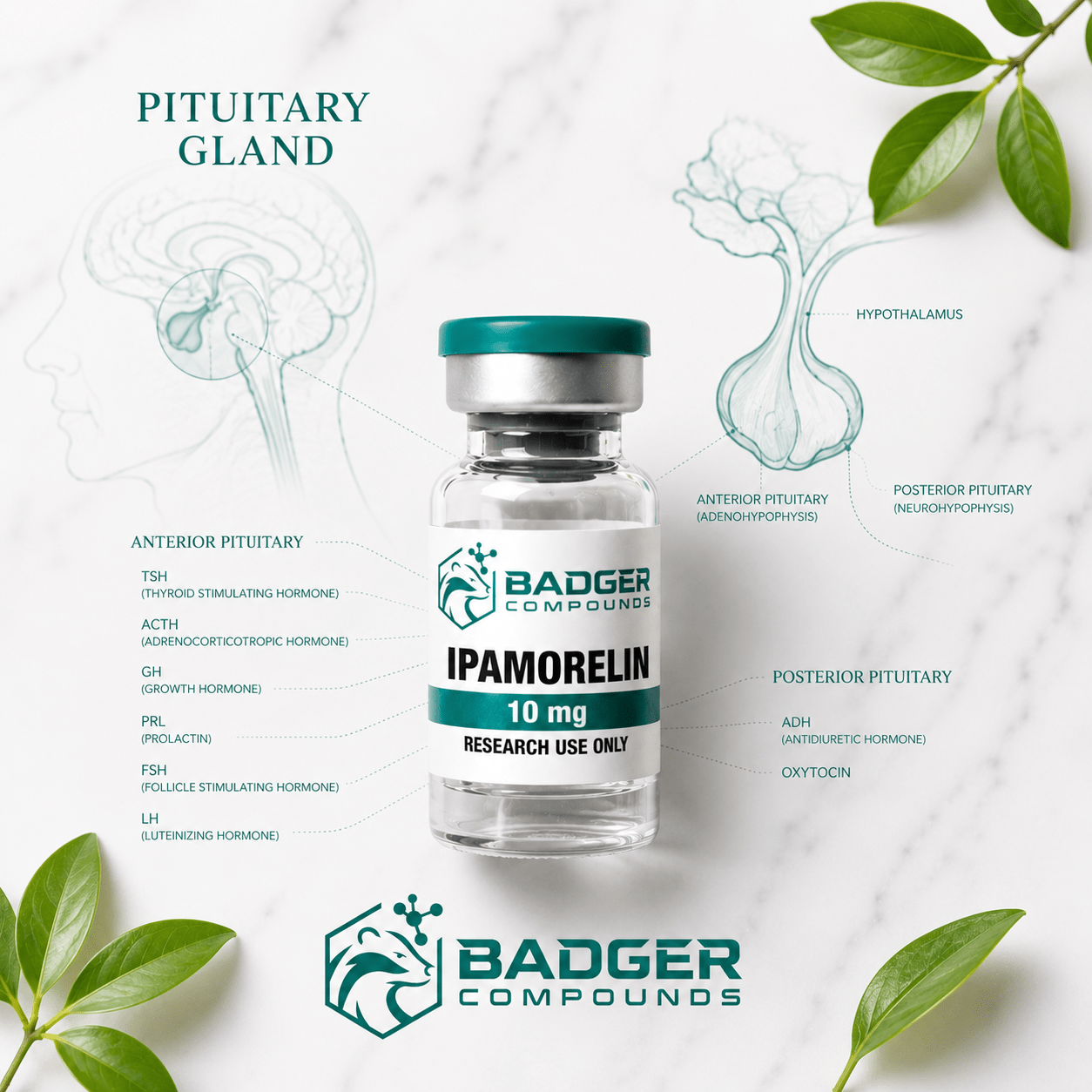
Ipamorelin is a synthetic pentapeptide growth hormone releasing peptide consisting of five amino acids: Aib-His-D-2Nal-D-Phe-Lys-NH2. It was developed by Novo Nordisk in the late 1990s and is classified as a growth hormone secretagogue – a compound that stimulates the secretion of growth hormone from the anterior pituitary gland. Ipamorelin acts as an agonist at the growth hormone secretagogue receptor (GHS-R1a), also known as the ghrelin receptor.
What distinguishes Ipamorelin from earlier growth hormone releasing peptides such as GHRP-2 and GHRP-6 is its selectivity profile. While earlier GHRPs also stimulate the release of cortisol, prolactin, and ACTH in research models – potentially confounding experimental interpretation – Ipamorelin demonstrates a high degree of selectivity for growth hormone release with minimal documented effects on these other hormonal systems in preclinical studies. This selectivity has made it a valuable research tool for investigators seeking to study growth hormone axis biology with greater experimental precision.
Ipamorelin at a Glance
Ipamorelin is a synthetic pentapeptide GHS-R1a agonist that selectively stimulates growth hormone release from the anterior pituitary. Its selective secretagogue profile, minimal effect on cortisol and prolactin in preclinical models, and well-characterized receptor pharmacology make it one of the most studied growth hormone secretagogue research compounds currently available.
The Growth Hormone Secretagogue Receptor
To understand Ipamorelin research, it is essential to understand the growth hormone secretagogue receptor (GHS-R1a) and its role in growth hormone axis regulation. GHS-R1a is a G protein-coupled receptor expressed primarily in the hypothalamus and anterior pituitary, but also in a range of peripheral tissues including the heart, pancreas, adrenal gland, thyroid, and gastrointestinal tract.
The endogenous ligand for GHS-R1a is ghrelin – an acylated peptide hormone produced primarily in the stomach that plays roles in appetite regulation, energy homeostasis, and growth hormone secretion. Synthetic GHS-R1a agonists like Ipamorelin mimic ghrelin’s ability to stimulate growth hormone release from pituitary somatotrophs, but with structural modifications that confer greater stability, receptor selectivity, and duration of action compared to native ghrelin.
GHS-R1a activation triggers a signaling cascade involving Gq protein coupling, phospholipase C activation, and intracellular calcium mobilization in pituitary somatotrophs – ultimately stimulating growth hormone synthesis and secretion. The downstream effects of growth hormone release include IGF-1 production in the liver, which mediates many of the anabolic and metabolic effects studied in growth hormone axis research.
Primary Research Pathways
Ipamorelin research spans multiple biological systems connected by the growth hormone and IGF-1 axis. The following represent the primary pathway areas under active preclinical investigation.
Pathway 1
Growth Hormone Axis Research
The primary research focus for Ipamorelin is its stimulation of pulsatile growth hormone release from anterior pituitary somatotrophs via GHS-R1a agonism. Preclinical studies have characterized the dose-response relationship, duration of GH pulse, and IGF-1 production downstream of Ipamorelin administration in research models.
Pathway 2
IGF-1 Signaling Research
Insulin-like growth factor 1 (IGF-1), produced hepatically in response to growth hormone stimulation, mediates many downstream biological effects studied in growth hormone axis research. Ipamorelin studies have examined IGF-1 levels, IGF-1 receptor signaling, and the downstream anabolic and metabolic effects of Ipamorelin-induced IGF-1 elevation in preclinical models.
Pathway 3
Body Composition Research
Growth hormone and IGF-1 play well-documented roles in body composition regulation in preclinical research models. Ipamorelin studies have examined its effects on lean mass, fat mass, and body composition parameters in animal models, with particular interest in age-related body composition changes.
Pathway 4
Bone Biology Research
The growth hormone and IGF-1 axis plays a critical role in bone formation and remodeling. Preclinical Ipamorelin research has examined its effects on bone mineral density, osteoblast activity, and bone turnover markers in animal models – particularly in aged research subjects where growth hormone secretion is naturally diminished.
Pathway 5
Gastrointestinal Research
GHS-R1a is expressed in gastrointestinal tissue, and Ipamorelin has been investigated in GI motility research models. Studies have examined its effects on gastric emptying, intestinal motility, and GI mucosal integrity in preclinical models, representing a research dimension distinct from its pituitary effects.
Pathway 6
Aging and Longevity Research
Growth hormone secretion declines significantly with age in research models – a phenomenon sometimes referred to as somatopause. Ipamorelin research has examined whether GHS-R1a agonism can restore more youthful growth hormone pulsatility patterns and influence age-related biological markers in aged preclinical models.
Ipamorelin vs Other Growth Hormone Secretagogues
Ipamorelin is one of several growth hormone secretagogue research compounds that act at GHS-R1a. Understanding how it compares to other secretagogues helps researchers select the most appropriate compound for their specific investigational framework and experimental design requirements.
| Compound | Type | GH Selectivity | Cortisol / Prolactin Effect | Primary Research Use |
|---|---|---|---|---|
| Ipamorelin | Synthetic pentapeptide GHRP | High selectivity | Minimal in preclinical models | Selective GH axis research, body composition, aging |
| GHRP-2 | Synthetic hexapeptide GHRP | Moderate selectivity | Documented cortisol and prolactin elevation | GH stimulation research, appetite models |
| GHRP-6 | Synthetic hexapeptide GHRP | Moderate selectivity | Notable cortisol and appetite effects | GH stimulation, appetite regulation research |
| Hexarelin | Synthetic hexapeptide GHRP | Lower selectivity | Significant cortisol and ACTH effects | Cardiac research, GH axis studies |
| MK-677 (Ibutamoren) | Non-peptide GHS-R1a agonist | Moderate | Some cortisol elevation documented | Oral GH secretagogue research, aging models |
| CJC-1295 | GHRH analog | GHRH receptor – not GHS-R1a | Minimal | GHRH axis research, often combined with Ipamorelin |
Ipamorelin and CJC-1295: Why They Are Studied Together
One of the most common pairings in growth hormone axis research involves Ipamorelin and CJC-1295. While Ipamorelin acts at the GHS-R1a receptor to stimulate growth hormone release, CJC-1295 is a synthetic analog of growth hormone releasing hormone (GHRH) that acts at the GHRH receptor – a distinct receptor system that works through a different but complementary signaling pathway.
In preclinical research models, the combination of GHS-R1a agonism and GHRH receptor activation has been found to produce a synergistic stimulation of growth hormone release that is greater than either compound produces independently. This complementary mechanism approach – similar to the multi-pathway research framework seen with BPC-157 and TB-500 in regenerative research – makes the Ipamorelin and CJC-1295 combination a frequently investigated pairing in growth hormone axis research.
Ipamorelin
GHS-R1a Mechanism
- Acts at ghrelin receptor (GHS-R1a)
- Stimulates pulsatile GH release from pituitary
- Works independently of GHRH receptor signaling
- Inhibits somatostatin activity indirectly
- Short acting – produces discrete GH pulses
- High selectivity for GH over other hormones
CJC-1295
GHRH Receptor Mechanism
- Acts at GHRH receptor on pituitary somatotrophs
- Amplifies the GH pulse magnitude
- Works independently of GHS-R1a signaling
- Drug Affinity Complex (DAC) version provides extended half-life
- Long acting – provides sustained GHRH receptor stimulation
- Complements Ipamorelin through different receptor system
Current Areas of Ipamorelin Investigation
Ipamorelin growth hormone secretagogue research continues to expand across several biological disciplines. The following represent the most active and documented areas of current preclinical investigation.
Muscle and Lean Mass Research
The anabolic effects of growth hormone and IGF-1 on skeletal muscle tissue are well-established in research models. Ipamorelin preclinical studies have examined its effects on muscle protein synthesis, lean mass accretion, and skeletal muscle fiber composition in animal research models – particularly in aged subjects where GH secretion is reduced.
Bone Density Research
Preclinical Ipamorelin research has examined its effects on bone mineral density, trabecular bone structure, and osteoblast activity in animal models. Studies in aged rodents have investigated whether GHS-R1a stimulation can partially restore bone formation rates that decline alongside growth hormone secretion with aging.
GI Motility Research
GHS-R1a expression in gastrointestinal tissue has prompted investigation of Ipamorelin in GI research models. Studies have examined its effects on gastric emptying rate, postoperative ileus models, and intestinal motility parameters – representing a peripheral research application distinct from its pituitary growth hormone effects.
Metabolic Research Models
Growth hormone and IGF-1 influence glucose metabolism, lipid metabolism, and insulin sensitivity in complex ways that are actively studied in metabolic research. Ipamorelin studies have examined its effects on metabolic parameters in preclinical models, with particular attention to the growth hormone – insulin sensitivity relationship.
Sleep and Recovery Research
Growth hormone secretion is closely linked to sleep biology, with the majority of daily GH pulses occurring during slow-wave sleep in research models. Ipamorelin research has examined its interaction with sleep-associated GH secretion patterns and recovery-related biological endpoints in preclinical settings.
Aging and Somatopause Research
The age-related decline in growth hormone secretion – somatopause – is a recognized feature of biological aging in research models. Ipamorelin studies have examined whether GHS-R1a agonism in aged research subjects can influence age-related markers of GH axis decline and associated biological parameters.
Why Selectivity Matters in Growth Hormone Research
The selectivity of Ipamorelin for growth hormone release over other pituitary hormones is one of its most scientifically significant characteristics from a research design perspective. Earlier growth hormone releasing peptides like GHRP-2 and GHRP-6 stimulate not only GH release but also cortisol, ACTH, and prolactin secretion in research models – introducing confounding hormonal variables that can complicate the interpretation of experimental outcomes.
By using a more selective secretagogue like Ipamorelin, researchers can study growth hormone axis biology with greater confidence that the effects observed are attributable to GH and IGF-1 signaling rather than concurrent changes in stress hormones or other pituitary-derived factors. This experimental clarity is particularly important in studies examining body composition, bone biology, metabolic function, and aging – all areas where cortisol and other hormones have independent and potentially confounding biological effects.
Key Research Takeaway
Ipamorelin’s high selectivity for growth hormone release over cortisol and prolactin in preclinical models makes it a more precise investigational tool than earlier generation GHRPs for studying growth hormone axis biology. This selectivity is a primary reason it has become one of the most widely used growth hormone secretagogue research compounds in modern preclinical investigation.
What Researchers Should Know When Sourcing Ipamorelin
As a pentapeptide with a specific structural configuration including non-standard amino acid residues, sequence accuracy and stereochemical integrity are particularly important quality considerations when sourcing Ipamorelin for research use. The presence of D-amino acids in the Ipamorelin sequence means that standard HPLC purity analysis should be complemented by mass spectrometry confirmation to verify correct molecular weight and sequence identity.
Key Quality Considerations
- Minimum 99% HPLC purity confirmation
- Mass spectrometry identity verification
- Correct molecular weight: approximately 711 Da
- D-amino acid configuration verification
- Lyophilized format for storage stability
- Independent third-party Certificate of Analysis
Storage and Handling in Research Settings
- Store lyophilized powder at -20 degrees Celsius
- Protect from light and moisture at all times
- Allow vial to reach room temperature before opening
- Reconstitute in bacteriostatic water for research use
- Avoid repeated freeze-thaw cycles after reconstitution
- Document lot number in all experimental records
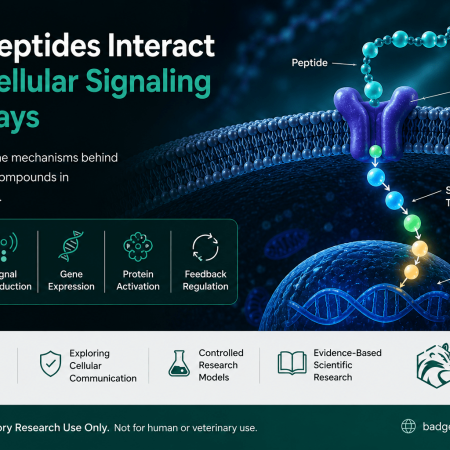
Related reading: For a broader overview of how peptides interact with cellular signaling pathways in research settings, see our article on How Peptides Interact with Cellular Signaling Pathways in Research Settings.
Final Thoughts
Ipamorelin growth hormone secretagogue research represents one of the most scientifically well-characterized areas of peptide endocrinology investigation. Its selective GHS-R1a agonism, minimal effects on non-target hormonal systems in preclinical models, and broad applicability across growth hormone axis, body composition, bone biology, gastrointestinal, and aging research frameworks make it one of the most versatile and valuable research tools in the growth hormone secretagogue compound class.
As research into growth hormone axis biology, somatopause, and age-related biological changes continues to expand, Ipamorelin is likely to remain a central compound in growth hormone secretagogue research. Researchers sourcing Ipamorelin for investigational use should prioritize sequence verification, analytical transparency, and independent CoA documentation to ensure experimental integrity across all study applications.
Related reading: To understand how analytical verification and third-party testing apply to growth hormone secretagogue research compounds like Ipamorelin, see our article on Why Third-Party Testing Matters in Research Compounds.
Explore Growth Hormone and Peptide Research Compounds
Ipamorelin and other growth hormone secretagogue research compounds are available in our catalog, each supported by independent third-party CoA documentation and our 6x testing standard.
View Research CompoundsReferences
[1] Raun K, et al. Ipamorelin, the first selective growth hormone secretagogue. Eur J Endocrinol. 1998;139(5):552-561. View via PubMed
[2] Johansen PB, et al. Ipamorelin, a new growth-hormone-releasing peptide, induces longitudinal bone growth in rats. Growth Horm IGF Res. 1999;9(2):106-113. View via PubMed
[3] Svensson J, et al. Two-month treatment of obese subjects with the oral growth hormone (GH) secretagogue MK-677 increases GH secretion, fat-free mass, and energy expenditure. J Clin Endocrinol Metab. 1998;83(2):362-369. View via PubMed
[4] Nass R, et al. Effects of an oral ghrelin mimetic on body composition and clinical outcomes in healthy older adults: a randomized trial. Ann Intern Med. 2008;149(9):601-611. View via PubMed
[5] Petersenn S, et al. Structure and regulation of the human growth hormone-releasing peptide receptor. Biochem Biophys Res Commun. 1999;259(2):363-367. View via PubMed
[6] Khorram O, et al. Effects of [norleucine27]growth hormone-releasing hormone(1-29)-NH2 administration on the immune system of aging men and women. J Clin Endocrinol Metab. 1997;82(11):3590-3596. View via PubMed
Disclaimer: This article is for informational and educational purposes only. Products and compounds discussed are intended for research use only and are not for human consumption, veterinary use, clinical use, diagnostic use, food use, supplement use, pharmaceutical use, cosmetic use, or any consumer application. Statements have not been evaluated by the FDA. This content does not provide medical advice, treatment guidance, dosing information, or recommendations for personal use.