No products in the cart.
U.S. FILLED & FINISHED | ≥99% COA-VERIFIED PURITY
LC-MS VERIFIED IDENTITY | INDEPENDENTLY TESTED
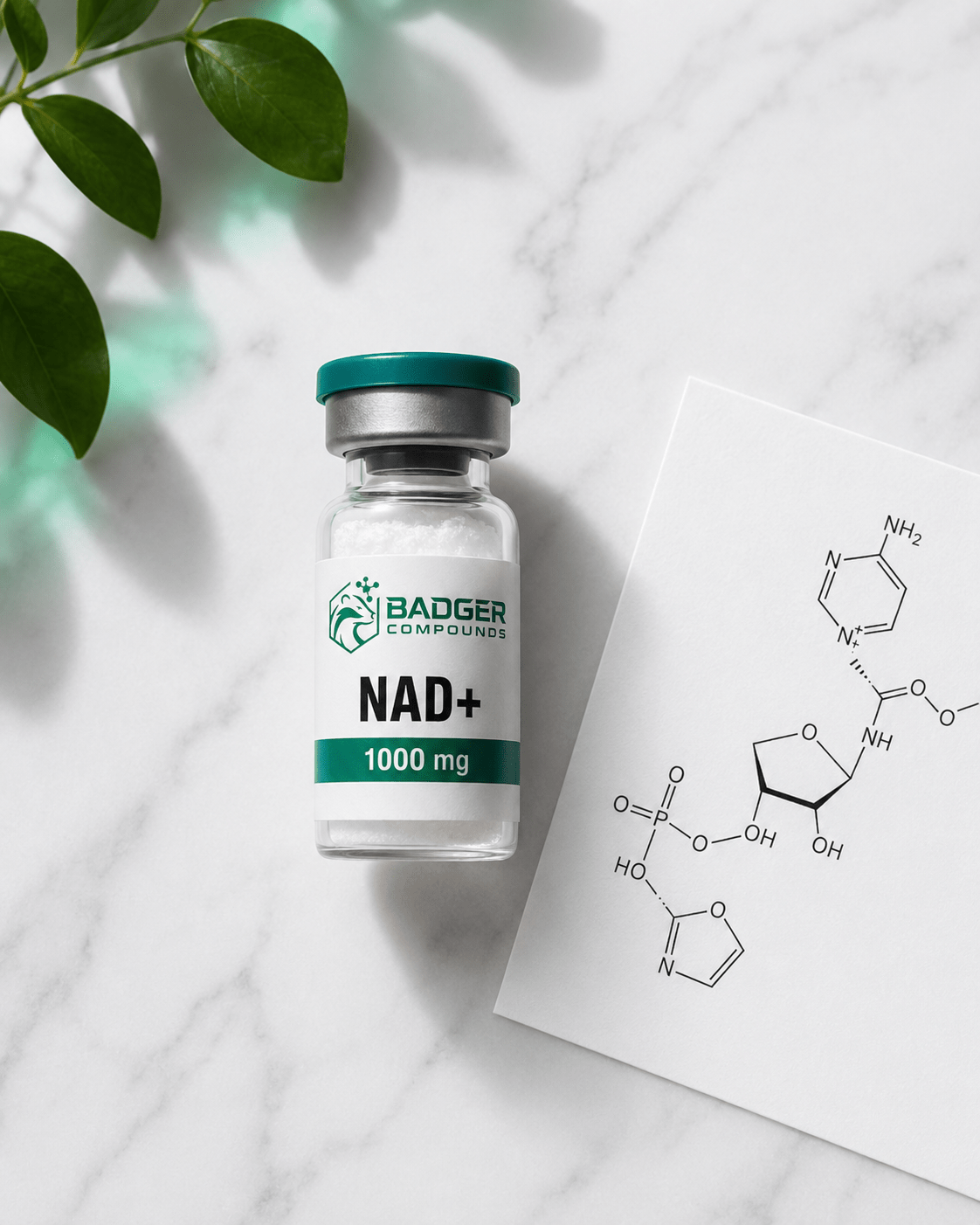
NAD+ precursors cellular energy research is one of the most rapidly expanding areas of longevity and mitochondrial biology. This article covers the primary NAD+ precursor compounds including NMN and NR, how they enter the biosynthesis pathway, and what current preclinical investigation reveals about NAD+ precursors cellular energy research in aging and metabolic research models.
NAD+ precursors and cellular energy research has become one of the most actively discussed topics in longevity science, mitochondrial biology, and metabolic research. Nicotinamide adenine dinucleotide (NAD+) is a coenzyme found in every living cell, playing a central role in energy metabolism, DNA repair signaling, and the regulation of proteins involved in aging biology.
As researchers have established that NAD+ levels decline with age in multiple organisms and tissue types, interest in compounds that can support NAD+ biosynthesis – known as NAD+ precursors – has grown substantially. This article explores what NAD+ is, why it matters in cellular energy research, what the primary precursor compounds are, and what current preclinical investigation is examining.
Research focus: This article is intended for educational and research-context discussion only. All compounds discussed are sold for laboratory investigation only. This content does not provide medical advice, dosing guidance, or treatment recommendations of any kind.
What Is NAD+ and Why Does It Matter?
NAD+ (nicotinamide adenine dinucleotide) is a dinucleotide coenzyme present in all living cells. It exists in two interconvertible forms – NAD+ (oxidized) and NADH (reduced) – and cycles between these states as it accepts and donates electrons in metabolic reactions. This redox cycling is fundamental to cellular energy production, particularly in the mitochondrial electron transport chain where NADH donates electrons to generate ATP.
Beyond its role in energy metabolism, NAD+ serves as a substrate for several classes of enzymes that regulate critical biological processes. Sirtuins (SIRT1-7) are NAD+-dependent deacylases that regulate gene expression, DNA repair, mitochondrial biogenesis, and stress response. PARPs (poly ADP-ribose polymerases) consume NAD+ in DNA damage response. CD38, a NAD+-consuming enzyme, regulates calcium signaling and immune function. The availability of NAD+ directly influences the activity of all these enzyme systems, connecting cellular energy status to broader regulatory biology.
Why NAD+ Decline Is a Research Focus
NAD+ levels in mammalian tissues decline significantly with age – with some research models documenting reductions of 50% or more in aged compared to young tissues. This decline is associated with reduced mitochondrial function, impaired DNA repair capacity, and decreased sirtuin activity in aging research models – making NAD+ biology a central focus of longevity and cellular aging research.
NAD+ Biosynthesis Pathways
Cells maintain NAD+ levels through multiple biosynthetic pathways. Understanding these pathways is essential for interpreting preclinical research on NAD+ precursors, since different precursors enter the biosynthesis network at different points and may have distinct tissue distribution and biological effects.
Pathway 1
Salvage Pathway
The primary NAD+ biosynthesis route in most mammalian tissues. Nicotinamide (NAM) released by NAD+-consuming enzymes is recycled back to NAD+ via NAMPT (nicotinamide phosphoribosyltransferase) – the rate-limiting enzyme in this pathway. NMN and NR both feed into the salvage pathway upstream of NAMPT.
Pathway 2
Preiss-Handler Pathway
Converts nicotinic acid (niacin, vitamin B3) to NAD+ via a three-step enzymatic process involving NAPRT, NMNAT, and NADS. This pathway is the basis for niacin’s NAD+-boosting effects but is associated with the skin flushing response that limits niacin’s research utility in some contexts.
Pathway 3
De Novo Synthesis
Synthesizes NAD+ from tryptophan through the kynurenine pathway. This route produces NAD+ independently of dietary precursor availability but is relatively inefficient and accounts for a smaller proportion of total NAD+ production in most tissues compared to the salvage pathway.
Primary NAD+ Precursors Under Investigation
Several compounds have been identified as effective NAD+ precursors in preclinical research models. Each enters the biosynthesis network at a different point and may have distinct bioavailability, tissue distribution, and downstream biological effects.
NMN
Nicotinamide Mononucleotide
NMN is a direct precursor to NAD+ in the salvage pathway, sitting one enzymatic step upstream of NAD+ itself. Preclinical research in rodent models has examined NMN supplementation in relation to age-related NAD+ decline, metabolic function, muscle physiology, and neurological research endpoints. NMN requires either direct cellular uptake via the Slc12a8 transporter or extracellular conversion to NR before cell entry, depending on tissue type.
NR
Nicotinamide Riboside
NR is a form of vitamin B3 that enters the salvage pathway and is converted to NMN intracellularly before conversion to NAD+. Preclinical research has examined NR in relation to mitochondrial biogenesis, muscle function, hepatic metabolism, and neurological research models. NR has been extensively studied in both animal models and human research populations.
Niacin
Nicotinic Acid (Vitamin B3)
The original NAD+ precursor identified in research, niacin enters the Preiss-Handler pathway and effectively raises NAD+ levels – particularly in the liver. Research has extensively documented niacin’s effects on lipid metabolism. The skin flushing associated with niacin use in research subjects has driven interest in alternative precursors with better tolerability profiles.
NAM
Nicotinamide
Nicotinamide is the amide form of niacin and enters the salvage pathway via NAMPT. While effective at raising NAD+ levels, high concentrations of nicotinamide can inhibit sirtuin activity – an important consideration for researchers studying NAD+-sirtuin signaling axes. This inhibitory effect distinguishes nicotinamide from NMN and NR in research design contexts.
NAD+ Precursor Comparison
| Precursor | Biosynthesis Entry Point | Sirtuin Compatibility | Key Research Areas | Notable Consideration |
|---|---|---|---|---|
| NMN | Salvage – direct NAD+ precursor | Compatible | Aging, metabolic, muscle, neurological | Tissue uptake mechanism still under investigation |
| NR | Salvage – converted to NMN intracellularly | Compatible | Mitochondrial biogenesis, muscle, liver, aging | Most extensively studied in human research populations |
| Niacin (NA) | Preiss-Handler pathway | Compatible | Lipid metabolism, liver NAD+, cardiovascular | Skin flushing limits research utility in some models |
| Nicotinamide (NAM) | Salvage via NAMPT | Inhibits sirtuins at high concentrations | General NAD+ elevation research | Sirtuin inhibition complicates longevity research interpretation |
Current Research Areas
Aging and Longevity Research
The age-related decline in NAD+ has made NAD+ precursor research a central focus of longevity biology. Preclinical studies in model organisms have examined whether NAD+ restoration via NMN or NR supplementation influences lifespan, healthspan markers, and age-related functional decline.
Mitochondrial Biology
NAD+ is essential for mitochondrial electron transport chain function and is a key substrate for sirtuins that regulate mitochondrial biogenesis via PGC-1alpha. Research has examined how NAD+ precursor supplementation influences mitochondrial content, respiratory capacity, and ATP production in aged and metabolically challenged research models.
Metabolic Research Models
NAD+ biology intersects with insulin signaling, glucose metabolism, and lipid homeostasis in research models. Studies have examined how NAD+ precursors influence metabolic parameters in diet-induced metabolic dysfunction models and aged research subjects with declining NAD+ levels.
DNA Repair Research
PARP enzymes consume NAD+ during DNA damage response. Research has examined the relationship between NAD+ availability, PARP activity, and DNA repair efficiency in aged cells – investigating whether NAD+ restoration supports genomic stability in preclinical aging models.
Neurological Research
NAD+ metabolism in the nervous system is an active research area. Studies have examined NAD+ precursor effects on neuronal survival, neuroinflammation markers, and cognitive function endpoints in preclinical neurodegeneration-relevant models and aged research subjects.
Sirtuin Pathway Research
Sirtuins are NAD+-dependent enzymes with broad regulatory roles in gene expression, stress response, and aging biology. Research examining NAD+ precursors often measures sirtuin activity as a downstream endpoint, connecting NAD+ availability to the broader sirtuin-longevity research framework.
Related reading: For a broader look at how mitochondrial biology intersects with aging and cellular energy research, see our article on MOTS-c and Mitochondrial Research: Current Areas of Investigation.
Final Thoughts
NAD+ precursors and cellular energy research sits at the intersection of mitochondrial biology, aging science, metabolic research, and longevity investigation. The central role of NAD+ in energy metabolism, DNA repair, and sirtuin signaling makes it one of the most biologically important molecules studied in modern aging research – and the precursor compounds that support NAD+ biosynthesis are among the most actively investigated research tools in the longevity space.
As this field continues to evolve, researchers should pay close attention to which precursor enters the biosynthesis network at which point, how sirtuin compatibility differs between compounds, and what the tissue-specific distribution of each precursor means for experimental design. Sourcing verified, analytically characterized compounds with independent CoA documentation is as important in NAD+ precursor research as in any other area of peptide and small molecule investigation.
Explore Longevity and Cellular Energy Research Compounds
Browse our catalog of research compounds in the longevity and cellular energy category, each supported by independent third-party CoA documentation and our 6x testing standard.
View Longevity Research CompoundsReferences
[1] Yoshino J, et al. NAD+ Intermediates: The Biology and Therapeutic Potential of NMN and NR. Cell Metab. 2018;27(3):513-528. View via PubMed
[2] Rajman L, et al. Therapeutic Potential of NAD-Boosting Molecules: The In Vivo Evidence. Cell Metab. 2018;27(3):529-547. View via PubMed
[3] Cantó C, et al. NAD+ Metabolism and the Control of Energy Homeostasis. Cell Metab. 2015;22(1):31-53. View via PubMed
[4] Mills KF, et al. Long-Term Administration of Nicotinamide Mononucleotide Mitigates Age-Associated Physiological Decline in Mice. Cell Metab. 2016;24(6):795-806. View via PubMed
[5] Trammell SA, et al. Nicotinamide riboside is uniquely and orally bioavailable in healthy humans. Nat Commun. 2016;7:12948. View via PubMed
[6] Verdin E. NAD+ in aging, metabolism, and neurodegeneration. Science. 2015;350(6265):1208-1213. View via PubMed
Disclaimer: This article is for informational and educational purposes only. Products and compounds discussed are intended for research use only and are not for human consumption, veterinary use, clinical use, diagnostic use, food use, supplement use, pharmaceutical use, cosmetic use, or any consumer application. Statements have not been evaluated by the FDA. This content does not provide medical advice, treatment guidance, dosing information, or recommendations for personal use.