No products in the cart.
U.S. FILLED & FINISHED | ≥99% COA-VERIFIED PURITY
LC-MS VERIFIED IDENTITY | INDEPENDENTLY TESTED

Semax and Selank neurological research represents two of the most scientifically compelling areas of investigation in modern peptide neuroscience. Both compounds are synthetic peptides with origins in Soviet and Russian neuroscience research, and both have accumulated a meaningful body of preclinical literature examining their effects on neurological signaling pathways, neuroprotection models, and cognitive biology.
While Semax and Selank are distinct compounds with different structural origins and proposed mechanisms, they are frequently discussed together in neurological research contexts because they target overlapping areas of brain biology – particularly those related to neurotrophic signaling, anxiety-related pathway research, and neuroprotective investigation. This article explores what each compound is, what pathways researchers are studying, and how they compare across key research dimensions.
Research focus: This article is intended for educational and research-context discussion only. Semax and Selank are research compounds sold for laboratory investigation only. This content does not provide medical advice, dosing guidance, or treatment recommendations of any kind.
What Is Semax?
Semax is a synthetic heptapeptide derived from the N-terminal fragment of adrenocorticotropic hormone (ACTH). Its full sequence is Met-Glu-His-Phe-Pro-Gly-Pro, and it was originally developed by the Institute of Molecular Genetics of the Russian Academy of Sciences. Unlike its parent molecule ACTH, Semax does not produce adrenocortical effects – its research profile is focused on neurological and neurotrophic signaling rather than hormonal activity.
The primary area of Semax neurological research is its interaction with brain-derived neurotrophic factor (BDNF) and nerve growth factor (NGF) signaling pathways. Preclinical investigations have examined Semax in relation to neurotrophic factor upregulation, neuroprotection in ischemia models, cognitive function in research settings, and neuroinflammation pathway research. Its ability to influence BDNF expression has made it a particularly interesting compound for researchers studying neuroplasticity and neuroprotective biology.
Semax at a Glance
Semax is a synthetic 7-amino acid peptide derived from ACTH, primarily investigated for its effects on BDNF and NGF signaling pathways in neurological research models. It is one of the most studied nootropic peptides in Russian neuroscience literature and has been investigated across neuroprotection, cognitive, and neuroinflammation research contexts.
What Is Selank?
Selank is a synthetic heptapeptide analog of the endogenous immunomodulatory peptide tuftsin. Its sequence is Thr-Lys-Pro-Arg-Pro-Gly-Pro, and like Semax, it was developed through Russian neuroscience research programs. Selank is sometimes referred to as a synthetic analog of tuftsin with an additional Pro-Gly-Pro sequence that is thought to enhance its stability and CNS penetration.
The primary research focus for Selank is its interaction with GABAergic and serotonergic signaling pathways, as well as its proposed effects on anxiety-related biological markers in preclinical models. Research has also examined Selank in relation to BDNF expression, immune signaling modulation, and enkephalin metabolism – making it a multidimensional neurological research compound with overlapping but distinct areas of investigation compared to Semax.
Selank at a Glance
Selank is a synthetic 7-amino acid analog of tuftsin, primarily investigated for its effects on GABAergic signaling, anxiety-related biological pathways, and neurotrophic factor expression in preclinical neurological research models. It has been studied extensively in Russian and Eastern European research literature across anxiolytic, neuroprotective, and immunomodulatory research contexts.
Primary Research Pathways for Each Compound
While Semax and Selank share overlapping areas of neurological research interest, their proposed primary mechanisms differ in important ways. Understanding these distinctions helps researchers select the most appropriate compound for their specific investigational framework.
Semax
BDNF and NGF Signaling
The most extensively documented area of Semax research involves its effects on brain-derived neurotrophic factor (BDNF) and nerve growth factor (NGF) expression. Preclinical studies have examined how Semax influences neurotrophic factor levels in various brain regions and what downstream effects this may have on neuronal survival and plasticity research models.
Semax
Neuroprotection Research
A significant portion of Semax preclinical literature has examined its effects in cerebral ischemia and hypoxia research models. Studies have investigated whether Semax administration influences neuronal survival, oxidative stress markers, and inflammatory signaling in models of acute neurological stress.
Semax
Dopaminergic Pathway Research
Research has also examined Semax in relation to dopaminergic signaling pathways. Studies have investigated its effects on dopamine receptor expression and dopaminergic neurotransmission in preclinical models, adding a monoaminergic dimension to its neurological research profile.
Selank
GABAergic Signaling Research
Selank research has focused heavily on its interaction with GABAergic neurotransmission. Preclinical studies have examined how Selank influences GABA receptor activity and related anxiety-associated signaling pathways in animal research models, positioning it as a subject of interest in neurobiological anxiety research.
Selank
Enkephalin Metabolism
One distinctive area of Selank research involves its proposed interaction with enkephalin-degrading enzymes. Studies have examined whether Selank influences the breakdown of endogenous enkephalins, which are opioid peptides involved in pain modulation and mood-related signaling in the central nervous system.
Selank
Immunomodulatory Research
Reflecting its origin as a tuftsin analog, Selank research has also examined its effects on immune signaling markers. Studies have investigated its influence on cytokine expression patterns and immune cell activity in preclinical models, adding an immunological dimension to its neurological research profile.
Semax vs Selank: Key Research Differences
Although Semax and Selank are frequently discussed together in neurological peptide research, they are scientifically distinct compounds with different structural origins, proposed mechanisms, and primary research applications. The table below outlines the key differences researchers should understand when evaluating these compounds for investigational use.
| Research Dimension | Semax | Selank |
|---|---|---|
| Structural Origin | Derived from ACTH N-terminal fragment | Synthetic analog of tuftsin with Pro-Gly-Pro extension |
| Amino Acid Sequence | Met-Glu-His-Phe-Pro-Gly-Pro (7 aa) | Thr-Lys-Pro-Arg-Pro-Gly-Pro (7 aa) |
| Primary Research Focus | BDNF and NGF upregulation, neuroprotection | GABAergic signaling, anxiety-related pathway research |
| Neurotrophic Research | Strongly documented in preclinical literature | Present but secondary to GABAergic research focus |
| Immunomodulatory Research | Limited | Well-documented – reflects tuftsin origin |
| Ischemia Research Models | Extensively studied | Less central to research profile |
| Anxiolytic Pathway Research | Secondary research area | Primary research focus |
| Research Origin | Institute of Molecular Genetics, Russia | Institute of Molecular Genetics, Russia |
The BDNF Connection: Why It Matters in Neurological Research
Both Semax and Selank have been investigated in relation to brain-derived neurotrophic factor (BDNF) signaling, though through different proposed mechanisms. BDNF is a member of the neurotrophin family of growth factors and plays a critical role in neuronal survival, synaptic plasticity, and the regulation of learning and memory processes in preclinical research models.
The TrkB receptor, which is the primary high-affinity receptor for BDNF, activates several downstream signaling pathways including MAPK/ERK, PI3K/Akt, and PLCgamma – all of which are relevant to neuronal survival, growth, and differentiation research. The investigation of peptides that influence BDNF expression or signaling has therefore become a significant area of neurological research, connecting neurotrophic biology to broader questions about neuroprotection, neuroplasticity, and cognitive function in research models.
Semax and BDNF Research
- Preclinical studies have documented Semax-induced upregulation of BDNF mRNA in hippocampal tissue
- Research has examined BDNF and NGF expression changes in cortical and subcortical brain regions
- Studies have investigated whether BDNF upregulation mediates Semax neuroprotective effects in ischemia models
- Dopaminergic system interaction with BDNF signaling has also been examined in Semax research
Selank and BDNF Research
- Selank research has also documented effects on BDNF expression in preclinical models
- Studies have investigated the relationship between Selank, BDNF, and anxiety-related behavioral endpoints
- Interaction between Selank, BDNF signaling, and serotonergic pathways has been examined
- BDNF modulation has been proposed as one mechanism contributing to Selank neurological research profile
Current Areas of Semax and Selank Investigation
Research involving Semax and Selank continues across several neurological and neuroscientific disciplines. The following represent the most active and documented areas of current preclinical investigation.
Cognitive Function Research
Both Semax and Selank have been investigated in preclinical models examining learning, memory, and cognitive processing. Research has examined performance on standard behavioral paradigms in animal models following peptide administration, with particular interest in hippocampal-dependent memory processes.
Neuroinflammation Models
Neuroinflammatory signaling is increasingly recognized as relevant to a wide range of neurological research models. Both compounds have been studied in relation to inflammatory cytokine expression and microglial activation patterns in preclinical neuroinflammation research contexts.
Cerebral Ischemia Research
Semax has been particularly extensively studied in cerebral ischemia research models. Preclinical investigations have examined its effects on infarct volume, neurological deficit scoring, and molecular markers of neuronal injury in rodent stroke models.
Anxiety Pathway Research
Selank’s interaction with GABAergic signaling has made it a primary subject of investigation in anxiety-related neurobiological research. Studies have used standard preclinical anxiety models including elevated plus maze and open field testing to examine Selank’s effects on anxiety-associated behavioral and neurochemical endpoints.
Neuroplasticity Research
The neurotrophic factor interactions documented for both compounds have prompted research into their potential effects on synaptic plasticity markers. Studies have examined dendritic spine density, long-term potentiation, and synaptic protein expression in preclinical neuroplasticity research models.
Stress Response Research
Both Semax and Selank have been investigated in relation to stress-responsive biological systems. Research has examined their effects on HPA axis markers, corticosterone levels, and stress-related behavioral endpoints in preclinical animal models of acute and chronic stress.
Why Russian Peptide Neuroscience Has Generated International Research Interest
Both Semax and Selank emerged from a tradition of peptide neuroscience research that developed largely independently in the Soviet Union and Russia from the 1970s onward. This research program produced a number of synthetic peptides with neurological research profiles that are only now receiving broader international scientific attention.
One reason for growing international interest is the expanding body of peer-reviewed literature examining these compounds in English-language journals, making Russian neuroscience peptide research more accessible to the broader scientific community. Another is the increasing focus on neurotrophic factor biology, neuroinflammation research, and cognitive neuroscience that has made the research profiles of compounds like Semax and Selank directly relevant to active areas of Western neurological investigation.
Key Research Takeaway
Semax and Selank represent two of the most scientifically documented neurological research peptides to emerge from Russian neuroscience. Their distinct but overlapping research profiles – Semax focused on neurotrophic signaling and neuroprotection, Selank on GABAergic pathways and anxiety-related biology – make them complementary subjects of investigation for researchers studying neurological signaling, neuroprotection, and cognitive biology.
What Researchers Should Know When Sourcing Semax and Selank
Both Semax and Selank are relatively short heptapeptides, which means sequence accuracy and stereochemical integrity are particularly important quality considerations. As with all research peptides, the quality of the compound used directly affects the reliability and reproducibility of experimental outcomes.
Quality Considerations for Semax
- Minimum 99% HPLC purity confirmation
- Mass spectrometry identity verification
- Correct molecular weight: approximately 887 Da
- Lyophilized format for storage stability
- Lot-specific Certificate of Analysis
- Independent third-party laboratory verification
Quality Considerations for Selank
- Minimum 99% HPLC purity confirmation
- Mass spectrometry identity verification
- Correct molecular weight: approximately 751 Da
- Lyophilized format for storage stability
- Lot-specific Certificate of Analysis
- Independent third-party laboratory verification
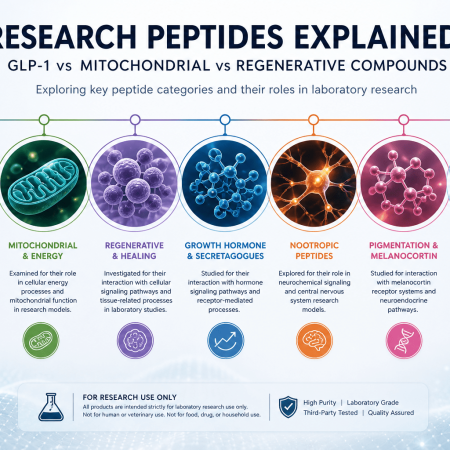
Related reading: For a broader overview of peptides being investigated in cognitive and neurological research contexts, see our article on Research Peptides Explained: GLP-1 vs Mitochondrial vs Regenerative Compounds.
Final Thoughts
Semax and Selank neurological research represents two of the most scientifically substantive areas of investigation in nootropic and neuroprotective peptide science. With distinct but complementary research profiles – Semax centered on neurotrophic factor signaling and neuroprotection, Selank on GABAergic pathway biology and anxiety-related research – these two compounds offer researchers a multidimensional framework for investigating neurological signaling in preclinical settings.
As international research interest in Russian neuroscience peptides continues to grow and the broader scientific community increasingly engages with neurotrophic factor biology, neuroinflammation research, and cognitive neuroscience, Semax and Selank are likely to remain important subjects of preclinical investigation. Researchers sourcing these compounds should prioritize sequence verification, analytical transparency, and independent CoA documentation to ensure experimental integrity.
Related reading: To understand how analytical verification and third-party testing apply to neurological research peptides like Semax and Selank, see our article on Why Third-Party Testing Matters in Research Compounds.
Explore Nootropic and Neurological Research Compounds
Semax, Selank, and other neurological research peptides are available in our catalog, each supported by independent third-party CoA documentation and our 6x testing standard.
View Nootropic and Cognitive Research CompoundsReferences
[1] Dolotov OV, et al. Semax, an analogue of ACTH(4-7) with prolonged action, and its relation to brain-derived neurotrophic factor. Neurosci Lett. 2006;395(3):207-210. View via PubMed
[2] Mjasoedov NF, et al. Analysis of Semax action on the parameters of major physiological systems, responsible for the maintenance of homeostasis in long-term space flight. Acta Astronaut. 1999;44(7-12):711-715. View via PubMed
[3] Semenova TP, et al. Selank and short peptides of the tuftsin family in the regulation of adaptive behavior in stress. Zh Vyssh Nerv Deiat Im I P Pavlova. 2010;60(3):349-358. View via PubMed
[4] Zozulya AA, et al. The antiamnestic and nootropic-like effects of the heptapeptide selank in a model of test situation. Zh Vyssh Nerv Deiat Im I P Pavlova. 2001;51(4):538-541. View via PubMed
[5] Grivennikov IA, et al. The nootropic peptide semax activates the expression of BDNF and its receptor (TrkB) genes in various brain structures in rats. Mol Biol (Mosk). 2008;42(4):632-638. View via PubMed
[6] Boyko SS, et al. Pharmacokinetics of selank administered intranasally. Bull Exp Biol Med. 2010;150(2):241-243. View via PubMed
Disclaimer: This article is for informational and educational purposes only. Products and compounds discussed are intended for research use only and are not for human consumption, veterinary use, clinical use, diagnostic use, food use, supplement use, pharmaceutical use, cosmetic use, or any consumer application. Statements have not been evaluated by the FDA. This content does not provide medical advice, treatment guidance, dosing information, or recommendations for personal use.