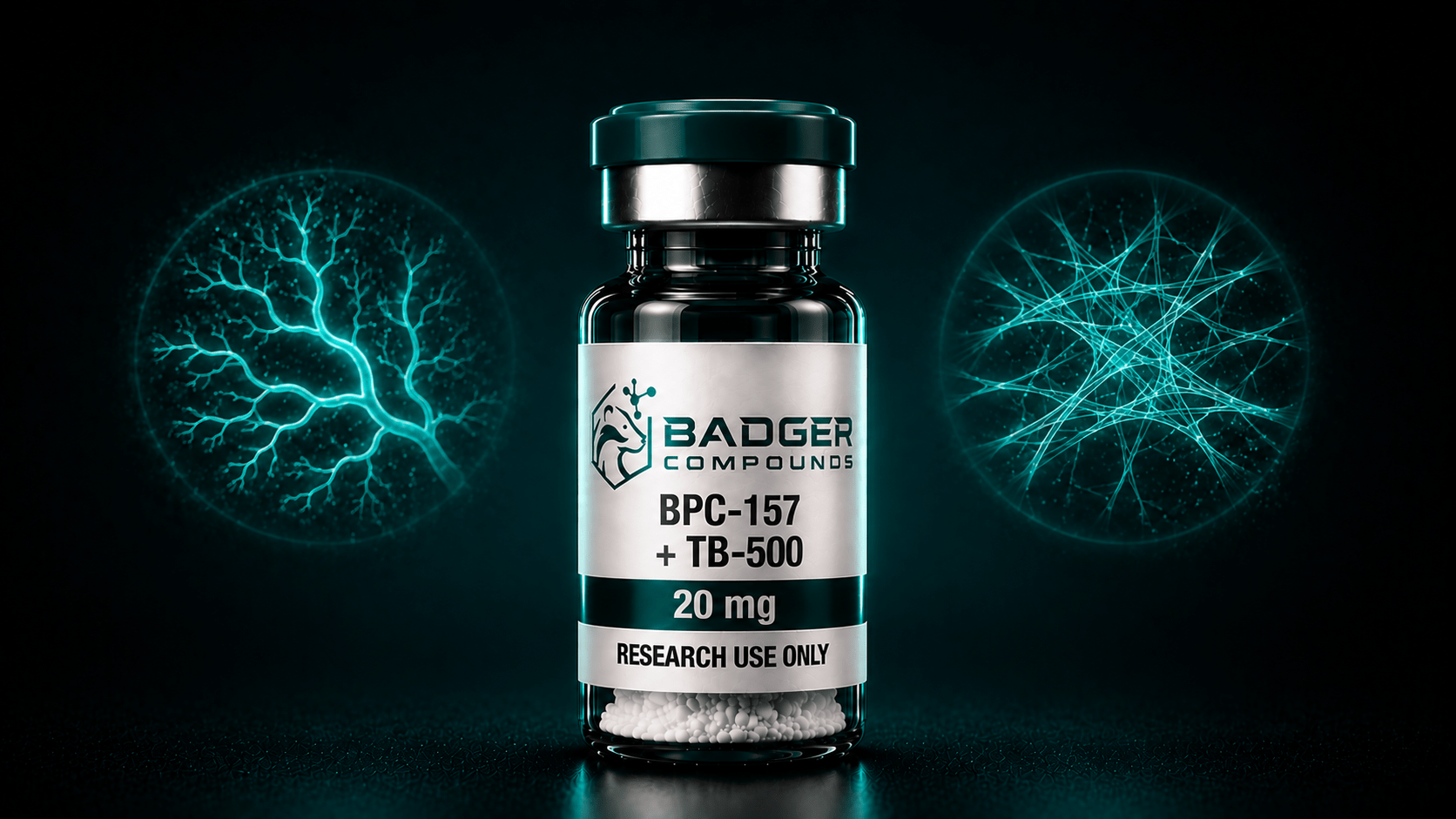
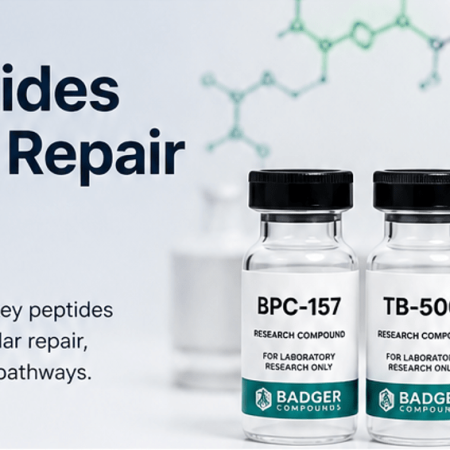
The TB-500 BPC-157 blend combines two of the most frequently paired research peptides in tissue-repair investigation at a straightforward 1:1 ratio. This guide covers exactly what’s in it and points to the substantial individual research behind each component.
TB-500 and BPC-157 Blend: What’s Actually In It
This blend combines two peptides that are already frequently studied side by side, TB-500 and BPC-157, at a simple 1:1 ratio. Here is exactly what that means and where to find the depth on each compound individually.
Blend Composition
| Component | 10mg option | 20mg option |
|---|
| BPC-157 | 5 mg | 10 mg |
| TB-500 | 5 mg | 10 mg |
Both size options maintain the same 1:1 ratio between the two compounds.
Research framing: This article is intended for educational and research-context discussion only. This blend is a research compound sold for laboratory investigation only. This content does not provide medical advice, dosing guidance, or treatment recommendations of any kind.
Two Different Mechanisms
BPC-157
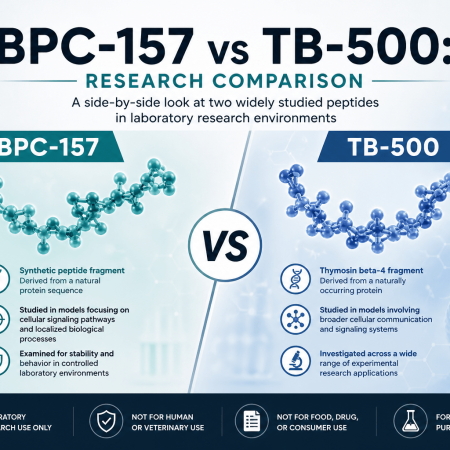
A 15-amino-acid pentadecapeptide studied for proposed mechanisms including VEGF-driven angiogenesis and nitric oxide signaling.
TB-500
A synthetic fragment of thymosin beta-4, studied for actin-sequestering activity and cell migration signaling.
These two compounds are unrelated in origin and mechanism, but they are commonly studied together because their proposed effects, vascular signaling and cytoskeletal/migratory signaling, are considered complementary rather than redundant. For the fuller explanation of that rationale, see our overview of BPC-157 and TB-500 research.
Each compound has an extensive independent research literature. This specific pre-mixed 1:1 blend has not itself been studied as a combination in the published literature; the rationale for pairing them comes from their individually documented, complementary mechanisms.
Where to Read the Actual Research
For a direct side-by-side comparison of the two compounds, see BPC-157 vs TB-500.
TB-500/BPC-157 Blend – Research Grade, ≥99% (HPLC)
Badger Compounds supplies this blend as a lyophilized research compound, six-round independently tested per batch with publicly viewable COAs. For qualified laboratory research use only.
View This BlendDisclaimer: This article is for informational and educational purposes only. Products and compounds discussed are intended for research use only and are not for human consumption, veterinary use, clinical use, diagnostic use, food use, supplement use, pharmaceutical use, cosmetic use, or any consumer application. Statements have not been evaluated by the FDA. This content does not provide medical advice, treatment guidance, dosing information, or recommendations for personal use.