No products in the cart.
U.S. FILLED & FINISHED | ≥99% COA-VERIFIED PURITY
LC-MS VERIFIED IDENTITY | INDEPENDENTLY TESTED
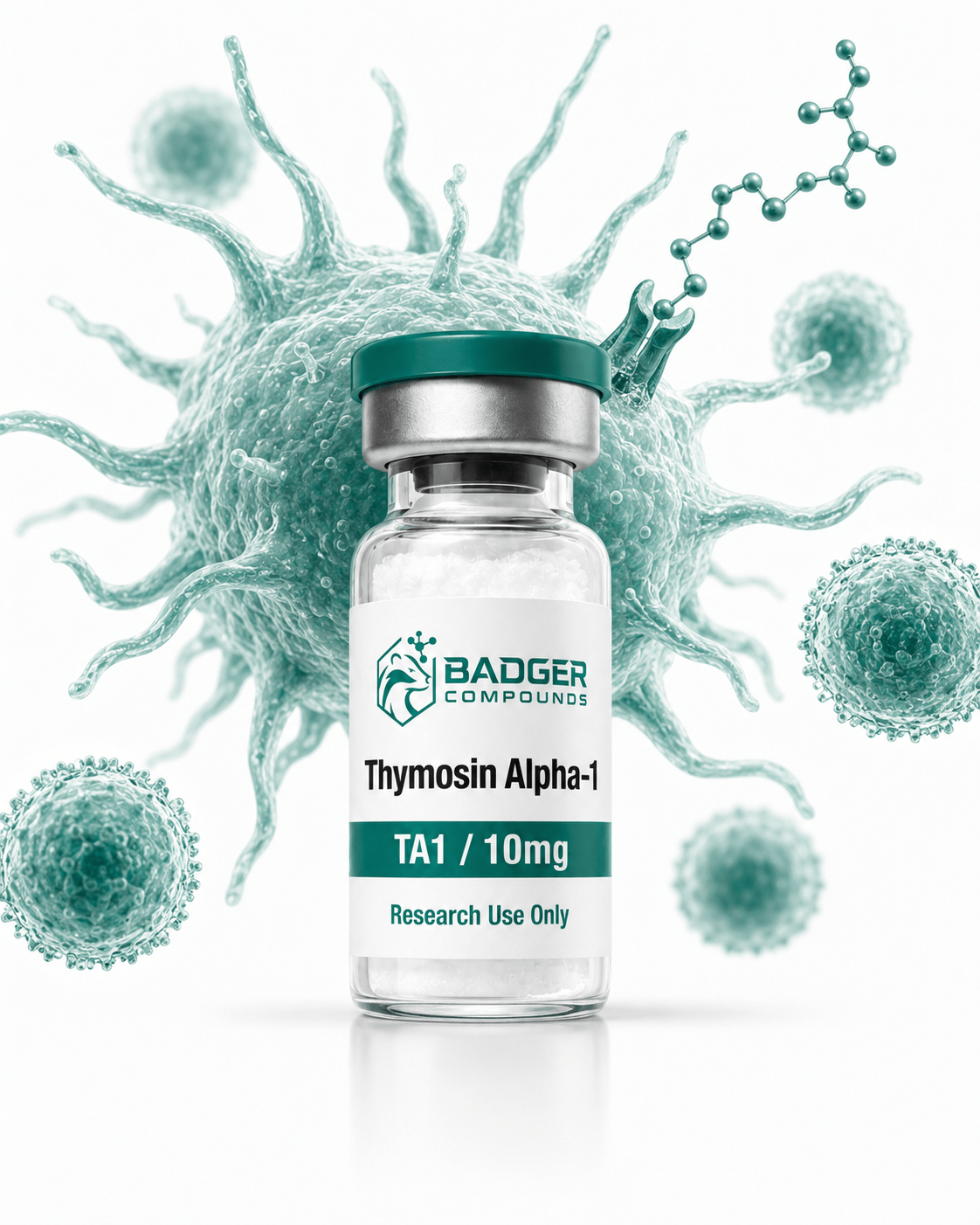
Thymosin Alpha-1 is a thymic peptide studied for its role in immune modulation. We review how preclinical and clinical research describes its interaction with Toll-like receptors, dendritic cells, and multiple T cell populations.
Thymosin Alpha-1 is one of the most studied peptides in immunology, valued in research for its balancing rather than simply stimulating action. We review how it engages innate and adaptive immune pathways across preclinical and clinical investigations.
Thymosin Alpha-1 (Ta1) is a 28-amino-acid peptide originally isolated from thymic tissue, where it occurs naturally with an identical sequence in humans. Its synthetic form is known as thymalfasin. In research, Ta1 is described as a biological response modifier with pleiotropic activity, meaning it acts on several immune cell types at once rather than through a single narrow pathway.
How Thymosin Alpha-1 Engages the Immune System
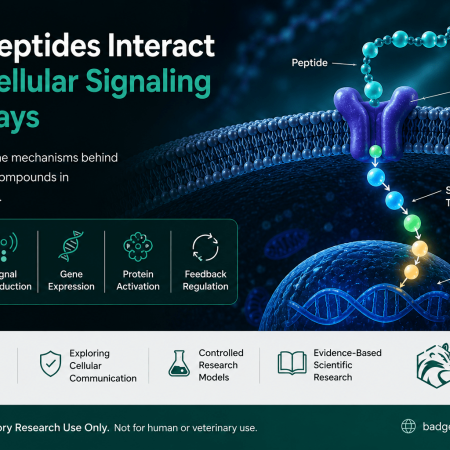
The mechanism most consistently described in the literature centers on Toll-like receptors (TLRs), a family of innate immune sensors. Research reports that Ta1 acts as an agonist of TLR2 and TLR9 on myeloid and plasmacytoid dendritic cells, and is also associated with TLR3, TLR4, and TLR7. Engagement of these receptors is reported to activate downstream signaling through pathways including NF-kB, IRF3, MyD88, and p38 MAPK, leading to the production of immune-related cytokines and the activation of target immune cells.
Immune Cell Populations Studied
Innate Sensing
Dendritic Cells
Research describes Ta1 acting through Toll-like receptors on dendritic cells to initiate signaling and cytokine production.
Adaptive
T Cells
Studies report effects on T cell maturation and a shift toward T-helper 1 responses, alongside changes in CD4 and CD8 populations.
Cytotoxic
NK and NKT Cells
Single-cell research has examined Ta1 in relation to natural killer and NKT cell proportions and receptor repertoire diversity.
Humoral
B Cells
Transcriptional profiling work has assessed how Ta1 modulates gene expression across B cells and other immune subsets.
Pleiotropic and Balancing Activity
A recurring theme in the literature is that Ta1 is studied as an immune modulator rather than a one-directional stimulant. Review work describes its pleiotropic mechanism affecting multiple immune cell subsets involved in immune regulation, with research interest concentrated in contexts of immune suppression, whether associated with aging, infection, or other challenges to immune balance.
Recent Mechanistic Research
More recent studies have applied modern profiling tools to this question. A 2025 investigation treated several cancer cell lines and isolated immune cell subsets from healthy donors with Ta1, then used transcriptional profiling to map differentially expressed genes across CD4 T, CD8 T, B, and natural killer cells. Separately, a single-cell RNA and T cell receptor sequencing study examined how Ta1 was associated with shifts in NKT cell proportions and greater diversity of T cell receptor clones in a clinical sample. Together these illustrate the breadth of immune populations under study.
Across decades of work, Thymosin Alpha-1 has remained a central reference point in peptide immunology research because it touches both innate and adaptive arms of the immune system. We present this overview strictly for its scientific and laboratory interest.
Explore our research-grade peptide catalog and batch-level certificates of analysis.
View the CatalogReferences
- King R, Tuthill C. Immune Modulation with Thymosin Alpha 1 Treatment. Vitam Horm. 2016. PubMed: 27450734
- Tao N, Xu X, Ying Y, et al. Thymosin alpha1 and Its Role in Viral Infectious Diseases: The Mechanism and Clinical Application. Molecules. 2023. PubMed: 37110771
- The Immunomodulatory Activity of Thymosin Alpha 1 on Tumor Cell Lines and Distinct Immune Cell Subsets. 2025. PubMed: 40955371
- Thymosin alpha1 modulated the immune landscape of COVID-19 patients revealed by single-cell RNA and TCR sequencing. 2023. PubMed: 37769533
All products and materials referenced are intended exclusively for in-vitro laboratory and research use only. They are not intended for human or animal consumption, diagnosis, treatment, or the prevention of any disease. Nothing in this article constitutes medical advice or a claim of therapeutic benefit. Statements describe published research findings only.