No products in the cart.
U.S. FILLED & FINISHED | ≥99% COA-VERIFIED PURITY
LC-MS VERIFIED IDENTITY | INDEPENDENTLY TESTED
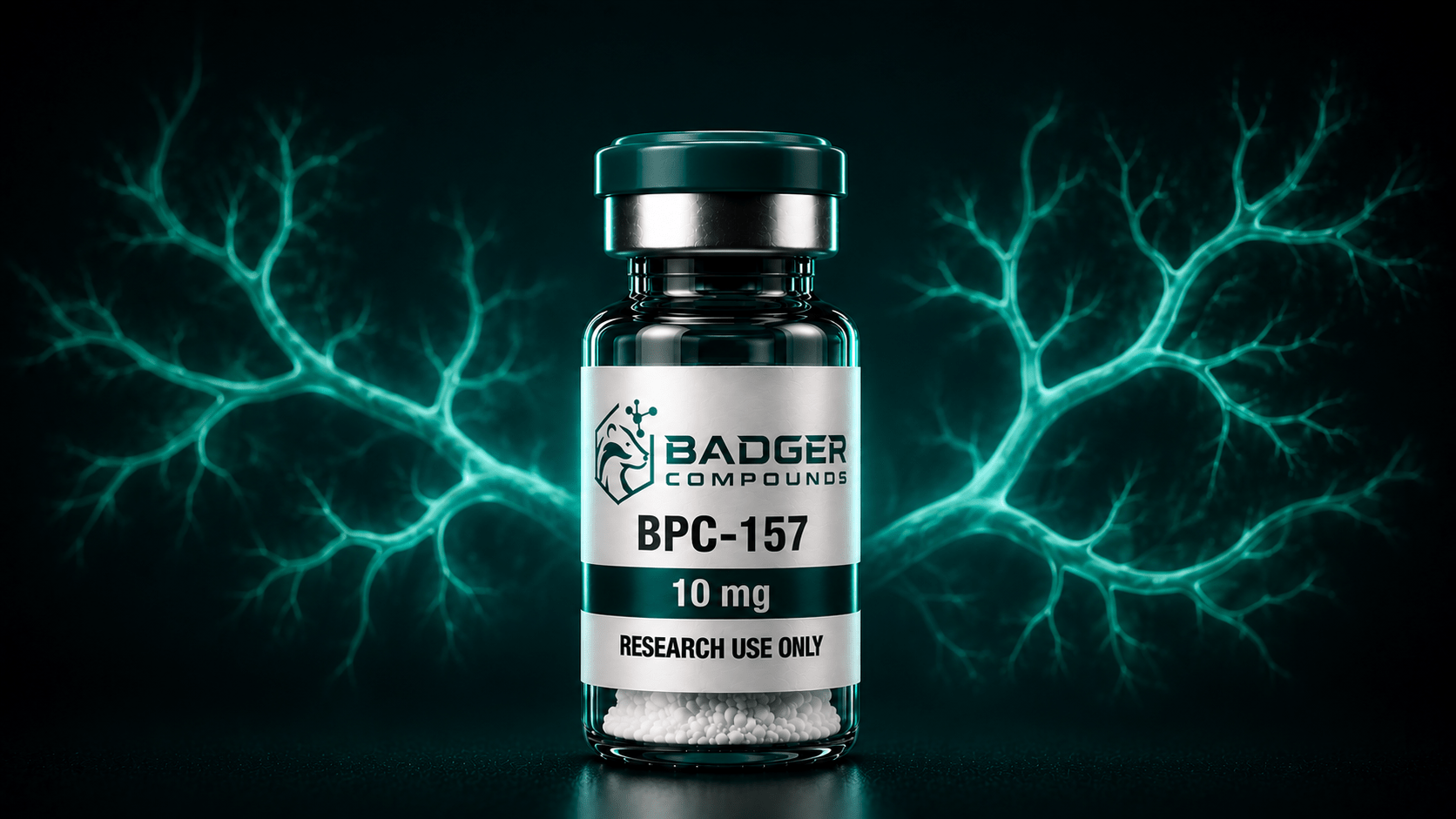
BPC-157 is likely the single most-searched research peptide in this field, and also one of the most misrepresented. This guide lays out what BPC-157 actually is, where it comes from, what mechanisms researchers have proposed, and an honest accounting of how much of that evidence comes from animal models versus humans.
BPC-157 Research: Origin, Mechanisms, and What the Evidence Shows
BPC-157 is one of the most extensively studied research peptides available today, and also one of the most frequently overstated. This overview lays out where the compound actually comes from, what mechanisms have been proposed to explain its effects, and, honestly, how much of that picture is built on animal data versus human evidence.
What Is BPC-157?
BPC-157 stands for Body Protection Compound-157, a 15-amino-acid pentadecapeptide. The name traces to 1993, when a research team led by Sikirić isolated a novel protein of roughly 40,000 daltons from human gastric juice and named it BPC. Within that larger protein, the team identified and fully characterized a 15-amino-acid fragment, designated BPC-157, that carried the parent protein’s activity [1]. For more on how this and other peptide names come about, see our overview of peptide nomenclature.
Research framing: This article is intended for educational and research-context discussion only. BPC-157 is a research compound sold for laboratory investigation only. This content does not provide medical advice, dosing guidance, or treatment recommendations of any kind.
Proposed Mechanisms of Action
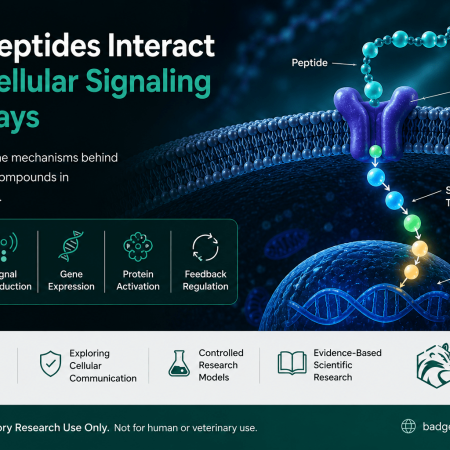
BPC-157’s research profile centers on a small number of interconnected pathways that repeatedly show up across the preclinical literature.
Angiogenesis and VEGF
Research has linked BPC-157 to upregulation of vascular endothelial growth factor (VEGF) and its receptor, supporting new blood vessel formation in injured tissue [4].
Nitric Oxide Signaling
Studies report BPC-157 activates endothelial nitric oxide synthase (eNOS), contributing to vascular tone regulation and tissue protection.
EGR-1 Gene Expression
BPC-157’s effects on wound healing have been linked to modulation of the early growth response-1 (egr-1) gene, an immediate-response gene tied to angiogenic signaling.
FAK-Paxillin Signaling
In tendon research models, BPC-157 has been connected to focal adhesion kinase and paxillin signaling, a pathway fibroblasts use to migrate into a healing wound [3].
Where BPC-157 Has Been Studied
The largest, most consistent body of BPC-157 research covers gastrointestinal cytoprotection, the original context in which it was isolated, and tendon, ligament, and muscle repair [2,3]. Additional preclinical work extends into blood vessel and vascular research, and a smaller body of literature has examined central nervous system and gut-brain axis models.
A 2025 systematic review of BPC-157 in orthopedic sports medicine screened 544 articles and included 36 studies that met its criteria. Of those 36, 35 were preclinical animal studies. Only one was a human clinical study [4]. That ratio is the honest starting point for evaluating this compound’s evidence base.
What Human Evidence Actually Exists
A separate 2025 narrative review searching multiple databases through March of that year identified only three small human pilot studies involving BPC-157: one on intra-articular knee pain, one on interstitial cystitis, and one examining intravenous safety and pharmacokinetics. The review’s authors concluded that despite broad and reproducible preclinical support, human evidence remains inadequate to support clinical recommendations, and called for properly designed randomized controlled trials before BPC-157 could be considered an evidence-based intervention [5].
This gap between preclinical breadth and human evidence is not unusual for an investigational compound, but it is worth stating plainly rather than glossing over. BPC-157 is not FDA-approved for any use, and it was placed on the World Anti-Doping Agency’s prohibited list in 2022.
A Note on the Literature’s Concentration
A meaningful share of the foundational BPC-157 literature, including much of the original characterization and mechanism work, originates from a single research group. That concentration of authorship is a reasonable factor to weigh when reading the wider body of BPC-157 research, alongside the preclinical-to-human evidence gap described above.
Research Concepts Related to BPC-157
Gastric cytoprotection VEGF and angiogenesis eNOS and nitric oxide signaling EGR-1 gene expression Tendon and ligament repair models Preclinical to human translationRelated Reading
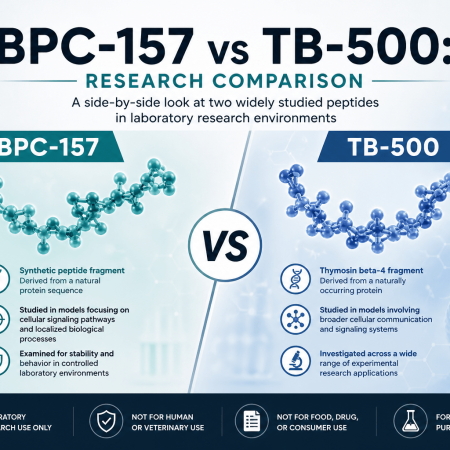
For how BPC-157 compares directly to TB-500, and why the two are so often studied together, see our guides on BPC-157 vs TB-500 and BPC-157 and TB-500 research.
BPC-157 – Research Grade, ≥99% (HPLC)
Badger Compounds supplies BPC-157 as a lyophilized research peptide, six-round independently tested per batch with publicly viewable COAs. For qualified laboratory research use only.
View BPC-157- Sikirić P, Petek M, Rucman R, et al. A new gastric juice peptide, BPC. An overview of the stomach-stress-organoprotection hypothesis and beneficial effects of BPC. J Physiol Paris. 1993;87(5):313-327. PMID 8298609
- Sikiric P, Seiwerth S, Rucman R, et al. Stable gastric pentadecapeptide BPC 157: novel therapy in gastrointestinal tract. Curr Pharm Des. 2011;17(16):1612-1632. PMID 21548867
- Chang CH, Tsai WC, Hsu YH, Pang JH. The promoting effect of pentadecapeptide BPC 157 on tendon healing involves tendon outgrowth, cell survival, and cell migration. J Appl Physiol. 2011;110(3):774-780. PMID 21148342
- Vasireddi N, Hahamyan H, Salata MJ, Karns M, Calcei JG, Voos JE, Apostolakos JM. Emerging use of BPC-157 in orthopaedic sports medicine: a systematic review. HSS J. 2025;21(4):15563316251355551. PMID 40756949
- McGuire FP, Martinez R, Lenz A, Skinner L, Cushman DM. Regeneration or risk? A narrative review of BPC-157 for musculoskeletal healing. Curr Rev Musculoskelet Med. 2025;18(12):611-619. PMID 40789979
Disclaimer: This article is for informational and educational purposes only. Products and compounds discussed are intended for research use only and are not for human consumption, veterinary use, clinical use, diagnostic use, food use, supplement use, pharmaceutical use, cosmetic use, or any consumer application. Statements have not been evaluated by the FDA. This content does not provide medical advice, treatment guidance, dosing information, or recommendations for personal use.