No products in the cart.
U.S. FILLED & FINISHED | ≥99% COA-VERIFIED PURITY
LC-MS VERIFIED IDENTITY | INDEPENDENTLY TESTED
Peptide nomenclature can look like a wall of random letters and numbers, BPC-157, TB-500, CJC-1295, GHK-Cu, until you know what the codes are actually built from. Most research peptide names follow one of a small number of patterns: an acronym describing origin or function, a reference to the parent molecule, a developer’s internal code, or the amino acid sequence itself. This guide breaks down where these names come from and how to read them.
Peptide Nomenclature: How Do Research Peptides Get Their Names?
Scroll through any research peptide catalog and the names read like a code: BPC-157, TB-500, CJC-1295, GHK-Cu. None of it is random. Each name comes from one of a handful of naming patterns rooted in where the peptide came from, what it is made of, or who first described it. Once you know the patterns, the alphabet soup starts to make sense.
Why Peptide Names Look So Different From Drug Names
Familiar drug names like ibuprofen or metformin follow a standardized naming system built for small molecules. Research peptides largely do not. Because many peptides begin their lives as laboratory research tools rather than approved drugs, they are frequently named informally, by the researchers or companies who first identified or synthesized them, long before any standardized naming process applies [4]. That is why peptide names vary so much in style, some are acronyms, some are company codes, and some are literally the amino acid sequence itself.
Research framing: This article is educational and explains naming conventions only. Compounds referenced are supplied by Badger Compounds for laboratory research use only and are not intended for human or veterinary use. Nothing here is medical advice.
Four Common Peptide Naming Patterns
Most research peptide names fall into one of four categories.
Descriptive Acronyms
An abbreviation describing the peptide’s origin or observed function, often followed by an internal number, as in BPC-157.
Parent Molecule References
A name built around a larger, naturally occurring protein the peptide is derived from, as in TB-500 and thymosin beta-4.
Developer Codes
An internal research code assigned by the lab or company that first synthesized the compound, as in CJC-1295.
Sequence-Based Names
A name built directly from the three-letter codes of the amino acids in the peptide’s sequence, as in GHK-Cu.
BPC-157: A Descriptive Acronym
BPC-157 stands for Body Protection Compound-157. The name traces back to 1993, when a research team led by Sikiric isolated a novel protein of roughly 40,000 daltons from human gastric juice and named it BPC. Within that larger protein, the team identified and fully characterized a 15-amino-acid fragment, designated BPC-157, that appeared to carry the protein’s protective activity [1].
The precise meaning of the number 157 is not stated in the original research; it functions as an internal designation for this specific fragment rather than a reference to molecular weight or sequence position. It is worth noting that the large majority of published BPC-157 research originates from this same original research group, a concentration of authorship that is a reasonable factor to weigh when reading the wider literature on the compound.
TB-500: Named for Its Parent Protein
TB-500 takes its name from thymosin beta-4 (Tβ4), the naturally occurring 43-amino-acid protein it is derived from. TB-500 corresponds to a shorter, active fragment of that parent molecule, specifically the region responsible for its actin-binding activity. This naming pattern, borrowing the parent protein’s name and appending a code, is common whenever a research peptide represents a fragment or engineered piece of a larger, previously known molecule.
CJC-1295: A Developer’s Internal Code
CJC-1295 was developed by ConjuChem Biotechnologies, and the “CJC” prefix reflects the company that first synthesized and characterized it as a long-acting analog of growth hormone-releasing hormone [2]. Numbers like “1295” in this pattern usually trace back to an internal compound-numbering system used during development rather than any property of the molecule. This is one of the most common naming patterns in peptide research: a company or lab prefix followed by a project or catalog number.
GHK-Cu: Named Directly for Its Sequence
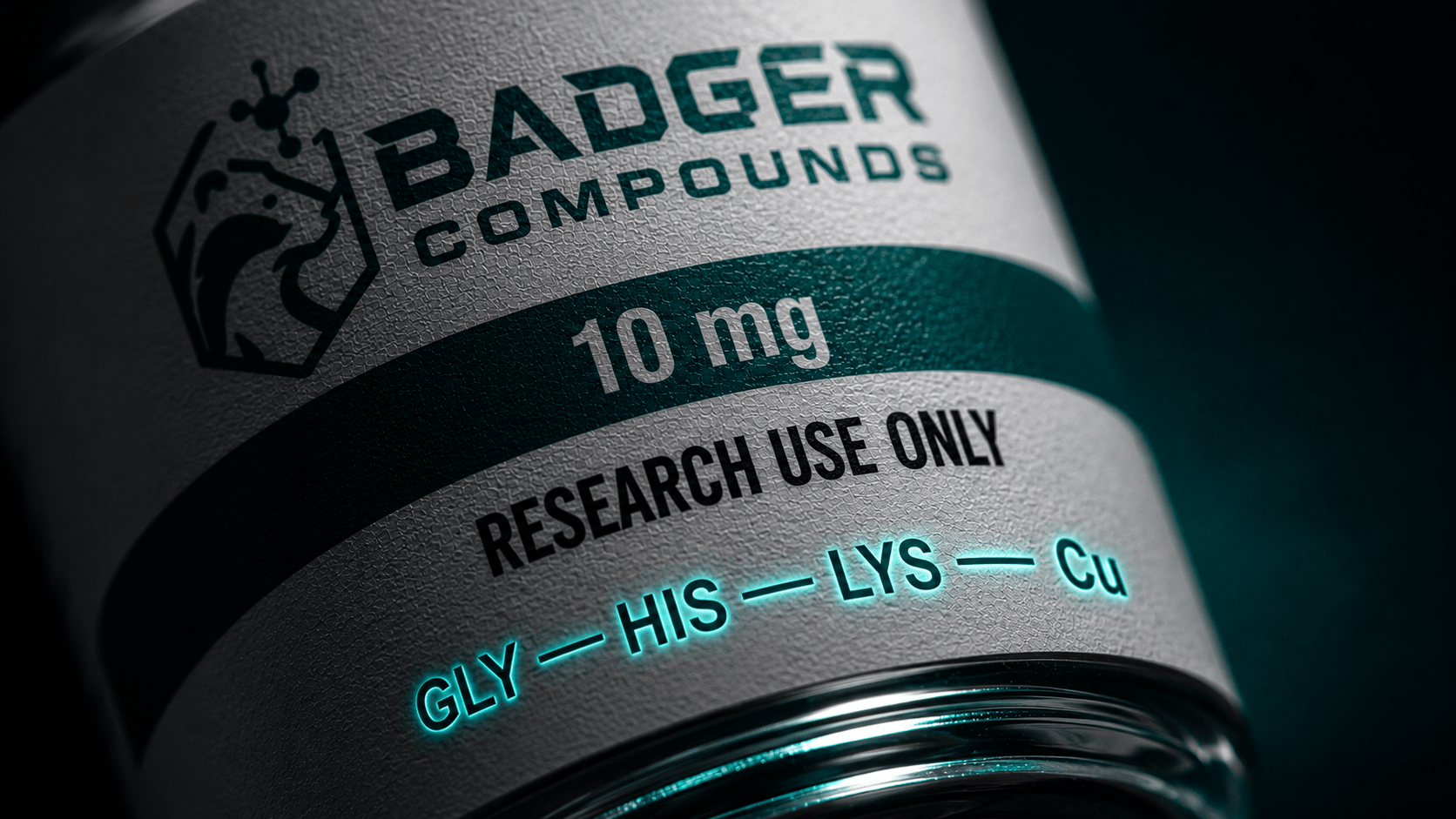
GHK-Cu is the most literal naming pattern of all. GHK stands for glycine, histidine, and lysine, the three amino acids that make up this tripeptide, written using their standard one-letter or three-letter codes. The “Cu” indicates that the peptide is bound to a copper ion. The tripeptide was first isolated from human serum in 1973 by Pickart and Thaler [3]. Because it is only three amino acids long, naming it directly after its sequence was the simplest and most precise option available.
Four patterns explain most of the alphabet soup: what the peptide does (BPC-157), what it comes from (TB-500), who made it (CJC-1295), and what it is made of (GHK-Cu). Reading a peptide name usually means figuring out which of these four stories it is telling.
How This Differs From Generic Drug Names
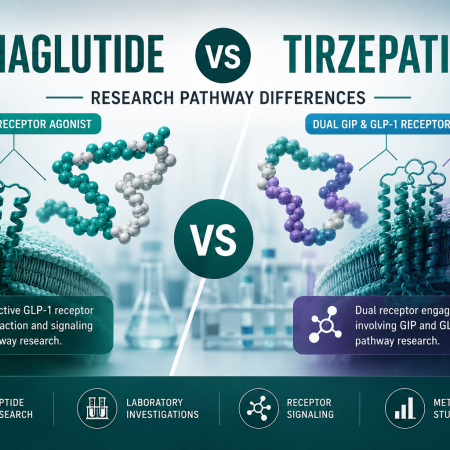
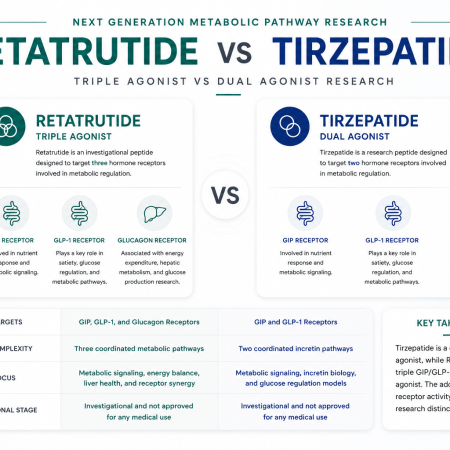
Once a peptide moves further along toward approval as a therapeutic, it is often assigned a standardized generic, or nonproprietary, name through international naming conventions rather than keeping its original research code. Semaglutide and tirzepatide are examples of this more formal system, where a compound’s generic name reflects its drug class rather than its lab history. Research peptides that have not gone through that process typically keep their original developer codes or acronyms, which is part of why the two naming worlds, informal research names and formal generic names, can look so different from each other [4,5].
Understanding this distinction also helps make sense of names on our own catalog. GLP-1S, GLP-2T, and GLP-3R are Badger Compounds’ own house designations for semaglutide, tirzepatide, and retatrutide, following the same developer-code logic described above, mapped onto compounds that already have formal generic names. For the underlying compounds, see our overview of the evolution of GLP-1 research compounds.
Naming Patterns at a Glance
| Name | Pattern | What it reflects |
|---|---|---|
| BPC-157 | Descriptive acronym | “Body Protection Compound,” a 15-amino-acid fragment of a larger gastric-juice protein |
| TB-500 | Parent molecule reference | Fragment of thymosin beta-4 (Tβ4) |
| CJC-1295 | Developer code | Developed by ConjuChem Biotechnologies |
| GHK-Cu | Sequence-based name | Glycine-histidine-lysine tripeptide with copper |
Research Concepts Related to Peptide Nomenclature
Understanding how peptides are named connects to several related topics:
Amino acid three-letter codes Parent protein fragments Developer research codes Generic and nonproprietary naming Peptide sequence identification Compound traceabilityExplore Research-Grade Peptides – ≥99% (HPLC)
Every compound in our catalog is synthesized domestically, six-round independently tested per batch, and supported by publicly viewable COAs. For qualified laboratory research use only.
Browse the Catalog- Sikirić P, Petek M, Rucman R, et al. A new gastric juice peptide, BPC. An overview of the stomach-stress-organoprotection hypothesis and beneficial effects of BPC. J Physiol Paris. 1993;87(5):313-327. PMID 8298609
- Jette L, Leger R, Thibaudeau K, et al. Human growth hormone-releasing factor (hGRF)1-29-albumin bioconjugates activate the GRF receptor on the anterior pituitary in rats: identification of CJC-1295 as a long-lasting GRF analog. Endocrinology. 2005;146(7):3052-3058. PMID 15817669
- Pickart L, Thaler MM. Tripeptide in human serum which prolongs survival of normal liver cells and stimulates growth in neoplastic liver. Nat New Biol. 1973;243(124):85-87. PMID 4349963
- Muttenthaler M, King GF, Adams DJ, Alewood PF. Trends in peptide drug discovery. Nat Rev Drug Discov. 2021;20(4):309-325. PMID 33536635
- Elsayed YY, Kühl T, Imhof D. Regulatory guidelines for the analysis of therapeutic peptides and proteins. J Pept Sci. 2025;31(3):e70001. PMID 39921384
Disclaimer: This article is for informational and educational purposes only. Products and compounds discussed are intended for research use only and are not for human consumption, veterinary use, clinical use, diagnostic use, food use, supplement use, pharmaceutical use, cosmetic use, or any consumer application. Statements have not been evaluated by the FDA. This content does not provide medical advice, treatment guidance, dosing information, or recommendations for personal use.