99% COA-Verified Purity | 6Γ— Independent Testing | Batch-Level COAs | USA Based

No products in the cart.

How Peptides Interact with Cellular Signaling Pathways in Research Settings

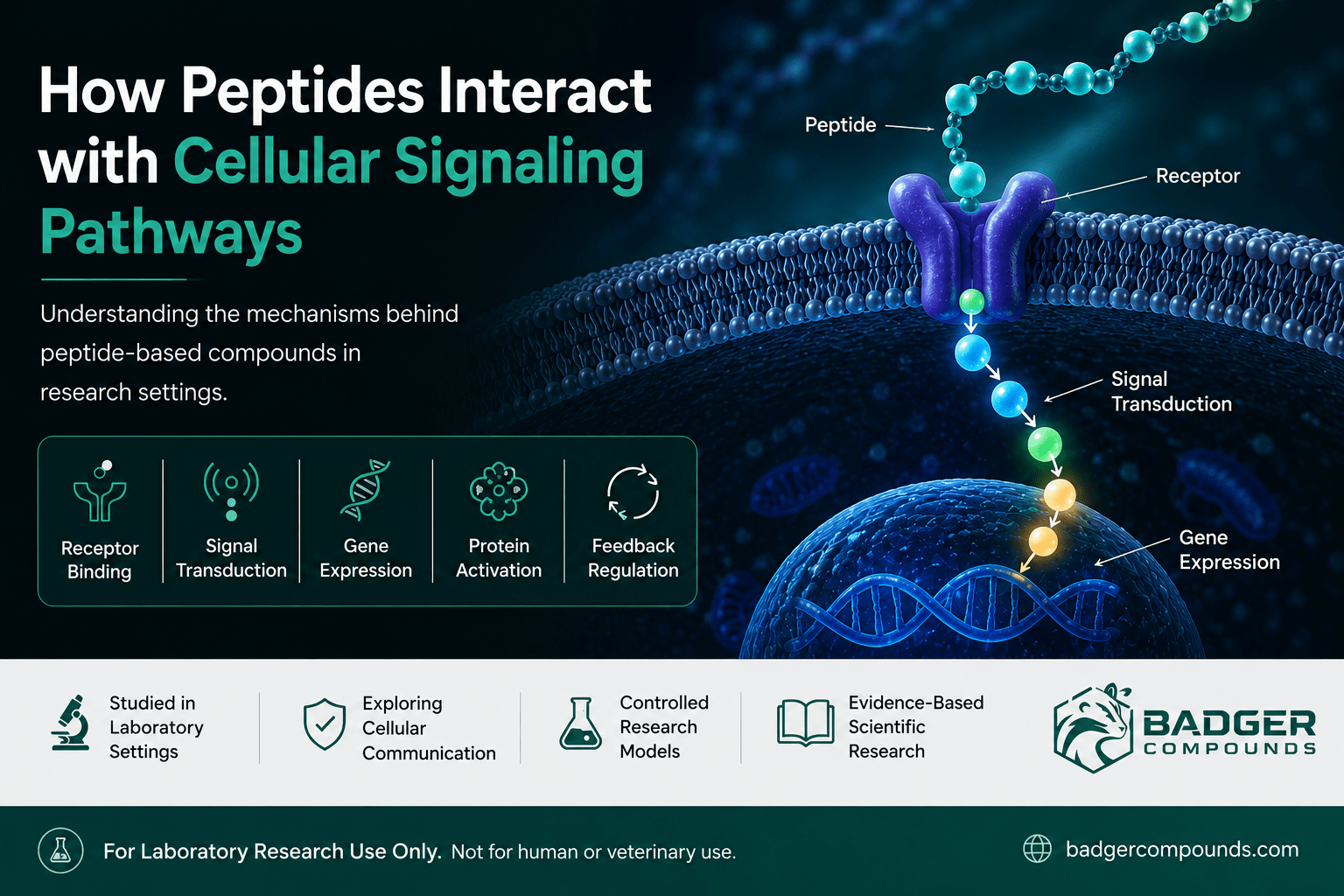
Peptide interaction with cellular signaling pathways in laboratory research settings

How Peptides Interact with Cellular Signaling Pathways in Research Settings

Peptide-based compounds are widely studied in laboratory environments for their interaction with cellular signaling pathways, which regulate communication between cells and coordinate biological processes [1].

Understanding how peptides influence signaling pathways is a key focus of modern research, particularly in studies examining cellular communication, protein expression, and biological response mechanisms [2].

Key Signaling Concepts

Receptor Binding Signal Transduction Gene Expression Protein Activation Cell Communication Feedback Loops

What Are Cellular Signaling Pathways?

Cellular signaling pathways are systems of communication that allow cells to detect and respond to internal and external signals. These pathways involve receptor binding followed by intracellular signaling cascades that regulate biological activity [1].

These pathways are commonly studied to better understand structural coordination, immune signaling, and cellular communication systems in controlled laboratory environments [2].

How Peptides Interact with Signaling Systems

πŸ”—

Receptor Interaction

Peptides are commonly studied for their ability to bind to specific cellular receptors, initiating signaling cascades and influencing downstream molecular activity [1].

⚑

Signal Transduction

Once receptors are activated, intracellular pathways transmit signals through biochemical reactions that coordinate cellular responses [3].

🧬

Gene Expression

Certain signaling pathways influence gene expression, affecting how proteins are produced and how cells respond to environmental conditions [3].

πŸ”„

Feedback Regulation

Many signaling systems include feedback loops that regulate pathway activity and maintain balance within cellular environments [2].

Scientific Literature and Research Sources

The interaction between peptides and cellular signaling pathways has been extensively documented in scientific literature. Studies demonstrate that peptide ligands bind to cellular receptors and initiate intracellular signaling cascades that influence biological responses [1][3].

Additional information is available through PubMed and NCBI Bookshelf.

Disclaimer

All products referenced are intended strictly for laboratory research use only. These compounds are not intended for human or veterinary use and have not been evaluated by the Food and Drug Administration (FDA).

Related Articles