No products in the cart.
U.S. FILLED & FINISHED | ≥99% COA-VERIFIED PURITY
LC-MS VERIFIED IDENTITY | INDEPENDENTLY TESTED
Semaglutide vs Tirzepatide: Research Pathway Differences
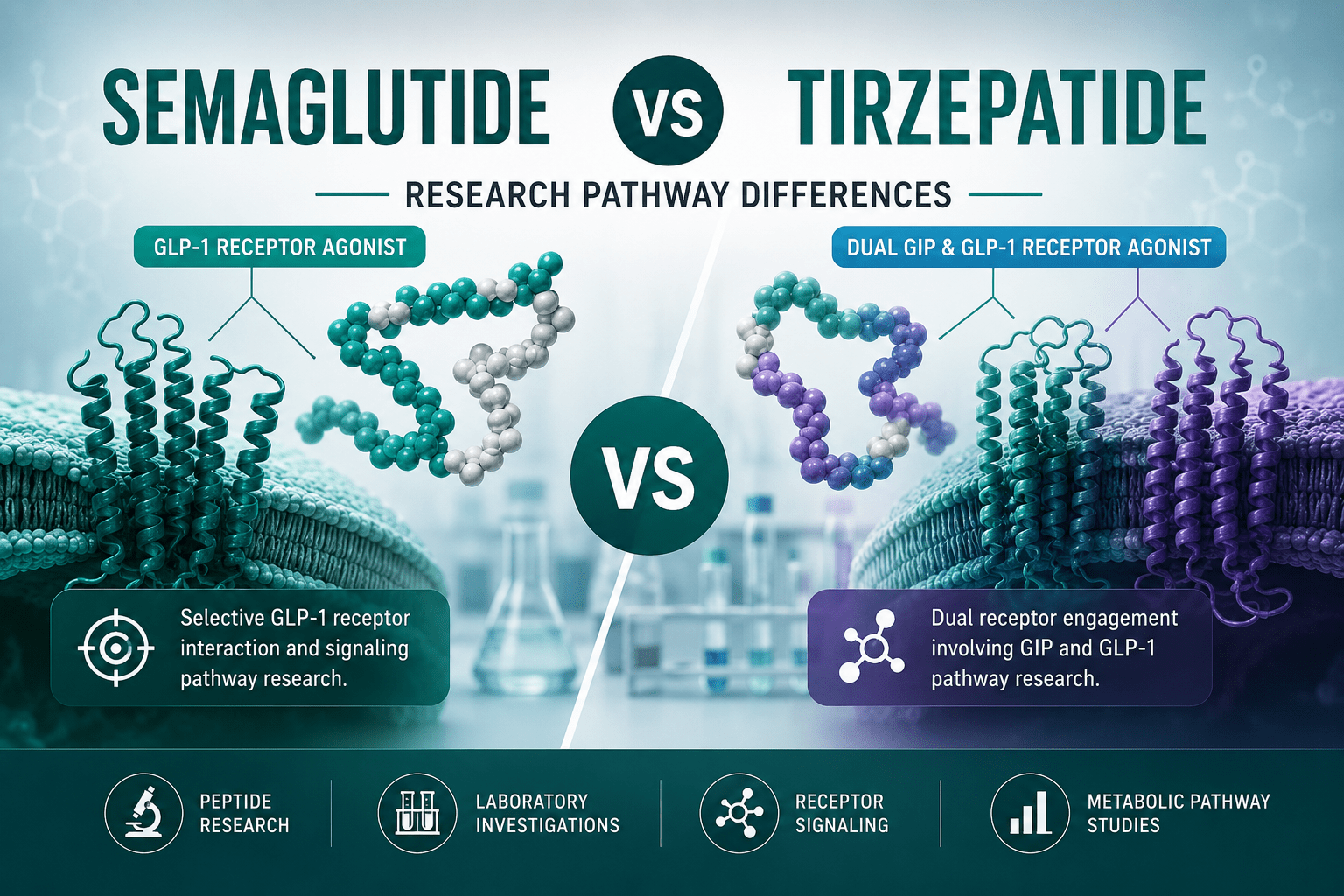
Semaglutide and tirzepatide are peptide-based research compounds that continue to attract significant scientific interest in laboratory investigations involving incretin signaling pathways, receptor interactions, and metabolic regulation mechanisms. Although both compounds are associated with glucagon-like peptide-1 (GLP-1) pathway research, their molecular targets and receptor interaction profiles differ in ways that have become an important focus of comparative laboratory studies.
Current investigations continue to evaluate how these compounds interact with receptor signaling systems, downstream cellular pathways, and multi-pathway biological processes under controlled research conditions. Researchers are particularly interested in understanding how selective versus dual receptor activity may influence signaling behavior across different experimental models.
Key Research Distinctions
GLP-1 Receptor Activity
Dual Agonist Signaling
Metabolic Pathway Research
Receptor Interaction Studies
Cellular Signaling Analysis
Multi-Pathway Investigation
Understanding GLP-1 Receptor Research
Incretin Signaling Interest
GLP-1 receptor pathways remain an important focus within metabolic and cellular signaling research. Investigators continue to examine how incretin-related peptides interact with receptor systems involved in coordinated biological signaling processes and downstream intracellular activity.
Research models frequently evaluate receptor binding characteristics, signaling cascade activation, and peptide stability under controlled laboratory conditions.
Comparative Pathway Investigations
Comparative studies involving semaglutide and tirzepatide often focus on receptor selectivity, signaling breadth, and differences in multi-receptor interaction behavior. Researchers continue to investigate how variations in molecular structure may influence signaling dynamics and pathway activation profiles.
These investigations remain an active area of peptide and receptor biology research.
Semaglutide Research Overview
Semaglutide is commonly investigated for its selective interaction with GLP-1 receptor pathways in laboratory research environments. Researchers continue to evaluate how receptor-specific signaling may influence downstream cellular communication systems and coordinated pathway responses.
Current investigations involving semaglutide frequently explore receptor affinity, signaling duration, molecular stability, and peptide-receptor binding characteristics. Additional studies assess how GLP-1 receptor activation may influence broader signaling networks under controlled experimental conditions.
Due to its receptor selectivity profile, semaglutide remains a widely referenced compound in incretin pathway and peptide signaling research literature.
Tirzepatide Research Overview
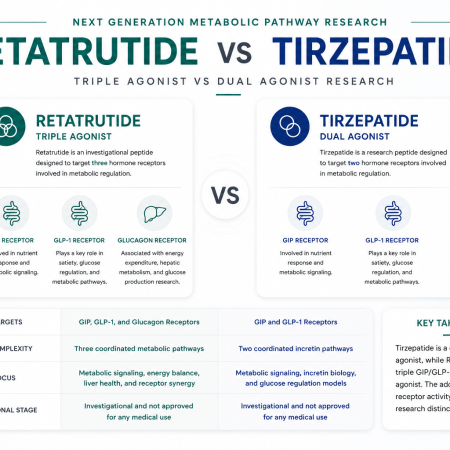
Tirzepatide differs from semaglutide in that it is commonly studied for dual receptor interaction activity involving both glucose-dependent insulinotropic polypeptide (GIP) and GLP-1 receptor pathways. This dual agonist profile has become a significant area of investigation within peptide signaling and metabolic pathway research.
Researchers continue to evaluate how multi-receptor pathway engagement may influence signaling complexity, receptor coordination, and downstream biological responses in laboratory models. Comparative investigations often focus on differences in signaling breadth and pathway interaction behavior relative to selective GLP-1 receptor agonists.
Ongoing laboratory studies continue to examine tirzepatide’s receptor binding dynamics, pathway activation patterns, and molecular interaction characteristics across various experimental systems.
Key Research Pathway Differences
| Research Category | Semaglutide | Tirzepatide |
|---|---|---|
| Primary Research Focus | Selective GLP-1 receptor signaling | Dual GIP and GLP-1 receptor signaling |
| Receptor Interaction Profile | Single-pathway receptor activity | Multi-receptor pathway investigation |
| Comparative Research Interest | Receptor selectivity studies | Signaling breadth investigations |
| Pathway Analysis | GLP-1 focused signaling models | Combined incretin pathway models |
| Laboratory Investigation Areas | Binding affinity and receptor activity | Coordinated pathway signaling behavior |
Ongoing Areas of Investigation
Cellular Signaling Research
Ongoing investigations continue to assess how incretin-related peptides interact with signaling systems involved in coordinated cellular communication and downstream pathway activity.
Researchers also continue to evaluate how receptor activation patterns may differ across various laboratory models and experimental conditions.
Peptide Stability and Binding Studies
Additional research focuses on peptide stability, receptor affinity, molecular conformation, and signaling duration. Comparative studies frequently assess how structural differences may influence receptor interaction behavior and pathway activation characteristics.
These investigations remain active areas of peptide biology research.
Related Research Compounds
Researchers interested in metabolic and incretin pathway investigations may also explore additional compounds within related laboratory research categories:
- Explore GLP-1S Research Compound
- Explore GLP-2T Research Compound
- Explore GLP-3R Research Compound
- Explore Cagrilintide Research Compound
Additional metabolic research compounds may also be viewed within our GLP-1 & Metabolic Research Collection.
References
[1] GLP-1 and GIP receptor signaling pathways in beta cells. View via PubMed
[2] Tirzepatide is an imbalanced and biased dual GIP and GLP-1 receptor agonist. View via PubMed
[3] GIP and GLP-1 as the two incretin hormones. View via PubMed
[4] Mechanisms of action and therapeutic applications of GLP-1 and GIP/GLP-1 receptor agonists. View via PubMed
Research Use Only: The compounds referenced in this article are intended strictly for laboratory research and analytical purposes only. They are not approved by the FDA for human or veterinary use.
The statements presented within this content are for educational and scientific discussion purposes only and have not been evaluated by the Food and Drug Administration. These materials are not intended to diagnose, treat, cure, or prevent any disease or medical condition.
Badger Compounds supplies research materials exclusively to qualified researchers, institutions, and laboratory professionals operating in accordance with applicable laws and regulations.