No products in the cart.
U.S. FILLED & FINISHED | ≥99% COA-VERIFIED PURITY
LC-MS VERIFIED IDENTITY | INDEPENDENTLY TESTED
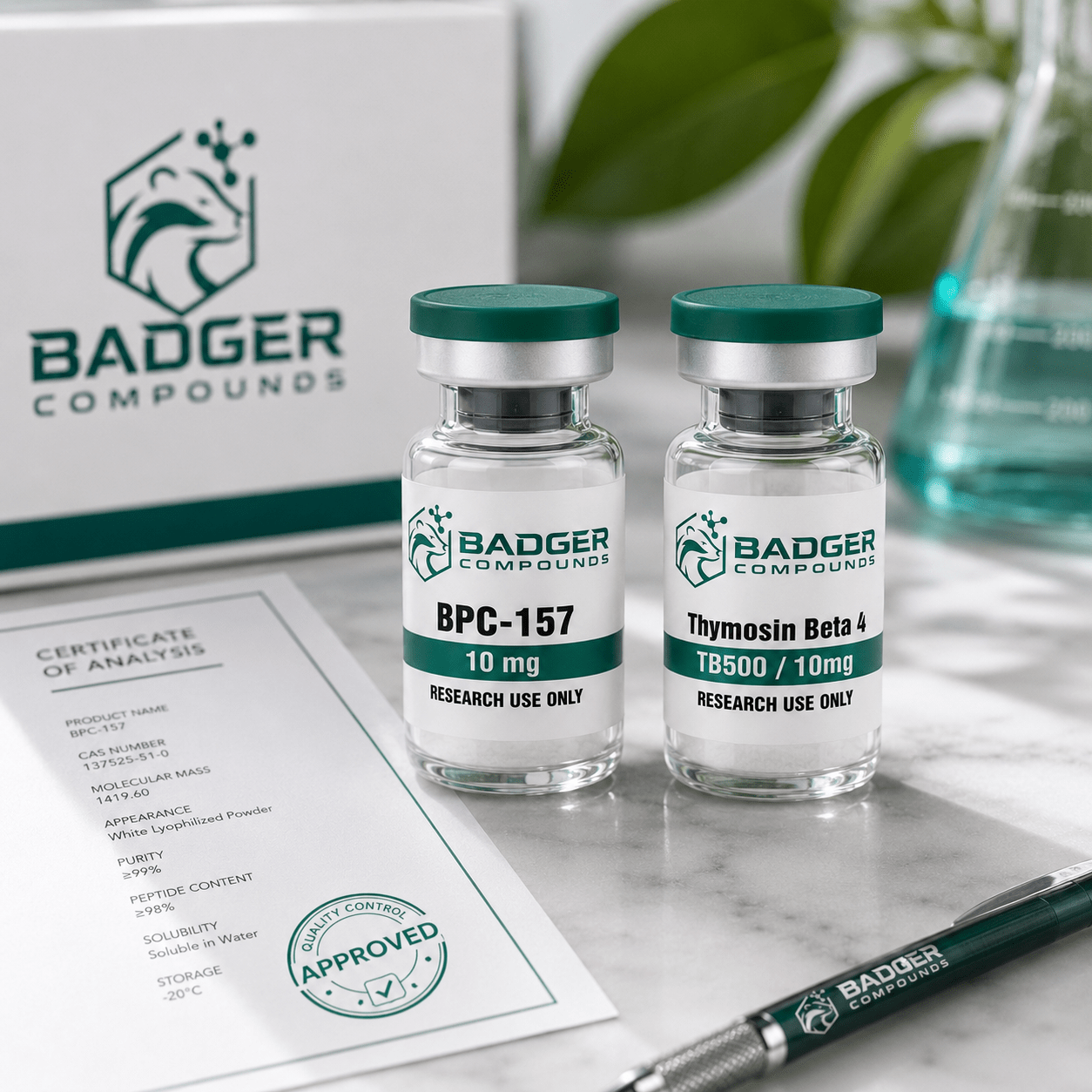
Lyophilized peptides laboratory handling is one of the most important aspects of reproducible peptide research. This guide covers correct storage, reconstitution, and degradation prevention for lyophilized peptides in laboratory settings.
Lyophilized peptides are the standard format for research-grade peptide compounds in laboratory settings. Also known as freeze-dried peptides, lyophilized peptides have had nearly all moisture removed through a specialized drying process that preserves molecular integrity and extends long-term stability far beyond what is achievable with liquid formulations.
Understanding what lyophilization is, why it matters for peptide research, and how to correctly handle and reconstitute lyophilized peptides in laboratory settings is essential knowledge for any researcher sourcing or working with synthetic peptide compounds. This article covers the full picture from the science of the process to practical laboratory considerations.
Research focus: This article is intended for educational and research-context discussion only. All peptide compounds discussed are sold for laboratory investigation only. This content does not provide medical advice, dosing guidance, or treatment recommendations of any kind.
What Is Lyophilization?
Lyophilization, commonly referred to as freeze-drying, is a dehydration process that removes water from a substance while preserving its physical structure and chemical composition. Unlike conventional drying methods that use heat, lyophilization works by first freezing the material and then reducing the surrounding pressure to allow the frozen water to sublimate directly from solid to vapor without passing through a liquid phase.
This process – known as sublimation – is critical for peptide preservation because it avoids the thermal and hydrolytic degradation that would occur if peptides were dried using heat or evaporation. The result is a dry, porous, powder-like cake or fine powder that retains the peptide’s molecular integrity and can be stored for extended periods under appropriate conditions.
The Lyophilization Process at a Glance
Lyophilization removes water from peptide solutions through three stages: freezing the material, primary drying via sublimation under reduced pressure, and secondary drying to remove residual bound water. The end result is a stable, dry peptide powder ready for long-term storage and laboratory reconstitution.
The Three Stages of Lyophilization
Industrial and laboratory-scale lyophilization occurs across three distinct stages, each of which plays a specific role in producing a stable final product. Understanding these stages helps researchers appreciate why lyophilized peptides behave differently from liquid formulations and why proper storage is essential to maintaining quality.
01
Freezing
The peptide solution is cooled to below its eutectic point, converting all liquid water to ice. Controlled freezing rate affects the final powder structure and reconstitution characteristics.
02
Primary Drying
Chamber pressure is reduced and gentle heat applied, causing the frozen water to sublimate directly from ice to vapor. This stage removes approximately 95% of the water content.
03
Secondary Drying
Temperature is raised further to remove residual bound water that did not sublimate in primary drying. Final moisture content is typically reduced to below 1-3% for peptide products.
Why Lyophilization Is the Standard for Research Peptides
Lyophilized peptides have become the default format for research-grade compounds for a combination of scientific and practical reasons. The removal of water addresses the primary driver of peptide degradation in storage – hydrolysis – while also eliminating the microbial growth risk associated with aqueous solutions.
Advantage 1
Extended Stability
Lyophilized peptides stored under appropriate conditions can maintain stability for 2 to 5 years or longer, depending on the specific peptide sequence and storage conditions. Liquid formulations typically degrade significantly within weeks to months under comparable conditions.
Advantage 2
Hydrolysis Prevention
Water is the primary reactant in peptide bond hydrolysis. By removing water content to below 1-3%, lyophilization effectively halts the hydrolytic degradation that would otherwise break down peptide bonds over time in solution.
Advantage 3
Oxidation Reduction
Aqueous environments accelerate the oxidation of susceptible amino acid residues such as methionine and cysteine. The dry lyophilized state significantly reduces oxidative degradation rates, particularly when stored under inert atmosphere or in amber vials.
Advantage 4
Shipping Stability
Lyophilized peptides are far more stable during shipping than liquid formulations. They can withstand brief temperature excursions during transit without the rapid degradation risk associated with peptide solutions, making them the practical choice for research compound distribution.
Advantage 5
Precise Reconstitution
Because the exact mass of lyophilized peptide is known from the Certificate of Analysis, researchers can prepare solutions of precise concentration by adding a calculated volume of reconstitution solvent – enabling accurate and reproducible experimental dosing in research models.
Advantage 6
Microbial Safety
Aqueous solutions support microbial growth even under refrigerated conditions. The dry lyophilized state eliminates the water activity required for microbial proliferation, maintaining sterility of the powder until reconstitution in the laboratory.
Lyophilized vs Liquid Peptide Formulations
While lyophilized peptides are the standard for research-grade compounds, it is useful to understand how they compare to liquid formulations across the key dimensions that matter to laboratory researchers.
| Dimension | Lyophilized Peptide | Liquid Formulation |
|---|---|---|
| Shelf Life | 2 to 5 years or more under proper storage | Weeks to months depending on conditions |
| Storage Temperature | -20 degrees Celsius recommended | 2 to 8 degrees Celsius or -20 degrees Celsius |
| Hydrolysis Risk | Very low – water removed | Ongoing – water present |
| Oxidation Risk | Low in dry state | Higher in aqueous environment |
| Shipping Stability | High – tolerates brief temperature excursions | Lower – temperature sensitive in transit |
| Ready to Use | Requires reconstitution before use | Ready to use immediately |
| Concentration Control | Precise – researcher controls concentration | Fixed – set by manufacturer |
| Microbial Risk | Very low in dry state | Higher without preservatives |
Correct Storage of Lyophilized Peptides in Laboratory Settings
Even in the lyophilized state, peptides are not indestructible. Incorrect storage conditions can accelerate degradation and compromise compound integrity before reconstitution. Following correct storage protocols is essential to maintaining the analytical quality documented in the Certificate of Analysis throughout the period of laboratory use.
Recommended Storage Conditions
- Store at -20 degrees Celsius as the standard recommendation
- Keep in original sealed vial until ready for use
- Protect from light – use amber vials or dark storage
- Protect from moisture – use desiccant in storage area
- Allow vial to reach room temperature before opening to prevent condensation
- Record lot number and receipt date for traceability
Common Storage Mistakes to Avoid
- Opening a cold vial directly from the freezer – causes condensation and moisture uptake
- Storing at room temperature for extended periods
- Exposing to direct light or UV radiation
- Storing near strong oxidizing agents or chemicals
- Repeated freeze-thaw cycles of reconstituted solution
- Using damaged or compromised vial seals
How to Reconstitute Lyophilized Peptides in the Laboratory
Reconstitution is the process of dissolving the lyophilized peptide powder into an appropriate solvent to create a working solution for laboratory use. Correct reconstitution technique preserves peptide integrity and ensures that the prepared solution accurately reflects the concentration calculations performed from the Certificate of Analysis data.
Step 1
Allow to Warm
Remove the vial from cold storage and allow it to equilibrate to room temperature for 15 to 30 minutes before opening. This prevents condensation from forming inside the vial when warm ambient air contacts the cold powder.
Step 2
Select the Right Solvent
Solvent selection depends on the peptide’s physical and chemical properties. Common reconstitution solvents include sterile water, bacteriostatic water, dilute acetic acid for basic peptides, and dilute ammonia solution for acidic peptides. Refer to the CoA or supplier guidance for specific recommendations.
Step 3
Calculate Volume
Use the mass stated on the Certificate of Analysis and the desired working concentration to calculate the exact volume of solvent required. Accurate volume calculation ensures that experimental dosing in research models reflects intended concentrations.
Step 4
Add Solvent Carefully
Add the calculated solvent volume slowly to the vial, directing the liquid down the inner wall of the vial rather than directly onto the powder. Avoid vigorous pipetting directly onto the lyophilized cake to prevent foaming and potential degradation.
Step 5
Gentle Mixing
Gently swirl or rotate the vial to dissolve the powder. Do not vortex or shake vigorously as mechanical agitation can cause aggregation or degradation in some peptide sequences. Allow time for complete dissolution before use.
Step 6
Aliquot and Store
Once reconstituted, divide the solution into single-use aliquots to avoid repeated freeze-thaw cycles. Store aliquots at -20 degrees Celsius and use within the timeframe recommended for the specific peptide compound.
Solvent Selection for Common Peptide Types
Choosing the correct reconstitution solvent is one of the most important decisions in working with lyophilized peptides. The wrong solvent can result in incomplete dissolution, aggregation, or accelerated degradation. The general principles below reflect common laboratory practice for peptide reconstitution.
| Peptide Type | Recommended Starting Solvent | Notes |
|---|---|---|
| Hydrophilic peptides | Sterile water or PBS | Most water-soluble peptides dissolve readily in aqueous buffers |
| Basic peptides (high Arg, Lys content) | Dilute acetic acid (0.1% to 1%) | Acidic solvent protonates basic residues and improves solubility |
| Acidic peptides (high Asp, Glu content) | Dilute ammonia solution (0.1%) | Alkaline solvent deprotonates acidic residues and improves solubility |
| Hydrophobic peptides | DMSO then dilute with aqueous buffer | Use minimum DMSO and dilute to working concentration in buffer |
| Cysteine-containing peptides | Degassed water or buffer with reducing agent | Prevents disulfide bond formation during reconstitution |
What Degradation Looks Like and How to Detect It
Researchers working with lyophilized peptides should be familiar with the signs that may indicate degradation has occurred either during storage or following reconstitution. While definitive assessment requires analytical methods such as HPLC or mass spectrometry, several observable indicators can prompt further investigation.
Possible Indicators of Degradation
- Discoloration of the lyophilized powder (yellowing or browning)
- Failure to dissolve fully in the expected reconstitution solvent
- Visible aggregation or precipitation in solution
- Unexpected change in solution color after reconstitution
- Unusual odor from reconstituted solution
- Compromised vial seal or evidence of moisture ingress
Analytical Confirmation Methods
- Reversed-phase HPLC to assess purity of reconstituted solution
- Mass spectrometry to confirm molecular weight and detect modifications
- UV-Vis spectroscopy for concentration verification
- Visual inspection under appropriate lighting conditions
- Comparison against Certificate of Analysis reference data
- Contact supplier for batch-specific stability data if concerns arise
Related reading: For a detailed explanation of how HPLC purity is measured and what impurities may be present in research peptides, see our article on What Does 99% Purity Actually Mean in Peptide Research?
Why Lyophilization Quality Affects Research Outcomes
Not all lyophilized peptides are produced using the same quality standards. The lyophilization process itself can introduce quality variables if not performed correctly. Poorly controlled freezing rates, insufficient primary drying, or inadequate secondary drying can all result in residual moisture levels that accelerate post-production degradation.
Researchers should look for suppliers who document their lyophilization process and provide lot-specific moisture content data alongside standard purity and identity documentation. A Certificate of Analysis that includes residual moisture data provides an additional layer of quality assurance beyond HPLC purity alone.
Key Research Takeaway
Lyophilized peptides represent the gold standard format for research-grade compounds because they offer maximum stability, precision, and shelf life. Understanding correct storage and reconstitution protocols is as important as sourcing high-purity compounds – even the highest quality lyophilized peptide can be compromised by incorrect laboratory handling.
Final Thoughts
Lyophilized peptides in laboratory settings are the foundation of reliable, reproducible peptide research. By removing water through a carefully controlled freeze-drying process, lyophilization preserves peptide integrity, extends shelf life, and enables the precise concentration control that quantitative research demands.
For researchers sourcing lyophilized peptide compounds, understanding the science behind the format – from the three stages of the lyophilization process to correct reconstitution technique and storage protocols – is essential to getting the most out of every research compound. Quality begins with the supplier, but it is maintained in the laboratory.
Related reading: To understand how third-party testing and CoA documentation apply to lyophilized peptide compounds, see our article on Why Third-Party Testing Matters in Research Compounds.
Browse Our Lyophilized Research Compound Catalog
Every Badger Compounds product is supplied in lyophilized format, supported by independent third-party CoA documentation and our 6x testing standard.
View Research CompoundsReferences
[1] Kasper JC, Friess W. The freezing step in lyophilization: physico-chemical fundamentals, freezing methods and consequences on process performance and quality attributes of biopharmaceuticals. Eur J Pharm Biopharm. 2011;78(2):248-263. View via PubMed
[2] Pikal MJ. Freeze-drying of proteins: process, formulation, and stability. Pharm Biotechnol. 1994;7:120-133. View via PubMed
[3] Chang BS, Patro SY. Freeze-drying process development for protein pharmaceuticals. Pharm Biotechnol. 2004;14:113-138. View via PubMed
[4] Carpenter JF, et al. Rational design of stable lyophilized protein formulations: theory and practice. Pharm Biotechnol. 2002;13:109-133. View via PubMed
[5] Bhambhani A, et al. Formulation design and high-throughput excipient selection based on structural integrity and conformational stability of dilute and concentrated IgG1 monoclonal antibody solutions. J Pharm Sci. 2012;101(3):1120-1135. View via PubMed
Disclaimer: This article is for informational and educational purposes only. Products and compounds discussed are intended for research use only and are not for human consumption, veterinary use, clinical use, diagnostic use, food use, supplement use, pharmaceutical use, cosmetic use, or any consumer application. Statements have not been evaluated by the FDA. This content does not provide medical advice, treatment guidance, dosing information, or recommendations for personal use.