No products in the cart.
U.S. FILLED & FINISHED | ≥99% COA-VERIFIED PURITY
LC-MS VERIFIED IDENTITY | INDEPENDENTLY TESTED
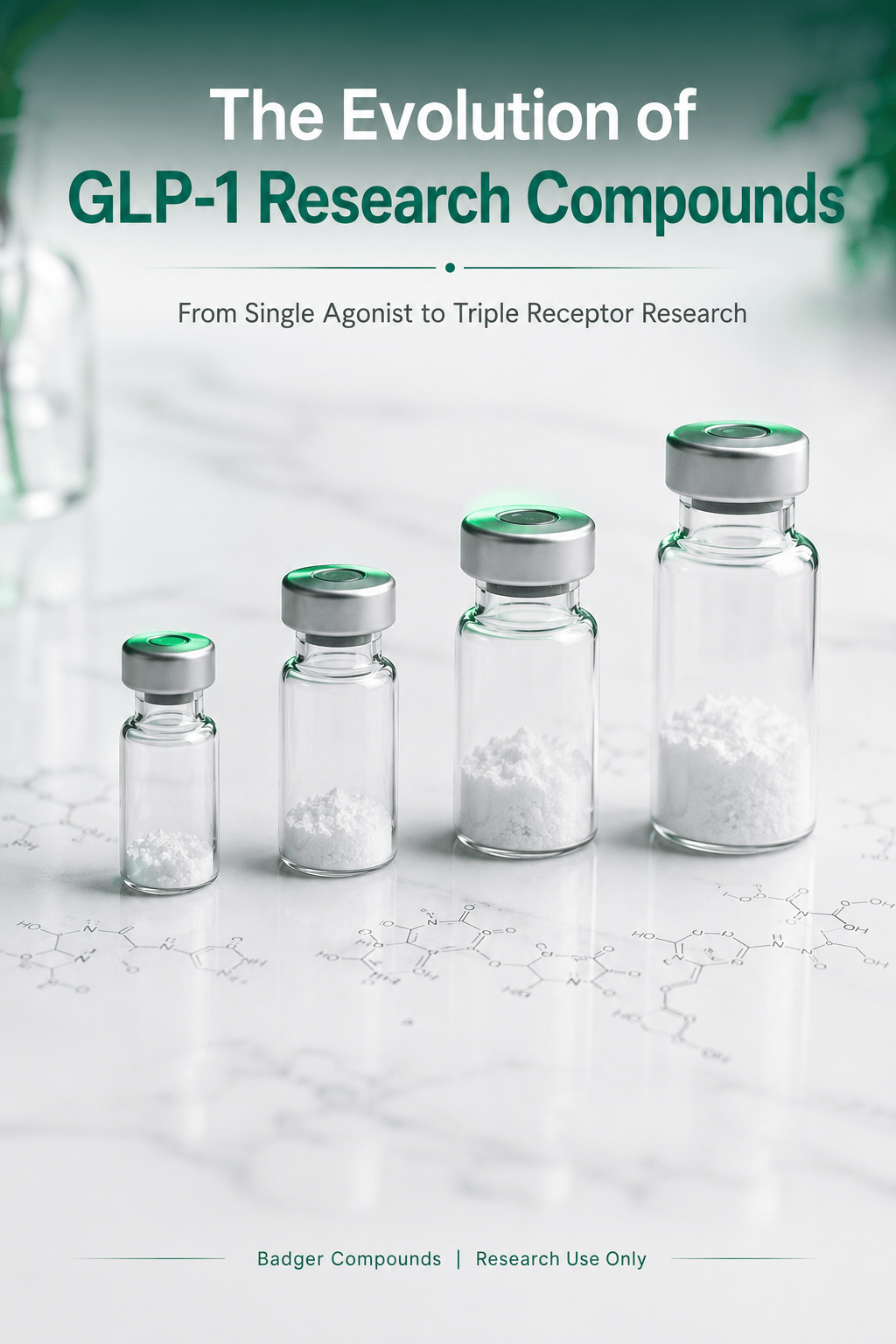
The evolution of GLP-1 research compounds represents one of the most significant trajectories in modern metabolic peptide science. What began as the investigation of a single incretin hormone has expanded into a multi-generational research program spanning single receptor agonists, dual agonists, triple agonists, and combination approaches that continue to redefine how researchers study metabolic signaling pathways.
This article traces the scientific development of GLP-1 research compounds from the earliest investigations of GLP-1 receptor biology through to the current generation of triple agonist compounds under active preclinical and clinical investigation – providing researchers with the topical context needed to understand where this field stands today.
Research focus: This article is intended for educational and research-context discussion only. All compounds discussed are investigational research compounds. This content does not provide medical advice, dosing guidance, or treatment recommendations of any kind.
What Is GLP-1 and Why Does It Matter in Research?
Glucagon-like peptide-1 (GLP-1) is a 30-amino acid incretin hormone produced primarily by L-cells in the intestinal epithelium in response to nutrient ingestion. In receptor-binding research models, GLP-1 is studied for its interaction with the GLP-1 receptor and its selectivity across related incretin receptor systems, characterized through in vitro binding and signaling assays.
The GLP-1 receptor is a G protein-coupled receptor expressed in pancreatic beta cells, the central nervous system, the gastrointestinal tract, the heart, and the kidneys – among other tissues. This broad receptor-expression pattern is one of the primary reasons GLP-1 receptor research has expanded beyond its original focus into a wider range of receptor-pathway and molecular investigation areas.
Why GLP-1 Research Has Expanded So Significantly
The GLP-1 receptor’s broad tissue distribution – spanning the pancreas, brain, heart, gut, and kidneys – means that GLP-1 receptor agonist research touches on a remarkably wide range of biological systems. This is why the evolution of GLP-1 research compounds has generated interest across metabolic, cardiovascular, neurological, and renal research disciplines simultaneously.
The Timeline of GLP-1 Research Compound Development
The progression from native GLP-1 to the current generation of multi-receptor agonist compounds spans several decades of incremental scientific advancement. Each generation of research compounds addressed specific limitations of the previous one while opening new investigational questions.
Early 1980s
Discovery of GLP-1
GLP-1 is first identified and characterized as a product of the proglucagon gene. Early research establishes its incretin-receptor activity and glucose-dependent signaling properties, laying the foundation for all subsequent GLP-1 receptor research.
1990s
Native GLP-1 Research Limitations Identified
Preclinical and early clinical investigations reveal that native GLP-1 has an extremely short half-life of approximately 1 to 2 minutes due to rapid degradation by the enzyme DPP-4 (dipeptidyl peptidase-4). This limitation drives the search for more stable GLP-1 receptor agonist compounds.
Early 2000s
First Generation GLP-1 Receptor Agonists
Exendin-4, a GLP-1 receptor agonist derived from Gila monster venom with natural DPP-4 resistance, becomes the basis for the first synthetic GLP-1 receptor agonist research compounds. These short-acting compounds confirm the viability of GLP-1 receptor agonism as a research and therapeutic strategy.
Mid 2000s
Long-Acting GLP-1 Agonist Research
Researchers develop strategies to extend GLP-1 receptor agonist half-life through albumin binding, fatty acid conjugation, and structural modifications. Liraglutide emerges as a once-daily GLP-1 receptor agonist with significantly extended duration of action compared to first-generation compounds.
2010s
Weekly GLP-1 Agonists and Semaglutide
Further structural optimization produces once-weekly GLP-1 receptor agonists. Semaglutide, with its enhanced albumin binding and structural modifications that confer exceptional DPP-4 resistance, becomes one of the most extensively studied GLP-1 receptor agonist compounds in the research literature. Oral formulation research also advances during this period.
Late 2010s
Dual Agonist Research – GLP-1 Plus GIP
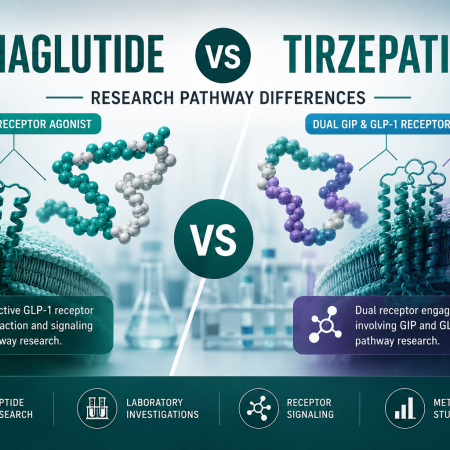
Research attention shifts toward dual receptor agonism. Tirzepatide, a dual GIP and GLP-1 receptor agonist, represents a significant step forward in multi-receptor metabolic research. By targeting both the GIP receptor and the GLP-1 receptor simultaneously, dual agonist compounds introduce new questions about receptor synergy and complementary incretin pathway signaling.
2020s
Triple Agonist Research – GLP-1, GIP, and Glucagon
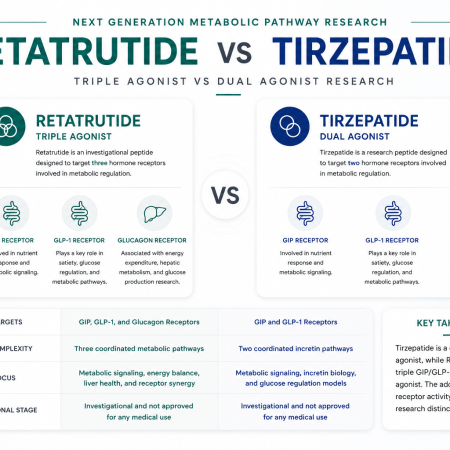
The current frontier of GLP-1 research compound development involves triple receptor agonism. Retatrutide, which targets GLP-1, GIP, and glucagon receptors simultaneously, represents the leading edge of multi-receptor metabolic research. The addition of glucagon receptor activity introduces a third receptor target into the research framework, broadening receptor-selectivity and binding-comparison studies.
Emerging
Combination Approaches and Next-Generation Research
Current research is exploring combination approaches pairing GLP-1 receptor agonists with amylin analogs such as Cagrilintide, as well as investigating GLP-1 receptor activity in non-metabolic contexts including neurological, cardiovascular, and renal research models. The GLP-1 research landscape continues to expand in both breadth and mechanistic complexity.
Generation by Generation: What Changed and Why
Each generation of GLP-1 research compounds addressed a specific scientific limitation or opened a new investigational question. Understanding these generational shifts helps researchers contextualize the current compound landscape and anticipate where research is heading next.
| Generation | Representative Compound | Key Advancement | Primary Research Question |
|---|---|---|---|
| Native GLP-1 | GLP-1 (7-36) amide | Identified incretin biology | What does GLP-1 receptor activation do? |
| First Generation | Exendin-4 based compounds | DPP-4 resistance, extended half-life | Can GLP-1 receptor agonism be sustained? |
| Second Generation | Liraglutide | Once-daily dosing, albumin binding | How is sustained GLP-1 receptor activation characterized in vitro? |
| Third Generation | Semaglutide | Once-weekly dosing, oral formulation research | How far can GLP-1 receptor agonist potency and convenience be extended? |
| Dual Agonist | Tirzepatide | GIP plus GLP-1 dual receptor targeting | How does combined incretin receptor activation compare in binding assays? |
| Triple Agonist | Retatrutide | GLP-1, GIP, and glucagon triple targeting | How do three coordinated receptor systems interact in metabolic research? |
| Combination Research | Semaglutide plus Cagrilintide | GLP-1 agonism plus amylin analog activity | Can complementary non-incretin pathways enhance GLP-1 research models? |
Key Compounds in the GLP-1 Research Landscape
The following compounds represent the most significant milestones in the evolution of GLP-1 research, each contributing a distinct advancement to the scientific understanding of incretin and metabolic receptor biology.
Single Agonist
Semaglutide
A once-weekly GLP-1 receptor agonist with high receptor selectivity and potency. Research has examined its effects across metabolic, cardiovascular, and neurological signaling contexts. It remains one of the most extensively characterized GLP-1 receptor agonist compounds in current literature.
Dual Agonist
Tirzepatide
A dual GIP and GLP-1 receptor agonist that introduced the concept of coordinated incretin receptor research. Tirzepatide research has examined how simultaneous GIP and GLP-1 receptor activation differs from GLP-1 receptor agonism alone across multiple metabolic research parameters.
Triple Agonist
Retatrutide
The leading triple agonist research compound targeting GLP-1, GIP, and glucagon receptors simultaneously. Retatrutide research has expanded the investigational framework to include comparative binding and selectivity characterization across the GLP-1, GIP, and glucagon receptors alongside standard incretin-receptor research.
Combination
Cagrilintide
A long-acting amylin analog being investigated in combination with semaglutide. Cagrilintide research examines how amylin receptor pathway activity may complement GLP-1 receptor signaling, representing a different approach to multi-pathway metabolic research than dual or triple agonist strategies.
Emerging
Orforglipron
A non-peptide small molecule GLP-1 receptor agonist representing a structural departure from peptide-based GLP-1 research compounds. Orforglipron research is investigating whether small molecule GLP-1 receptor activation can replicate the biological effects observed with peptide-based agonists.
Emerging
Mazdutide
A dual GLP-1 and glucagon receptor agonist being investigated as an alternative dual agonist approach to Tirzepatide’s GLP-1 and GIP combination. Mazdutide research is examining how different dual receptor combinations produce distinct receptor-signaling profiles in preclinical research models.
What the Shift from Single to Multi-Receptor Research Means
The transition from single GLP-1 receptor agonism to dual and triple receptor research frameworks represents more than an incremental improvement in compound potency. It reflects a fundamental shift in how researchers conceptualize metabolic signaling – from isolated receptor biology to coordinated multi-pathway investigation.
Single GLP-1 receptor agonists allowed researchers to study the isolated effects of GLP-1 receptor activation with a high degree of experimental precision. Dual and triple agonist compounds introduce greater biological complexity, allowing researchers to investigate how receptor systems interact, whether synergistic signaling patterns emerge, and how different pathway combinations produce distinct receptor-signaling research outcomes.
Single Receptor Research Strengths
- High mechanistic specificity
- Clear attribution of biological effects to one receptor
- Extensive existing research literature
- Well-characterized safety and pharmacology profiles
- Useful as reference standard in comparative studies
Multi-Receptor Research Strengths
- Models the complexity of real metabolic signaling networks
- Allows investigation of receptor synergy and interaction
- Covers broader range of metabolic pathway research questions
- Introduces additional receptor-target and selectivity dimensions
- Represents the current frontier of metabolic compound research
Related reading: For a detailed comparison of dual and triple agonist research frameworks, see our articles on Retatrutide vs Tirzepatide: Triple Agonist vs Dual Agonist Research and What Makes Triple Agonist Research Different?
Beyond Metabolic Research: Where GLP-1 Science Is Expanding
One of the most notable aspects of the current GLP-1 research landscape is the expansion of investigational interest beyond traditional metabolic signaling contexts. The broad tissue distribution of the GLP-1 receptor has prompted researchers to investigate its activity in several non-metabolic biological systems.
Neurological Research
GLP-1 receptors are expressed in multiple brain regions including the hypothalamus, hippocampus, and brainstem. Research is investigating GLP-1 receptor activity in neuroprotection models, neuroinflammation research, and cognitive function investigations in preclinical settings.
Cardiovascular Research
GLP-1 receptors are present in cardiac tissue and vascular endothelium. Preclinical and clinical research has examined GLP-1 receptor agonist effects on cardiac function, inflammatory markers, and vascular biology in cardiovascular research models.
Renal Research
GLP-1 receptors are expressed in kidney tissue. Research is examining GLP-1 receptor activity across additional preclinical tissue models, expanding the investigational scope beyond incretin-receptor endpoints.
Final Thoughts
The evolution of GLP-1 research compounds from the discovery of native GLP-1 biology through to the current generation of triple agonist and combination research frameworks represents one of the most dynamic trajectories in modern peptide science. Each generation of compounds has built on the scientific foundation established by the previous one, progressively expanding the complexity and breadth of investigational questions that can be addressed.
For researchers working in metabolic, cardiovascular, neurological, or renal biology, understanding the GLP-1 research compound landscape – where it came from, where it stands today, and where it is heading – provides essential context for interpreting the existing literature and designing new preclinical investigations. The field is still developing rapidly, and the compounds under investigation today represent only the current snapshot of a research area that continues to evolve.
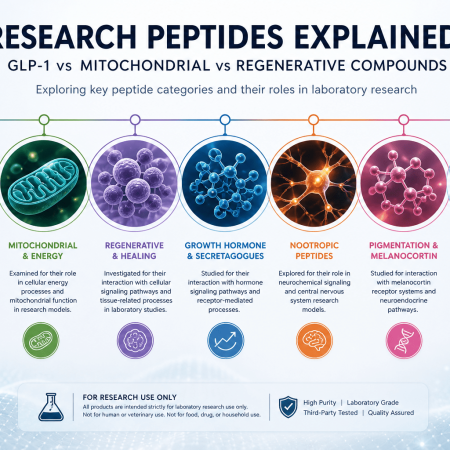
Related reading: For a broader overview of how GLP-1 compounds fit within the wider peptide research landscape, see our article on Research Peptides Explained: GLP-1 vs Mitochondrial vs Regenerative Compounds.
Explore GLP-1 and Metabolic Research Compounds
Browse our catalog of GLP-1 and metabolic research compounds, each supported by independent third-party COA documentation and independent batch-level analytical testing.
View GLP-1 and Metabolic Research CompoundsReferences
[1] Drucker DJ. The biology of incretin hormones. Cell Metab. 2006;3(3):153-165. View via PubMed
[2] Nauck MA, Meier JJ. Incretin hormones: their role in health and disease. Diabetes Obes Metab. 2018;20 Suppl 1:5-21. View via PubMed
[3] Jastreboff AM, et al. Tirzepatide once weekly for the treatment of obesity. N Engl J Med. 2022;387(3):205-216. View via PubMed
[4] Jastreboff AM, et al. Triple-Hormone-Receptor Agonist Retatrutide for Obesity. N Engl J Med. 2023;389(6):514-526. View via PubMed
[5] Holst JJ. The physiology of glucagon-like peptide 1. Physiol Rev. 2007;87(4):1409-1439. View via PubMed
[6] Nauck MA, et al. GLP-1 receptor agonists in the treatment of type 2 diabetes – state-of-the-art. Mol Metab. 2021;46:101102. View via PubMed
Disclaimer: This article is for informational and educational purposes only. Products and compounds discussed are intended for research use only and are not for human consumption, veterinary use, clinical use, diagnostic use, food use, supplement use, pharmaceutical use, cosmetic use, or any consumer application. Statements have not been evaluated by the FDA. This content does not provide medical advice, treatment guidance, dosing information, or recommendations for personal use.