No products in the cart.
U.S. FILLED & FINISHED | ≥99% COA-VERIFIED PURITY
LC-MS VERIFIED IDENTITY | INDEPENDENTLY TESTED

Peptides cognitive neurological research is one of the most rapidly expanding areas of modern preclinical science. This overview covers the key compounds, biological pathways, and current investigational frontiers being studied in brain biology research today. As researchers develop a more sophisticated understanding of the molecular pathways underlying cognition, neuroprotection, neuroplasticity, and neuroinflammation, synthetic peptides have emerged as valuable investigational tools for probing these systems with a high degree of biological specificity.
This article provides a broad overview of the peptide categories currently being investigated in cognitive and neurological research contexts, the key biological pathways they target, and what the current state of preclinical investigation reveals about the role of peptides in brain biology research.
Research focus: This article is intended for educational and research-context discussion only. All compounds discussed are sold for laboratory investigation only. This content does not provide medical advice, dosing guidance, or treatment recommendations of any kind.
Why Peptides Are Studied in Neurological Research
The brain relies on a complex network of signaling molecules to regulate neuronal function, synaptic transmission, neuroprotection, and cognitive processing. Many of these endogenous signaling molecules are peptides – short chains of amino acids that act as neurotransmitters, neuromodulators, growth factors, or regulatory hormones within the central nervous system.
Synthetic research peptides designed to mimic, modulate, or interact with these endogenous neurological signaling systems provide researchers with precise investigational tools for studying brain biology. Unlike small molecule drugs that often have broad pharmacological profiles, peptides typically interact with specific receptors or signaling pathways, making them particularly useful for dissecting the molecular mechanisms underlying cognitive and neurological processes in preclinical research models.
Why Peptide Research Tools Matter in Neuroscience
The specificity of peptide-receptor interactions makes synthetic peptides valuable research tools for studying discrete neurological pathways. By targeting specific neurotrophic factors, receptor systems, or signaling cascades, peptide research compounds allow investigators to isolate and examine individual components of complex neurological processes in preclinical models.
Key Neurological Pathways Under Investigation
Peptide neurological research spans several interconnected biological systems. The following represent the most active pathway areas in current preclinical cognitive and neurological peptide investigation.
Pathway 1
Neurotrophic Factor Signaling
Brain-derived neurotrophic factor (BDNF) and nerve growth factor (NGF) are central regulators of neuronal survival, synaptic plasticity, and cognitive function in research models. Peptides that influence neurotrophic factor expression or receptor signaling are among the most studied compounds in cognitive neuroscience research.
Pathway 2
GABAergic Signaling
GABA is the primary inhibitory neurotransmitter in the central nervous system. Peptides that interact with GABAergic signaling pathways are investigated in relation to anxiety-associated neurobiological research, stress response models, and inhibitory neurotransmission studies in preclinical settings.
Pathway 3
Dopaminergic and Serotonergic Systems
Monoaminergic neurotransmitter systems are critically involved in cognitive function, motivation, mood regulation, and reward processing in research models. Peptides with documented interactions with dopaminergic or serotonergic signaling are studied across a wide range of cognitive and behavioral neuroscience research contexts.
Pathway 4
Neuroprotection Research
Neuronal survival under conditions of ischemia, oxidative stress, excitotoxicity, and neuroinflammation is a central concern in neurological research. Peptides investigated for neuroprotective properties are studied in models of cerebral ischemia, hypoxia, and neurodegenerative biology.
Pathway 5
Neuroinflammation Pathways
Neuroinflammatory signaling involves microglial activation, cytokine release, and blood-brain barrier integrity. Peptides with proposed anti-inflammatory effects in neurological tissue are investigated in relation to neuroinflammation models relevant to a wide range of brain biology research questions.
Pathway 6
Cholinergic and Memory Research
The cholinergic system plays a well-established role in learning and memory processes in research models. Peptides that interact with acetylcholine signaling pathways or influence hippocampal memory consolidation research are studied in relation to cognitive function and age-related cognitive biology.
Peptides Currently Investigated in Cognitive and Neurological Research
The following peptides represent some of the most documented compounds in current cognitive and neurological preclinical research. Each has a distinct research profile targeting specific aspects of brain biology.
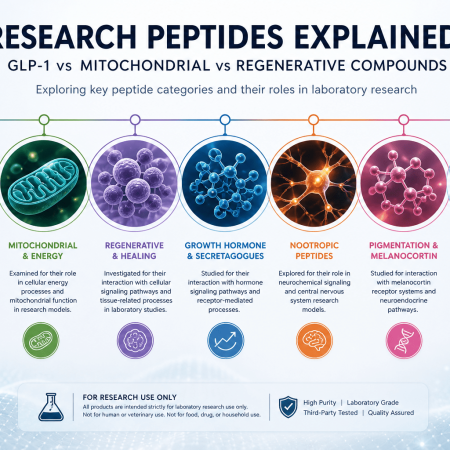
Nootropic Research
Semax
A synthetic heptapeptide derived from ACTH, Semax is primarily investigated for its effects on BDNF and NGF expression. Preclinical research has examined its role in neuroprotection models, dopaminergic signaling, and cognitive function research in rodent models. One of the most extensively documented nootropic peptides in Russian neuroscience literature.
Anxiolytic Research
Selank
A synthetic analog of tuftsin, Selank is primarily studied for its interaction with GABAergic signaling pathways and anxiety-related neurobiological research. Studies have also examined its effects on BDNF expression, enkephalin metabolism, and immunomodulatory signaling in preclinical models.
Neuroprotection
Humanin
A mitochondria-derived peptide encoded within the 16S rRNA gene, Humanin is investigated for its neuroprotective properties in preclinical models. Research has examined its interaction with STAT3 signaling, apoptosis inhibition, and insulin-related pathway activity in neurological research contexts.
Synaptic Research
Dihexa
Dihexa is a synthetic peptide derived from angiotensin IV, investigated for its effects on hepatocyte growth factor (HGF) signaling and synaptic connectivity in preclinical cognitive research models. Research has examined its influence on synaptogenesis and cognitive performance endpoints in animal models.
GLP-1 Neuro Research
Semaglutide (CNS Research)
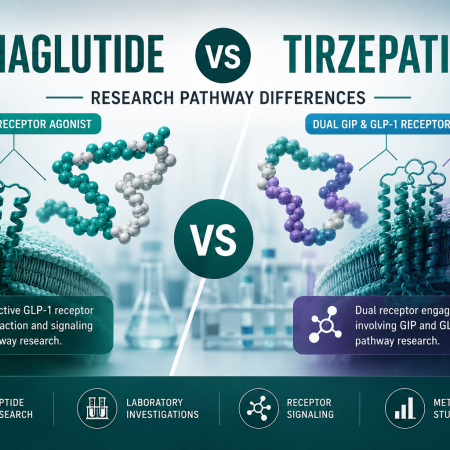
While primarily studied in metabolic research contexts, GLP-1 receptor agonists including semaglutide have generated significant interest in neurological research. GLP-1 receptors are expressed in multiple brain regions, and preclinical research has examined GLP-1 receptor activity in neuroprotection, neuroinflammation, and cognitive function models.
Mitochondrial Neuro
SS-31 (Neurological Models)
Beyond its cardiac and renal research applications, SS-31 has been investigated in neurological research models where mitochondrial dysfunction is implicated. Studies have examined its effects on neuronal energy metabolism, oxidative stress markers, and mitochondrial integrity in neurodegeneration-relevant preclinical models.
Comparing Key Cognitive and Neurological Research Peptides
The following comparison provides researchers with a structured overview of the primary mechanisms and research focus areas associated with the most documented cognitive and neurological research peptides currently under investigation.
| Peptide | Primary Mechanism Focus | Key Research Areas | Research Category |
|---|---|---|---|
| Semax | BDNF and NGF upregulation, dopaminergic signaling | Neuroprotection, cognitive function, neuroplasticity | Neurotrophic / Nootropic |
| Selank | GABAergic signaling, enkephalin metabolism | Anxiety pathway research, cognitive models, immunomodulation | Anxiolytic / GABAergic |
| Humanin | STAT3 signaling, apoptosis inhibition | Neuroprotection, insulin signaling, neurodegeneration models | Mitochondrial / Neuroprotective |
| Dihexa | HGF/MET receptor signaling, synaptogenesis | Cognitive function, synaptic connectivity, memory research | Synaptic / Cognitive |
| GLP-1 Agonists | GLP-1 receptor activity in CNS tissue | Neuroprotection, neuroinflammation, cognitive models | Incretin / Neuroprotective |
| SS-31 | Cardiolipin stabilization, mitochondrial membrane integrity | Neuronal energy metabolism, oxidative stress, mitochondrial dysfunction | Mitochondrial / Neurological |
| MOTS-c | AMPK signaling, nuclear translocation | Metabolic-neurological interface, stress response, aging models | Mitochondrial / Metabolic |
The Blood-Brain Barrier Challenge in Neurological Peptide Research
One of the central challenges in neurological peptide research is the blood-brain barrier (BBB) – a selective permeability barrier formed by tight junctions between endothelial cells lining brain capillaries. The BBB restricts the passage of most molecules from the bloodstream into the central nervous system, which presents significant design and delivery challenges for peptide research compounds intended to act on brain tissue.
Different research peptides address this challenge in different ways. Some, like Semax and Selank, have been specifically designed or selected for their ability to penetrate the BBB through active transport mechanisms or structural properties that favor CNS entry. Others are studied in contexts where peripheral administration may influence central nervous system function through indirect mechanisms, such as vagal nerve signaling or circumventricular organ pathways.
BBB Penetration Strategies in Research
- Small molecular size and lipophilicity to favor passive diffusion
- Structural similarity to endogenous peptides that use active transport systems
- Intranasal delivery routes that bypass the BBB via olfactory pathways
- Conjugation to BBB-penetrating carrier molecules in research models
- Intracerebroventricular administration in controlled preclinical studies
Why BBB Penetration Matters in Research Design
- Determines which brain regions a peptide can access following administration
- Affects the relationship between peripheral dose and central biological effect
- Influences the relevance of peripheral vs central administration routes in study design
- Is a key variable when interpreting preclinical cognitive and behavioral research data
- Shapes the translational potential of preclinical neurological research findings
Current Frontiers in Cognitive Peptide Research
The field of cognitive and neurological peptide research continues to expand as new compounds are characterized and existing ones are investigated in increasingly sophisticated preclinical models. The following represent the most active current frontiers in the field.
Neurodegeneration Models
Preclinical research is investigating a range of peptides in neurodegeneration-relevant models, examining their effects on amyloid processing, tau phosphorylation, mitochondrial dysfunction, and neuroinflammatory signaling in rodent and cell-based research systems.
Neuroplasticity Research
The investigation of peptides that influence synaptic plasticity, dendritic spine density, and long-term potentiation is an active area of cognitive neuroscience research. Compounds that modulate BDNF signaling, HGF receptor activity, or glutamate receptor function are particularly studied in this context.
Stress and Resilience Biology
The neurobiological mechanisms underlying stress resilience and HPA axis regulation are increasingly studied using peptide research tools. Compounds like Selank that interact with GABAergic and stress-responsive signaling systems are investigated in relation to chronic stress models and stress-induced neurobiological changes.
Mitochondria-Brain Interface
The recognition that mitochondrial dysfunction is a common feature of many neurological conditions has opened a new research frontier examining mitochondria-targeted peptides in neurological contexts. SS-31, MOTS-c, and Humanin are all being investigated at the intersection of mitochondrial biology and neurological research.
GLP-1 and Brain Biology
The discovery of GLP-1 receptor expression in multiple brain regions has expanded GLP-1 research well beyond its original metabolic focus. Current preclinical research is examining GLP-1 receptor activity in neuroprotection, neuroinflammation, and cognitive function models, representing a convergence of metabolic and neurological peptide research.
Aging and Cognitive Biology
The relationship between biological aging and cognitive decline is a major research focus. Peptides that influence neurotrophic factor signaling, mitochondrial function, neuroinflammation, and synaptic integrity are studied in aged preclinical models examining the neurobiological correlates of age-related cognitive changes.
Related reading: For a detailed look at two of the most studied nootropic peptides in neurological research, see our article on Semax and Selank: Peptides in Neurological Research.
Final Thoughts
Peptides in cognitive and neurological research represent one of the most scientifically rich and rapidly expanding areas of modern preclinical investigation. From neurotrophic factor signaling and GABAergic pathway research to mitochondrial biology and GLP-1 receptor activity in the brain, synthetic research peptides provide investigators with precise tools for studying the molecular mechanisms that underlie cognition, neuroprotection, and neurological function.
As the field continues to mature and new compounds are characterized, the intersection of peptide science and neuroscience research will likely yield some of the most important biological insights of the coming decade. Researchers working in this space should prioritize sourcing compounds with verified analytical documentation, confirmed sequence identity, and batch-level traceability to ensure the experimental integrity that rigorous neurological research demands.
Related reading: To understand how analytical verification applies to neurological research peptides, see our article on Why Third-Party Testing Matters in Research Compounds.
Explore Nootropic and Neurological Research Compounds
Browse our catalog of cognitive and neurological research peptides, each supported by independent third-party CoA documentation and our 6x testing standard.
View Nootropic and Cognitive Research CompoundsReferences
[1] Dolotov OV, et al. Semax, an analogue of ACTH(4-7) with prolonged action, and its relation to brain-derived neurotrophic factor. Neurosci Lett. 2006;395(3):207-210. View via PubMed
[2] Semenova TP, et al. Selank and short peptides of the tuftsin family in the regulation of adaptive behavior in stress. Zh Vyssh Nerv Deiat Im I P Pavlova. 2010;60(3):349-358. View via PubMed
[3] Akhtar A, Sah SP. Insulin signaling pathway and related molecules: Role in neurodegeneration and Alzheimer’s disease. Neurochem Int. 2020;135:104707. View via PubMed
[4] Holscher C. The incretin hormones glucagonlike peptide 1 and glucose-dependent insulinotropic polypeptide are neuroprotective in mouse models of neurodegeneration. Alzheimers Dement. 2014;10(1 Suppl):S47-54. View via PubMed
[5] Kim SJ, et al. Mitochondria-derived peptides in aging and healthspan. J Clin Invest. 2022;132(9):e158450. View via PubMed
[6] Bhatt DL, et al. Selective G protein-coupled receptor kinase 2 inhibition: a promising approach for treating neurological disorders. Pharmacol Ther. 2021;221:107749. View via PubMed
Disclaimer: This article is for informational and educational purposes only. Products and compounds discussed are intended for research use only and are not for human consumption, veterinary use, clinical use, diagnostic use, food use, supplement use, pharmaceutical use, cosmetic use, or any consumer application. Statements have not been evaluated by the FDA. This content does not provide medical advice, treatment guidance, dosing information, or recommendations for personal use.