No products in the cart.
U.S. FILLED & FINISHED | ≥99% COA-VERIFIED PURITY
LC-MS VERIFIED IDENTITY | INDEPENDENTLY TESTED
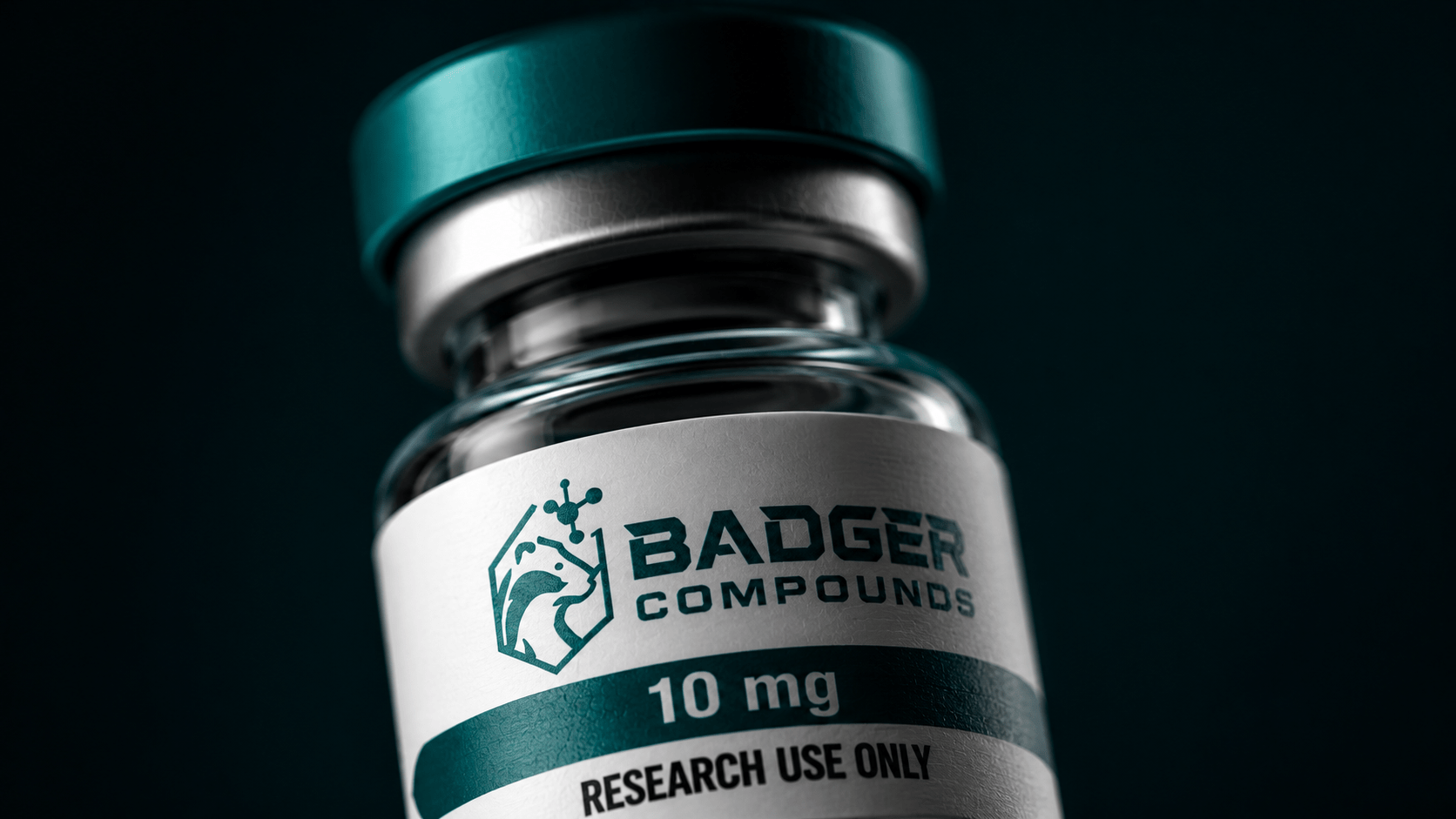
“Research Use Only” is a phrase you will see on every research peptide label, including ours, but it is often misunderstood. Far from a formality, RUO is a real regulatory designation that defines what a product is for and, just as importantly, what it is not for. This guide explains what Research Use Only means, where the designation comes from, and the responsibilities that come with handling RUO materials.
What Does ‘Research Use Only’ (RUO) Mean?
“Research Use Only” is a phrase you will see on every research peptide label, including ours, but it is often misunderstood. Far from a formality, RUO is a real regulatory designation that defines what a product is for and, just as importantly, what it is not for. This guide explains what Research Use Only means, where the designation comes from, and the responsibilities that come with handling RUO materials.
What Does ‘Research Use Only’ Mean?
Research Use Only, abbreviated RUO, means a product is intended solely for laboratory research. It has not been evaluated or approved by the FDA for use in humans or animals, and it is not intended for any clinical, diagnostic, therapeutic, food, supplement, or cosmetic purpose. In plain terms, an RUO product is a tool for the bench, and nothing more.
This is not a technicality or a disclaimer bolted on for legal cover. The designation reflects a real difference in how the product has been developed and tested. An RUO compound has not gone through the studies that a product intended for human use is required to complete, which is exactly why its use is restricted to research.
Scope note: This article explains the meaning of the RUO designation in general terms. It is educational and is not legal advice. Compounds supplied by Badger Compounds are for research use only and are not intended for human or veterinary use.
Where the RUO Designation Comes From
The RUO label has a specific regulatory origin. In the FDA’s labeling rules for in vitro diagnostic products, a product in the laboratory research phase must carry the statement “For Research Use Only. Not for use in diagnostic procedures” [2]. That wording, and the principle behind it, is the source of the RUO designation.
The same principle is applied broadly across research reagents and chemicals: an RUO product is one that is meant for laboratory work and is not represented as safe or effective for clinical or human use. The FDA’s guidance on these products makes clear that RUO materials are those still in the research phase and that marketing or using them for clinical or diagnostic purposes falls outside what the designation permits [1]. Representing an unapproved product as suitable for human use can render it misbranded under the Federal Food, Drug, and Cosmetic Act [3].
What RUO Does and Does Not Permit
The clearest way to understand Research Use Only is to separate what it covers from what it explicitly excludes.
What RUO Is For
Laboratory and in vitro research conducted by qualified researchers in an appropriate setting: assay development, method work, and controlled experimental study of the compound.
What RUO Is Not For
Human consumption, injection, or any human use. Veterinary use. Clinical diagnosis, treatment, or patient monitoring. Food, dietary supplements, or cosmetics. None of these are permitted uses of an RUO product.
RUO Products Versus Approved Products
A side-by-side comparison shows why the two categories are not interchangeable.
| Aspect | Research Use Only (RUO) | FDA-approved product |
|---|---|---|
| Evaluation | Not evaluated by the FDA for safety or efficacy in humans | Reviewed and approved through the FDA process |
| Intended use | Laboratory research only | Defined clinical or consumer use |
| Who uses it | Qualified researchers and institutions | Patients, clinicians, or consumers as directed |
| Human use | Not permitted | Permitted within the approved indication |
RUO is a boundary, not a loophole. It marks a product that is for the laboratory and has not been approved for human or veterinary use. Treating an RUO compound as if it were a supplement or a medicine ignores the reason the designation exists.
Why Legitimate Suppliers Emphasize Research Use Only
When a responsible supplier labels a product Research Use Only and asks buyers to confirm they are qualified researchers, that is the designation working as intended. It is the correct legal classification for an unapproved compound, and it is also a genuine safety boundary: RUO materials have not been through the evaluation that human-use products require, so their behavior in people is not established [1].
This is why quality documentation and honest labeling go together. Publishing batch-level results and independent testing tells a researcher exactly what the material is, while the RUO label tells them exactly what it is for. For more on the documentation side, see our guides on third-party testing for research compounds and how to read a Certificate of Analysis.
Responsibilities That Come With RUO Materials
Buying and handling RUO products carries clear obligations for the researcher:
Be Qualified
RUO materials are for qualified researchers and institutions with the training and facilities to handle research compounds appropriately.
Use as Intended
Keep use within laboratory research. RUO products are not to be used in or on humans or animals, or in food, supplements, or cosmetics.
Follow the Law
Handle, store, and dispose of materials in compliance with all applicable laws and institutional and safety requirements.
Research-Grade Compounds, Clearly Labeled – ≥99% (HPLC)
Every compound in our catalog is supplied strictly for research use only, synthesized domestically, independently tested per batch, and supported by publicly viewable COAs. For qualified laboratory research use only.
Browse the Catalog- U.S. Food and Drug Administration. Distribution of In Vitro Diagnostic Products Labeled for Research Use Only or Investigational Use Only: Guidance for Industry and FDA Staff. 2013. FDA guidance document
- 21 CFR 809.10(c), Labeling for in vitro diagnostic products. Electronic Code of Federal Regulations (eCFR). View on eCFR
- Federal Food, Drug, and Cosmetic Act, section 502 (Misbranded drugs and devices), 21 U.S.C. 352. FD&C Act
Disclaimer: This article is for informational and educational purposes only and is not legal advice. Products and compounds discussed are intended for research use only and are not for human consumption, veterinary use, clinical use, diagnostic use, food use, supplement use, pharmaceutical use, cosmetic use, or any consumer application. Statements have not been evaluated by the FDA. This content does not provide medical advice, treatment guidance, dosing information, or recommendations for personal use.