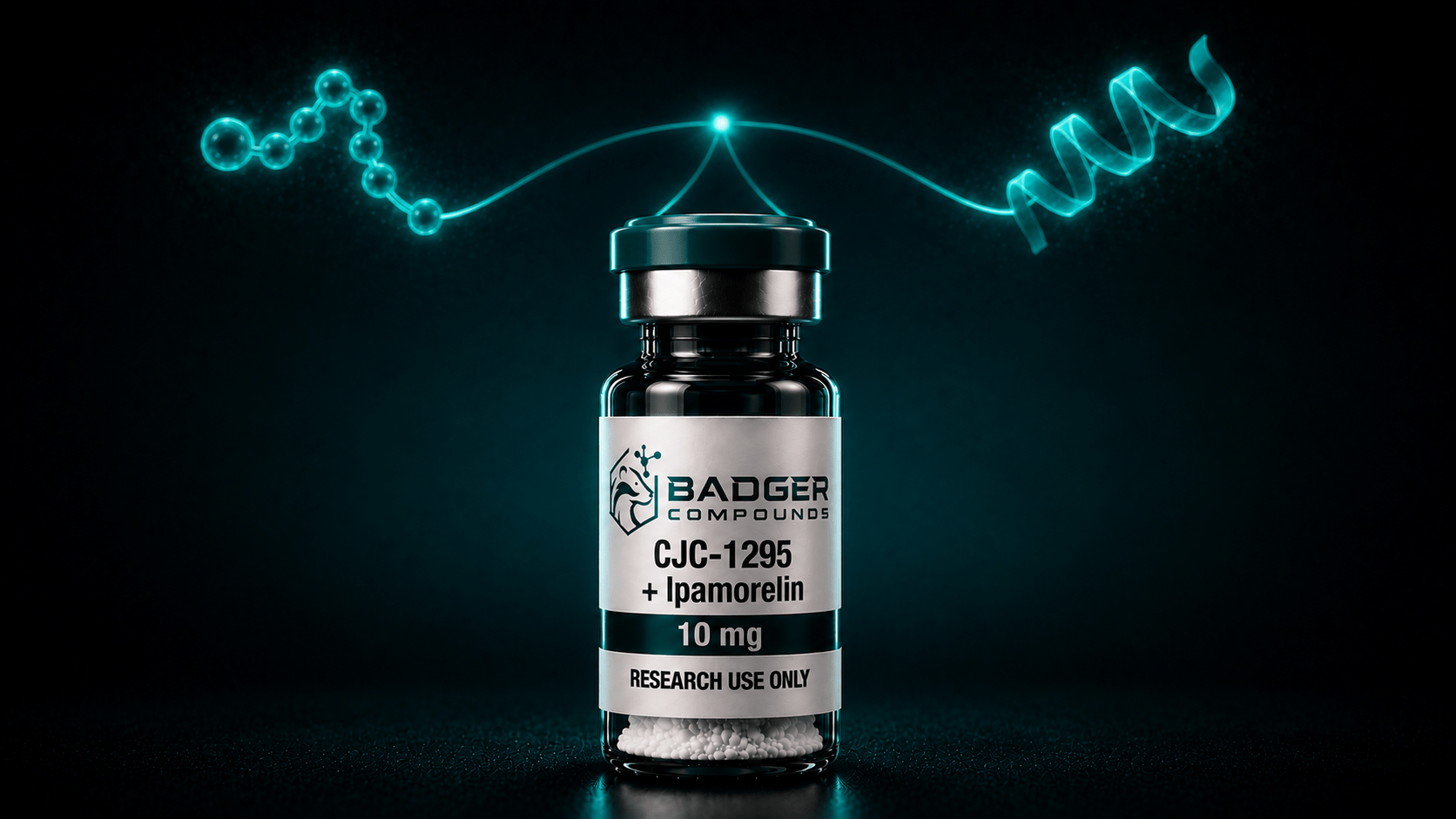
The CJC-1295 Ipamorelin blend combines two compounds that act on two different, complementary receptor pathways in growth hormone research. This guide explains what each compound is, why the pairing makes pharmacological sense, and points to the individual research behind each.
CJC-1295 (No DAC) + Ipamorelin: What’s In This Blend
The CJC-1295 Ipamorelin blend combines two compounds acting on two different, complementary receptor pathways in growth hormone research. Here’s what each does individually, and why combining them follows an established rationale in growth hormone secretagogue research.
Blend Composition
| Component | Amount | Receptor target |
|---|
| CJC-1295 (No DAC) | 5 mg | GHRH receptor |
| Ipamorelin | 5 mg | Ghrelin (GHS) receptor |
Research framing: This article is intended for educational and research-context discussion only. This blend is a research compound sold for laboratory investigation only. This content does not provide medical advice, dosing guidance, or treatment recommendations of any kind.
Two Different Receptors, One Axis
CJC-1295 (No DAC)
A DPP-IV-resistant analog of GHRH(1-29), administered without the albumin-binding drug affinity complex, preserving a shorter, more pulsatile pattern of GH release characteristic of native GHRH signaling.
Ipamorelin
A selective growth hormone releasing peptide (GHRP) that acts on the ghrelin receptor (GHS-R), a distinct pathway from GHRH, studied for its comparatively selective GH-releasing profile.
Because GHRH and ghrelin receptor signaling are two separate, non-overlapping pathways that both converge on growth hormone release, pairing a GHRH analog with a selective GHRP is a well-established pharmacological rationale in this research area. That rationale is about the receptor biology of each individual compound; it is not itself evidence that this specific blend or ratio has been studied as a combined unit.
Each compound’s receptor mechanism is independently well documented. The rationale for pairing them follows logically from that mechanism, but the blend itself, as a specific two-compound combination, has not been studied as its own subject in the published literature.
Where to Read the Actual Research
For the individual mechanism and evidence behind each component, see our dedicated guides:
For the broader receptor framework this pairing is built on, see our post on agonist vs antagonist receptor binding.
CJC-1295 + Ipamorelin – Research Grade, ≥99% (HPLC)
Badger Compounds supplies this blend as a lyophilized research compound, six-round independently tested per batch with publicly viewable COAs. For qualified laboratory research use only.
View This BlendDisclaimer: This article is for informational and educational purposes only. Products and compounds discussed are intended for research use only and are not for human consumption, veterinary use, clinical use, diagnostic use, food use, supplement use, pharmaceutical use, cosmetic use, or any consumer application. Statements have not been evaluated by the FDA. This content does not provide medical advice, treatment guidance, dosing information, or recommendations for personal use.