No products in the cart.
U.S. FILLED & FINISHED | ≥99% COA-VERIFIED PURITY
LC-MS VERIFIED IDENTITY | INDEPENDENTLY TESTED
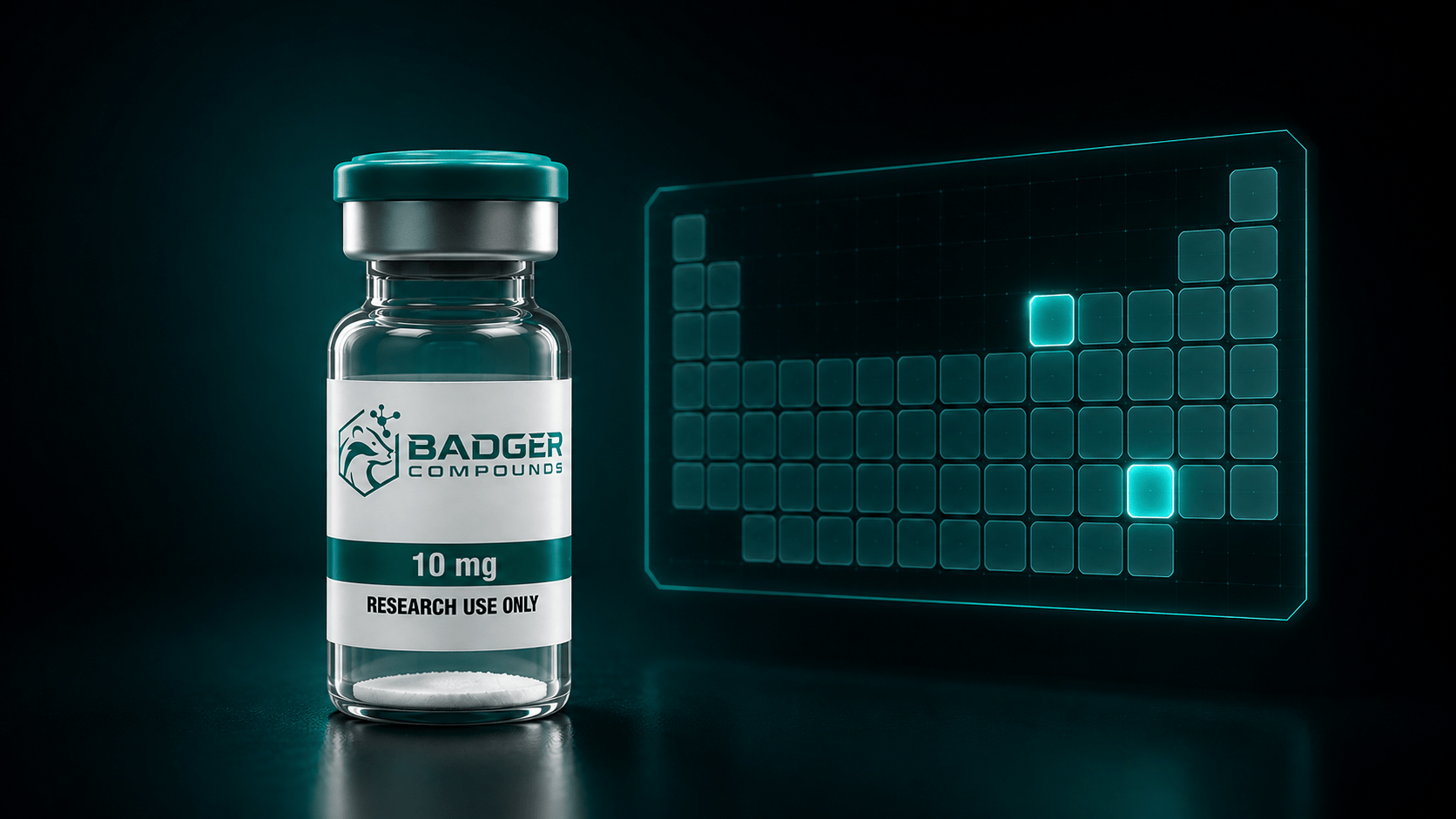
Heavy metals testing answers a question that neither purity nor endotoxin testing can: is the material free of toxic elemental contamination such as lead, arsenic, cadmium, and mercury. The standard method, ICP-MS, can detect these elements at extraordinarily low concentrations, and the modern framework governing acceptable limits, ICH Q3D, replaced a decades-old, far less precise test. This guide explains what heavy metals testing actually screens for and why it matters.
Heavy Metals Testing: What ICP-MS Screens For and Why It Matters
A peptide can be chemically pure, correctly identified, and free of bacterial contamination, and still carry toxic elemental impurities that none of those tests would ever catch. Heavy metals testing closes that gap, and the modern method behind it, ICP-MS, is precise enough to detect these elements at parts-per-billion concentrations.
What Are Heavy Metals in This Context?
In a pharmaceutical and research context, heavy metals refers to a set of toxic elemental contaminants, most critically lead, arsenic, cadmium, and mercury, that can enter a compound during raw material sourcing, synthesis, or manufacturing. These elements provide no therapeutic or research value and are known systemic toxicants capable of causing organ damage even at low levels of exposure [1]. Because they are elemental rather than organic, no amount of chemical purification aimed at peptide-related impurities will remove them; testing for them requires an entirely separate analytical method.
Research framing: This article explains laboratory quality testing methods. Compounds referenced are supplied by Badger Compounds for research use only and are not intended for human or veterinary use. Nothing here is medical advice.
ICP-MS: How Heavy Metals Testing Works
Inductively coupled plasma mass spectrometry (ICP-MS) is the standard analytical method for identifying and quantifying elemental impurities. The sample is vaporized into a high-temperature argon plasma, which ionizes individual elements; those ions are then separated and measured by mass, producing an extremely sensitive, element-specific readout [2]. This is what allows ICP-MS to detect trace elements at concentrations far below what older, non-specific methods could resolve.
Lead (Pb)
A neurotoxicant with no safe threshold of exposure, historically one of the most closely monitored contaminants in pharmaceuticals.
Arsenic (As)
A known carcinogen linked to cardiovascular and neurological effects even at low chronic exposure.
Cadmium (Cd)
Accumulates in the body over time and is associated with kidney and bone toxicity.
Mercury (Hg)
A potent neurotoxicant that can cross biological membranes and accumulate in tissue.
These four elements are consistently classified as the highest-priority toxic metals of public health significance, which is why they anchor every heavy metals testing panel [1].
Heavy metals testing answers a question purity and identity testing cannot: is the material free of toxic elemental contamination. HPLC purity, mass spectrometry identity, and ICP-MS heavy metals are three independent tests, each catching something the others cannot.
From “Heavy Metals Test” to ICH Q3D
For nearly a century, the pharmaceutical industry relied on a nonspecific colorimetric test that measured total “heavy metals” as a single lumped value without identifying which elements were actually present. That approach has been replaced by ICH Q3D, the internationally harmonized guideline that classifies elemental impurities by toxicity and likelihood of occurrence and establishes permitted daily exposure limits for each one [3]. Modern ICP-MS methods were adopted specifically because they can resolve individual elements, including arsenic and lead at very low concentrations, in a way the older test never could [3].
Why This Belongs on a Spec Sheet
A complete Certificate of Analysis reports heavy metals as its own distinct panel, separate from purity, identity, and endotoxin results, because it answers a question none of the others do. For how this fits into the full picture of a COA, see our guide on how to read a Certificate of Analysis, and for the complementary contamination check, see our overview of endotoxin testing and the LAL assay.
Research Concepts Related to Heavy Metals Testing
Inductively coupled plasma mass spectrometry Elemental impurities ICH Q3D guideline Permitted daily exposure (PDE) Lead, arsenic, cadmium, mercurySix-Round Tested, Including Heavy Metals – ≥99% (HPLC)
Every compound in our catalog is independently tested per batch across a full panel, with publicly viewable COAs. For qualified laboratory research use only.
Browse the Catalog- Tchounwou PB, Yedjou CG, Patlolla AK, Sutton DJ. Heavy metal toxicity and the environment. Exp Suppl. 2012;101:133-164. PMID 22945569
- Mittal M, Kumar K, Anghore D, Rawal RK. ICP-MS: analytical method for identification and detection of elemental impurities. Curr Drug Discov Technol. 2017;14(2):106-120. PMID 28003007
- International Council for Harmonisation of Technical Requirements for Pharmaceuticals for Human Use. ICH Q3D(R2) Guideline for Elemental Impurities. ICH guideline document
Disclaimer: This article is for informational and educational purposes only. Products discussed are research use only, not for human consumption, veterinary use, clinical use, or any consumer application. Statements have not been evaluated by the FDA. This content does not provide medical advice.